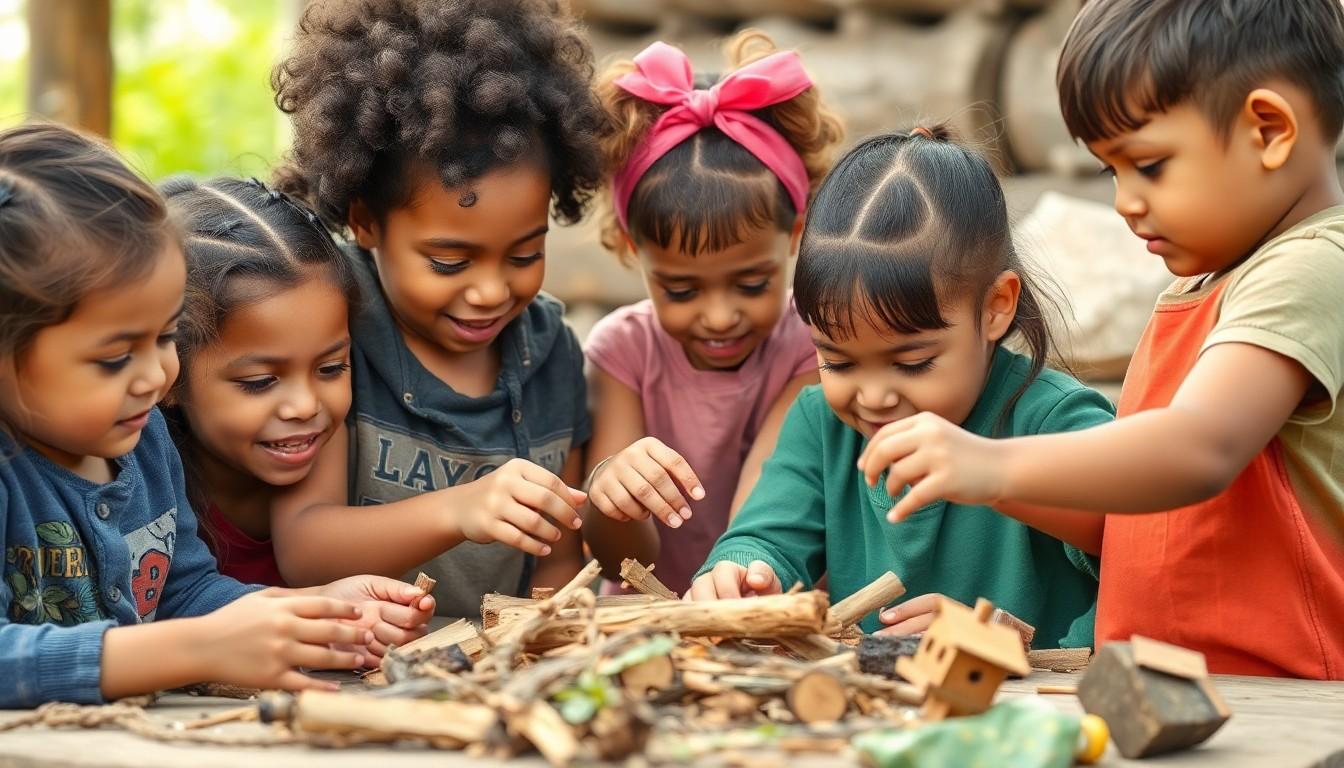

Engaging children in making, testing, and rebuilding not only fosters technical skills but also builds resilience, empathy, and sustainability awareness, offering vital lessons beyond the classroom.
Children who are given the chance to make, test and rebuild are doing far more than passing the time. According to educational writing from KiwiCo and the Minnesota Children’s Museum, hands-on building can strengthen spatial reasoning, fine motor control and creative thinking, while also helping children learn to approach problems from new angles.
That matters because making things forces children to think in more than one direction at once. A bridge made from sticks may need a stronger base; a cardboard vehicle may need lighter wheels; a tower may need a different shape altogether. The Fay School says design-thinking projects teach children that early ideas are not always the best ones, and that frustration is often part of the process rather than a signal to stop.
The educational value is not only technical. Research shared on ResearchGate identifies curiosity, imagination, persistence, collaboration and reflection as central to children’s creativity, and argues that those qualities grow best in environments that leave room for experimentation. That is one reason open-ended building tasks tend to be so powerful: they invite children to explore, revise and try again without waiting for a single correct answer.
Tinkering also gives children a practical form of resilience. The Wellan Foundation has described it as a process of open-ended exploration in which children learn to make a plan and adjust it when conditions change. In that sense, building teaches a mindset that is useful well beyond play: when something breaks, slips or collapses, the lesson is not defeat but adaptation.
There is also a social benefit. The Minnesota Children’s Museum notes that creative thinking can support empathy and positive relationships because it encourages children to imagine different perspectives. In group projects, that can mean sharing materials, listening to others, dividing tasks and working through disagreements to reach a common goal.
The environmental lesson is just as relevant. Reusing cardboard, bottles, paper tubes and scrap wood can help children see that everyday waste can become a resource for invention. That kind of activity builds awareness of sustainability while showing that creativity often begins with what is already close at hand.
For parents and teachers, the message from these sources is consistent: the aim is not perfection, but participation. Adults can help by offering safe, affordable materials, praising effort as well as outcome, and allowing children enough freedom to make decisions for themselves. When children are trusted to build, they are also trusted to think, and that may be one of the most valuable lessons of all.
Disclaimer: This content is for informational purposes only and is not intended to be a substitute for professional medical judgment, advice, diagnosis, or treatment.