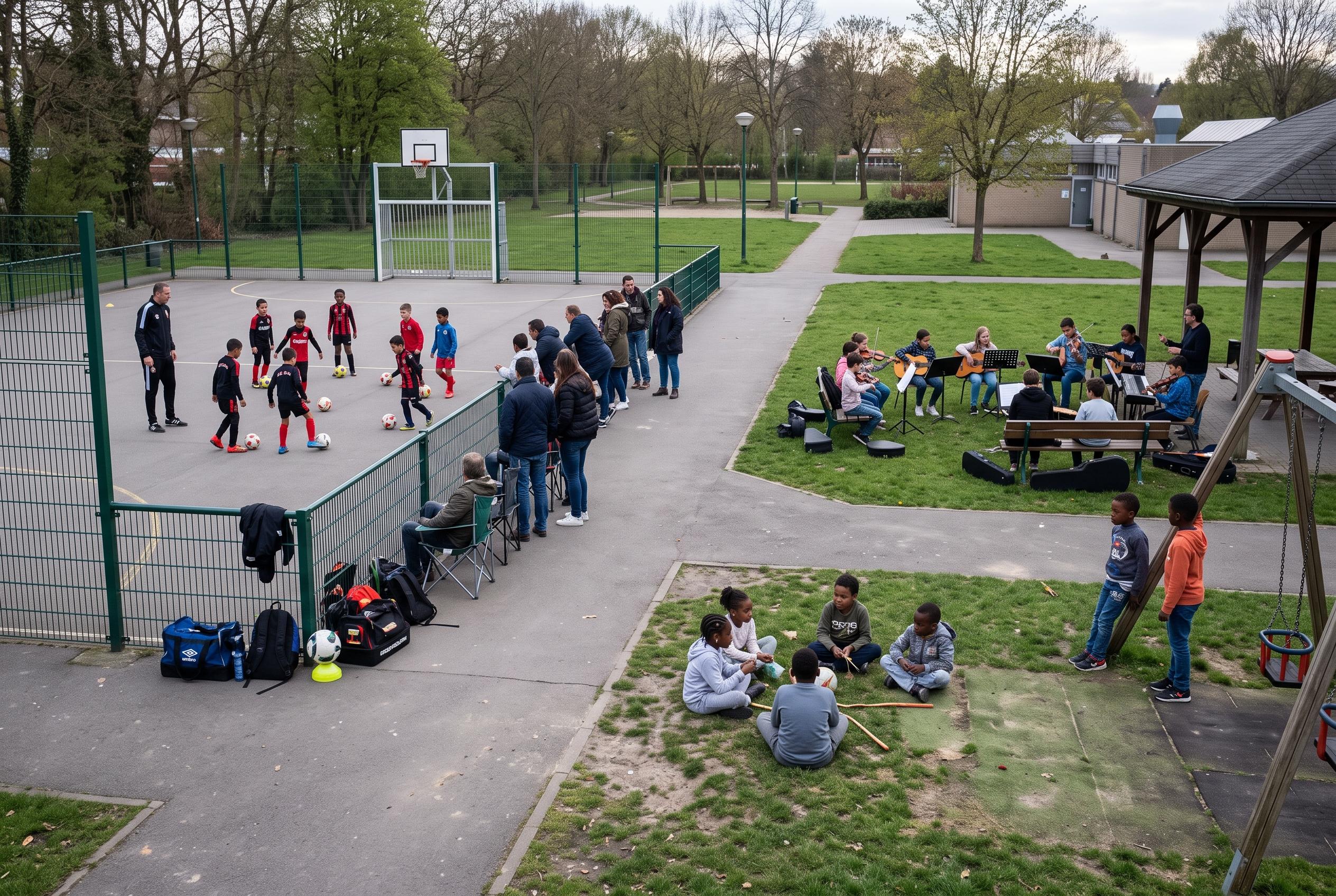

Recent research in Belgium suggests that rising costs of organised activities such as sport and music are deepening social divides, with wealthier families benefiting most from youth development opportunities, raising concerns over long-term social cohesion.
Extracurricular activities can support children’s development in many ways, but in Belgium a growing body of evidence suggests they also risk deepening social inequality. A report in La DH says the issue is not whether sport, music or other organised pursuits have value, but whether families can afford them, with costs quickly mounting for parents who try to give each child several opportunities.
Valentine Anciaux, a psychopedagogue quoted by La DH, argues that very young children do not necessarily need packed schedules, apart from developmental activities such as swimming. She says one weekly sport can make sense in primary school, although even that is often more than a single hour once training and matches are included. Her warning is that the price of participation can become prohibitive, with some families facing annual bills of about €500 per child.
That concern is backed by research showing that access to organised activities is shaped as much by social class as by talent or interest. A study published on ScienceDirect found that middle-class parents are more likely to see structured sport as a way to build health knowledge and life skills, while working-class parents do not always share that view. Other research, including work cited by Harvard, Stanford and the European Sociological Review, points to a widening gap in extracurricular participation linked to income, parental education and family resources.
Jean-Michel De Waele, a sport sociologist at the Université libre de Bruxelles, told La DH that the idea of sport as a route to integration often runs into family budgets. He said hobbies themselves can become a marker of social status and that many children are kept out simply because sport is expensive and parents are not always available to provide transport or supervision. Studies cited in the report also show that extracurricular participation is associated with better academic outcomes and lower substance use, which makes unequal access more consequential. In De Waele’s view, only the very best athletes are likely to break through the barriers, while more ordinary participation remains concentrated among families with the time and money to pay for it.
Disclaimer: This content is for informational purposes only and is not intended to be a substitute for professional medical judgment, advice, diagnosis, or treatment.