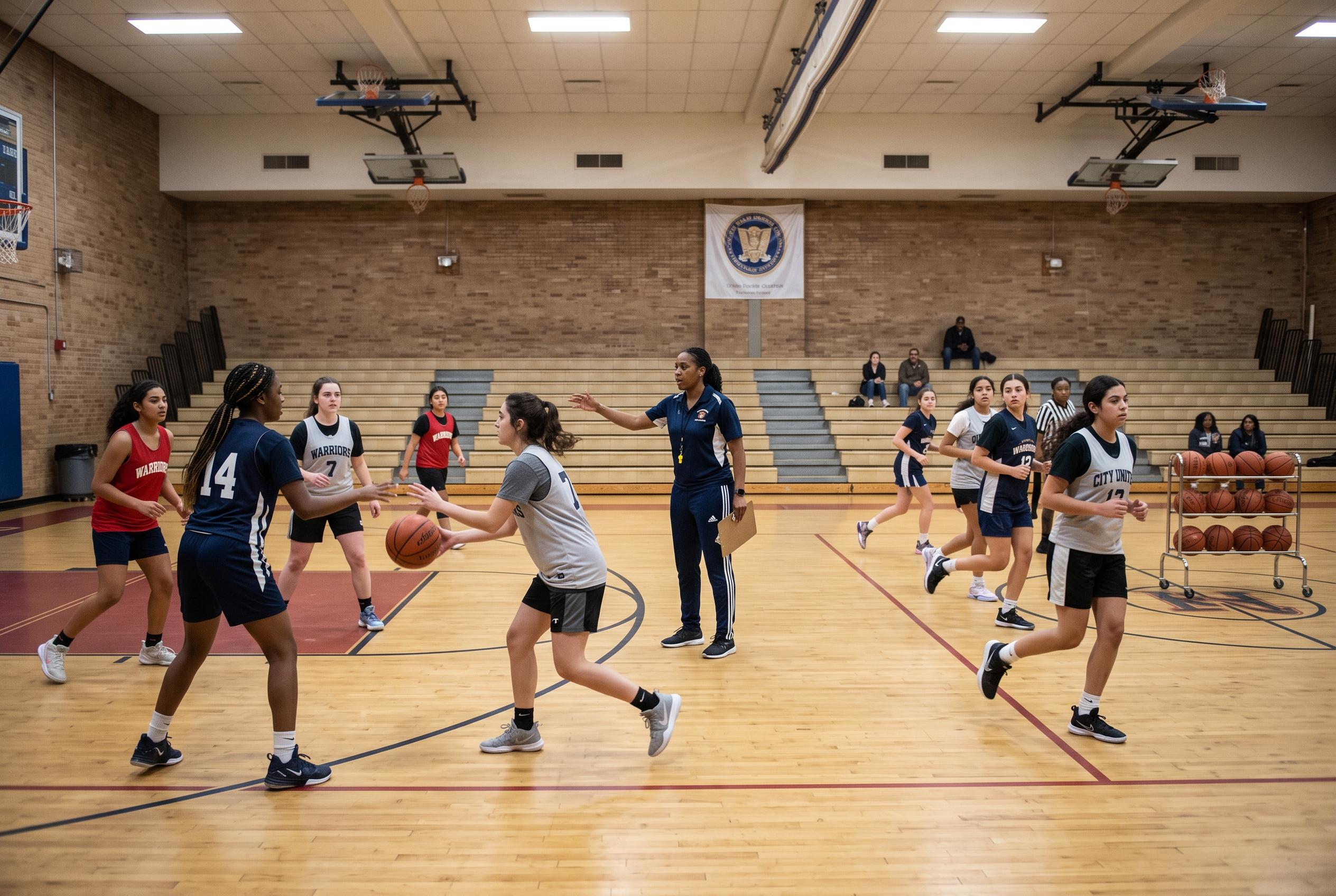

A growing shortage of female players is forcing schools across Minnesota and the US to merge teams and shorten seasons, amid a sharp decline in participation driven by economic and societal factors.
Girls’ basketball is feeling the squeeze in Minnesota and across the country as schools struggle to keep enough players in the pipeline, forcing more co-operative teams and fewer full schedules. In Hayfield, the prospect of joining with Schaeffer Academy initially seemed impractical to coach Kasey Krekling, but the numbers made the arrangement hard to ignore after Hayfield lost eight seniors and entered the 2024-25 season with only eight varsity players. Across south-eastern Minnesota, other programmes have already merged or fallen short of fielding full teams, underscoring how widespread the problem has become.
That local picture mirrors a broader decline. The National Federation of State High School Associations says Minnesota girls basketball participation is down 22.6% from 2000, with the steepest fall coming since 2018-19. Nationally, the sport has dropped by about 21% over the same period, according to the federation, while states such as Kansas, North Dakota, Indiana, Iowa and Michigan have posted even sharper losses. The National Sporting Goods Association has also reported a 45% decline in basketball participation among girls aged 12 to 17 since 2001, suggesting the slump begins well before high school.
Coaches point to early specialisation, tighter family budgets and the growing weight of club sports as major reasons. A survey cited by the Minnesota Girls Basketball Coaches Association found lack of participants was a barrier for roughly two-thirds of more than 240 respondents. Another survey from Minnesota State High School League historian Kevin Anderson showed the average U.S. family spent $1,016 on a child’s primary sport in 2024, up 46% from 2019. That kind of expense can push families towards one sport and away from the multi-sport path that once sustained small-school programmes.
The calendar is also working against schools. Drew Olinger of Lake City said his programme has had to combine grade levels on some nights because of thin numbers, and he noted that what used to be five team levels at many schools has often shrunk to three or four. Matt Solberg, who coaches at Proctor and leads the girls basketball coaches association, said basketball now competes with longer club commitments and summer training that make a four-and-a-half-month high school season feel much longer. He said smaller schools are especially affected by the overlap with club volleyball, which can run deep into the winter and spring.
The result, Solberg said, is a widening gap between the strongest programmes and the weakest ones. More younger players are being pushed up to varsity, which can lead to lopsided scores and long, punishing seasons for inexperienced teams. This year’s high school season began on November 16 and the state tournament is scheduled for March 24-27, a stretch that leaves little room for programmes already short on depth. For coaches and athletes alike, the concern is no longer just participation numbers, but whether enough schools can keep the game competitive at all.
Disclaimer: This content is for informational purposes only and is not intended to be a substitute for professional medical judgment, advice, diagnosis, or treatment.