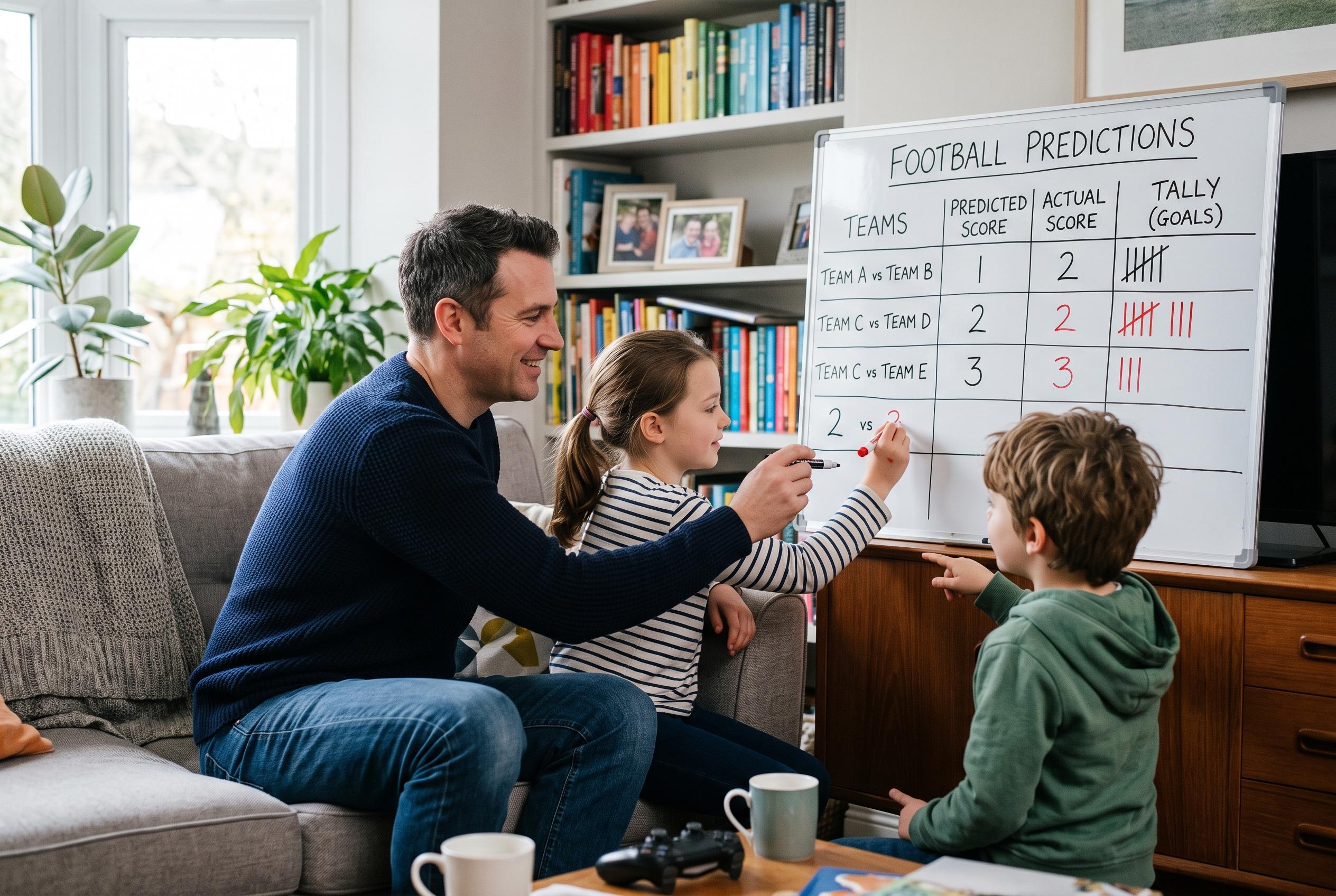

A simple weekly football prediction game can help families make maths more engaging, teaching children about chance and confidence through everyday conversation and routine activities.
Families looking for an easy way to make maths feel less like homework may find it in football. A weekly prediction game, built around who will win and by how much, gives parents a simple reason to talk about chance, numbers and confidence while the match is already part of the household routine. Research on family maths suggests that these everyday conversations can strengthen children’s number skills and support later learning, especially when they are woven into normal life rather than set up as formal lessons.
That is part of why the idea works. The National Association for Family, School and Community Engagement says family maths is most effective when it is relevant to daily activities and rooted in family relationships. The Centre for Family Math makes a similar case, arguing that playful, regular number talk can turn ordinary moments into learning opportunities. A football forecast does exactly that: it asks children to compare outcomes, think about likelihood and explain why they chose one result over another.
The exercise also helps children understand that probability is not the same as certainty. A child who predicts a team will win and gets it wrong is not failing; they are learning that a low-probability result can still happen. That kind of experience matters, because kids who practise judging likelihood are better prepared to make sense of percentages in everyday life, whether they are reading a weather forecast or looking at an admissions rate. Over time, the habit can build patience and confidence, particularly when children see that being slightly off is often more useful than being lucky once.
As children get older, the game can become more detailed. Younger children may simply decide between win and loss, or compare a coin flip with a football prediction. Older children can start working with percentages, tracking how confident they feel and how close their guess was to the actual result. Guides on football prediction from probability-based betting sites note that assessing outcomes often involves weighing recent form, home advantage, injuries, rest days and past results against the odds being offered. Parents do not need to turn the family activity into betting, but that framework can help explain how probability is used in the real world.
The most effective version is the one that repeats. A short Sunday ritual, a note on a kitchen whiteboard or a shared picks sheet can turn the exercise into a steady family habit. Simple rewards such as a sticker, extra screen time or choosing dinner can keep younger children engaged without making the task feel like a competition for money. What begins as a casual game can end up teaching something more durable: how to guess, how to revise a guess and how to stay calm when the numbers do not go the way a child expected.
Disclaimer: This content is for informational purposes only and is not intended to be a substitute for professional medical judgment, advice, diagnosis, or treatment.