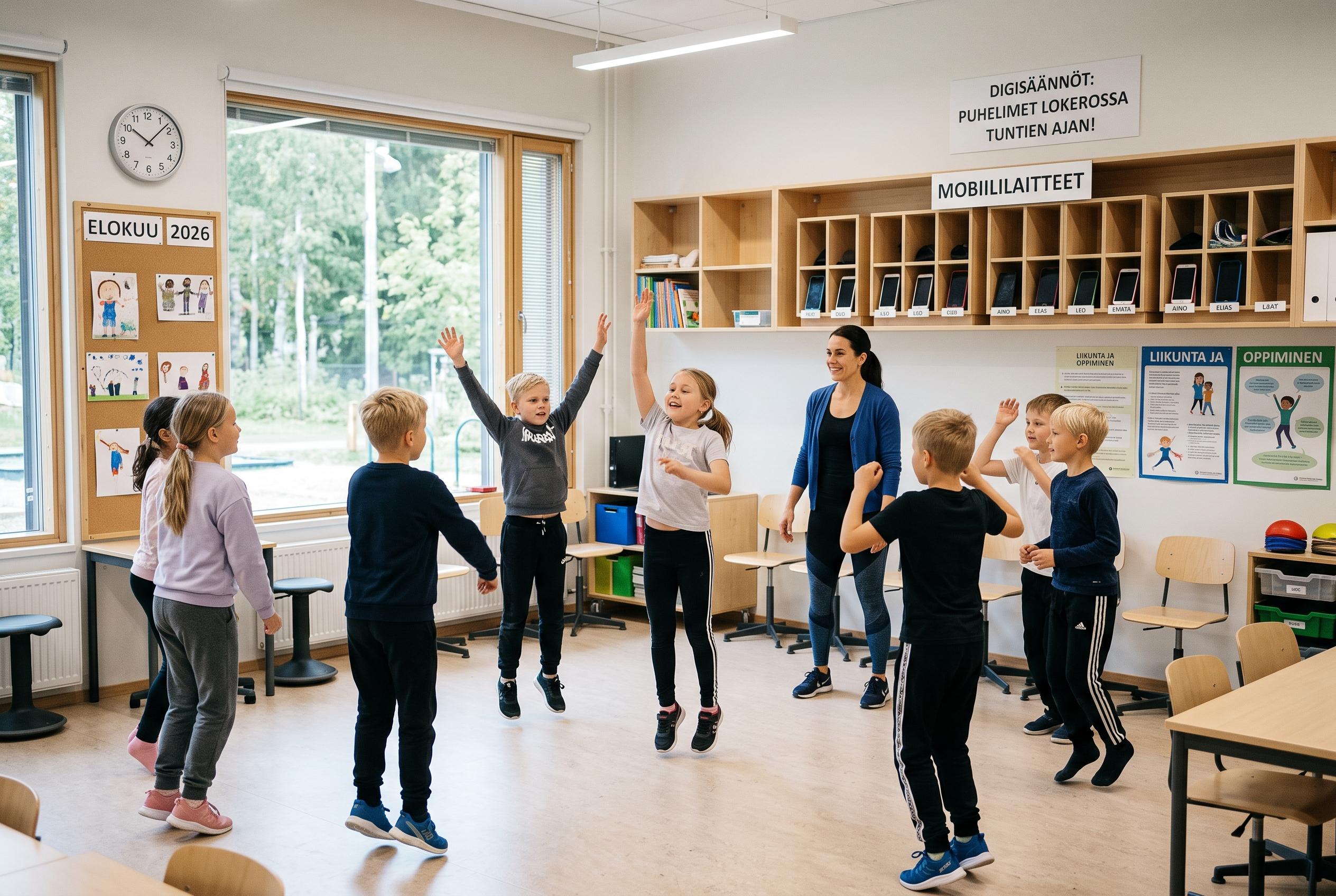

Finnish schools are implementing stricter rules on mobile device use and increasing physical activity measures amid declining pupil intake, signalling a shift towards more active and disciplined learning environments from August 2026.
Finnish schools are opening the new academic year with a sharper focus on movement, digital discipline and support for pupils who need extra help. According to the Finnish National Agency for Education, promoting an active lifestyle in early years and basic education becomes mandatory from August 2026, with schools expected to build more physical activity into the day through playground exercise, clubs and active travel to school.
The agency has also pushed schools to tighten rules on phones and other mobile devices. Restrictions in lessons have already been in place since the start of the previous school year, and the recommendation now is to extend limits to breaks and meal times as well. Several municipalities have already moved in that direction, with local school rules in places such as Jyväskylä, Hämeenlinna and Lappeenranta widening bans during the school day.
The policy shift comes as Finland’s intake of first-year pupils continues to shrink. This autumn, just under 50,000 children are starting school, about 1,000 fewer than last year. In much of the country, however, term time is not starting until around August 12 or 13, although pupils in the Tampere region returned earlier.
Tampere also marked the debut of one of Finland’s seven new English-language upper secondary programmes. The courses are designed for a limited group of students whose Finnish or Swedish is not strong enough for standard upper secondary study, and it will be possible to take the matriculation examination in English from autumn 2028.
Finland is also moving towards national grading criteria for top marks. Parliament approved the legal changes in June, and the Finnish National Agency for Education is to update the national curricula by the end of October 2027. Under the planned system, common criteria will be set for grades 5, 8 and 10 in every subject and year group, with pupils needing to meet at least grade 5 standards in all subjects to progress.
At the same time, support for learning is being widened, particularly for pupils with an immigrant background. Those who move from preparatory education into basic education may receive an extra year of support, while a broader reform aims to make help more proactive and more often delivered within the pupil’s own class group. Similar changes have now also been made in vocational education. According to the agency, the broader goal is a culture in which support is granted earlier and with clearer rights written into law.
The original article was also corrected on August 10 after an earlier claim about additional mother tongue and maths lessons for basic education pupils was found to be wrong. Those increases had already taken effect a year earlier.
Disclaimer: This content is for informational purposes only and is not intended to be a substitute for professional medical judgment, advice, diagnosis, or treatment.