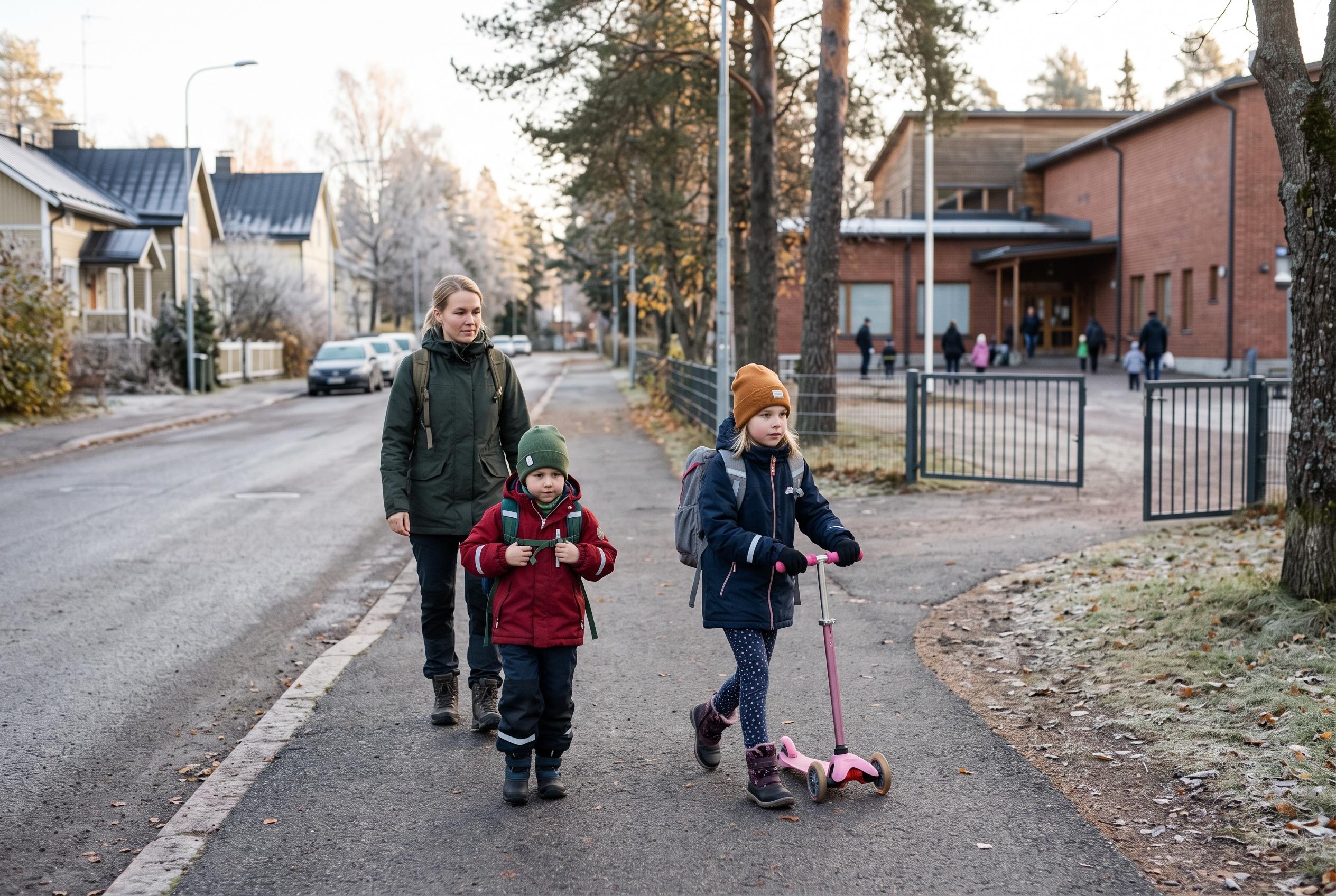

A Finnish mother’s decision to stop driving her children to school reveals positive impacts on their self-reliance, physical health, and confidence, amid growing emphasis on active travel and independence for children across Europe.
One Finnish mother’s decision to stop driving her children to school has turned into a wider lesson about independence, routine and everyday exercise.
Heli, an entrepreneur, said she used to drop her children off on her way to work because her flexible schedule made it easy. This autumn, however, she noticed something that made her reconsider: the school run had begun to feel automatic for the children, who had come to expect their mother to do it. After she changed the arrangement, she said she saw a positive difference. Her children became more self-reliant, she said, and they also seemed to benefit physically because they had to think about when to leave home and how to manage the journey themselves.
The issue goes well beyond convenience. UKK Institute guidance cited in the article says children aged seven to 17 should aim for at least 60 minutes of varied physical activity a day, ideally across the whole week, with endurance exercise making up much of that movement. It also stresses that regular movement in daily life matters, and that active travel, such as walking or cycling to school, can complement organised sport. Similar advice from British councils and transport guidance highlights added benefits: children gain road-safety skills, practise independence and can build confidence by learning to navigate familiar routes on their own.
Readers who responded to the Finnish article described a range of approaches. Some said their children walk or cycle whenever the weather and distance allow, while others allow car journeys in winter or when the route is unsafe. One mother said her family had let the children travel by bicycle to school and activities through spring, summer and autumn, while another said a child who has cycled to school in all seasons since the age of six still prefers it even in cold weather. Several parents said the habit seemed to have long-term effects, from better fitness to a more positive attitude towards exercise later in life.
Not everyone can make the same choice. Parents living in rural areas or on the edge of towns said school closures and longer distances have made active travel unrealistic. Others pointed to dangerous roads, unpaved routes and heavy winter conditions. One parent argued that schools and local authorities could do more to make active travel easier, including bike-repair days, equipment exchanges, lighting checks and reflector distribution. That broader idea is in line with active-travel initiatives elsewhere in Europe, where councils and government guidance encourage safer routes, walking buses and school travel plans to help more children reach class under their own steam.
Disclaimer: This content is for informational purposes only and is not intended to be a substitute for professional medical judgment, advice, diagnosis, or treatment.