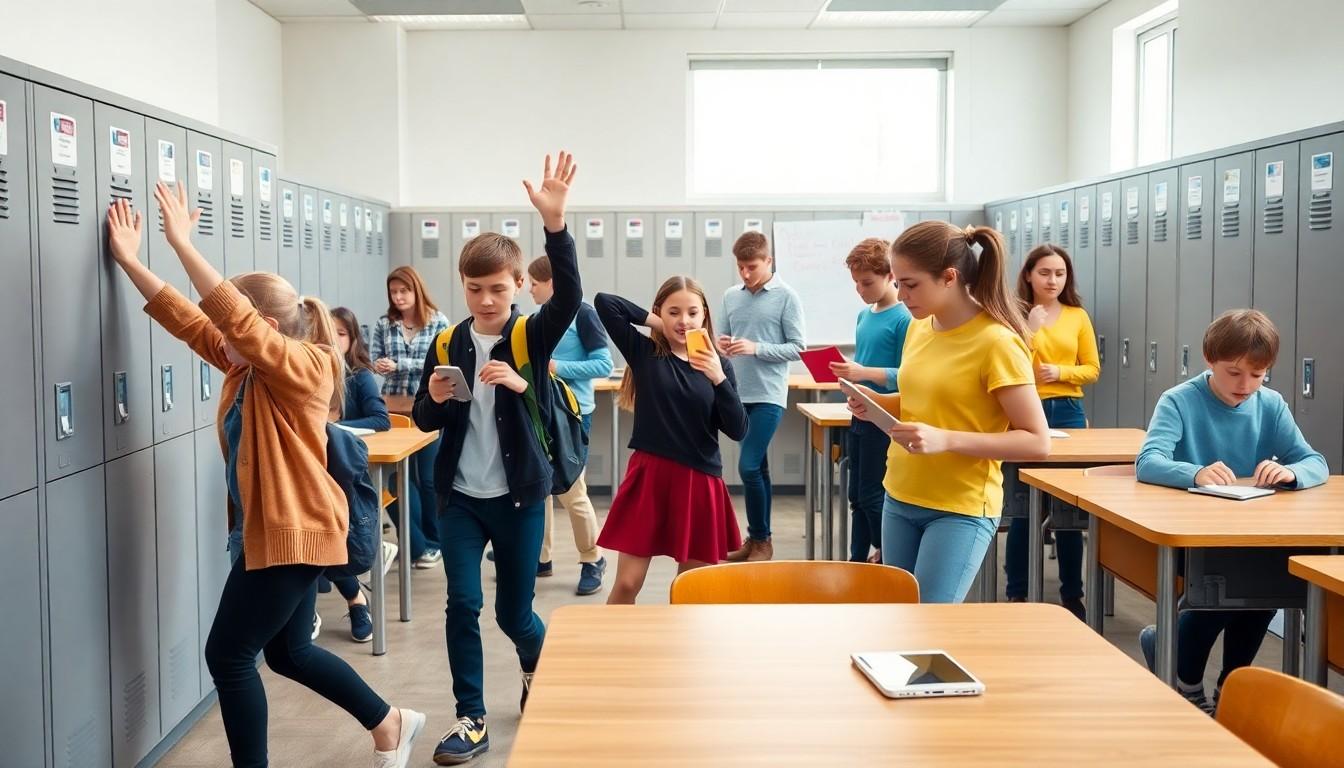

Finnish schools are set to enhance student activity, curb mobile device use beyond lessons, and introduce new grading standards, signalling a significant shift towards holistic education and wellbeing in the upcoming academic year.
Finland’s schools are entering the new academic year with a sharper focus on movement, mobile-phone limits and stronger support for pupils, as the Finnish National Agency for Education reminded schools at its back-to-school media briefing.
From this autumn, providers of pre-primary and basic education are required to update their school culture so that every child and teenager has the chance to be active during the day. That means more movement in lessons and between classes, through activities such as break-time exercise and clubs, while pupils are also being encouraged to travel to school using their own muscle power rather than motorised transport.
The agency has also urged schools to tighten rules on mobile devices beyond the classroom. Phones and other devices were already restricted during lessons from the start of the previous school year, and the agency has recommended that schools extend those limits to breaks and lunch periods through their rules of order, including in pre-primary education and early childhood education.
The push for more activity comes against a backdrop of concerns about children’s physical condition. In December 2023, the agency said the decline in the fitness of boys in the fifth and eighth grades had levelled off nationally, while girls’ fitness also appeared to have stabilised after several years of decline. At the same time, the agency noted that pupils in urban areas tended to do better in the Move! fitness assessments than those in sparsely populated regions.
The new term also begins with fewer first-graders than in previous years. Finland has just under 50,000 children starting school this autumn, roughly 1,000 fewer than last year. In the Tampere region, the school year started on Thursday, while in much of the country pupils still have about a week of summer holiday left, with most schools opening on August 12 or 13.
Tampere was also the location for one of Finland’s seven new English-language upper secondary school programmes. The route is aimed at a limited group of students whose language skills are not strong enough to complete upper secondary education in Finnish or Swedish, and matriculation examinations will be available in English from autumn 2028.
More broadly, Finland is moving towards national criteria for top marks. After parliament approved a law change on competence guarantees in June, the Finnish National Agency for Education will update the national core curricula for pre-primary and basic education by the end of October next year. The planned reform takes effect in August 2028 and will set national criteria for grades 5, 8 and 10 in every subject and year group, with pupils needing to meet at least the grade 5 standard to move up a class.
The new school year also brings more teaching time in mother tongue and mathematics for all basic education pupils. Other changes taking effect in August are designed in particular to strengthen the skills of pupils with immigrant backgrounds. Those who move from preparatory education into basic education can receive an extra year of preparatory support, while the most significant change across all levels is a more preventive approach to support, delivered mainly within the pupil’s own teaching group.
According to the agency, the emphasis is not only on academic progress but on a wider cultural shift in schools: support should arrive earlier, be easier to access and be more clearly guaranteed in law.
Disclaimer: This content is for informational purposes only and is not intended to be a substitute for professional medical judgment, advice, diagnosis, or treatment.