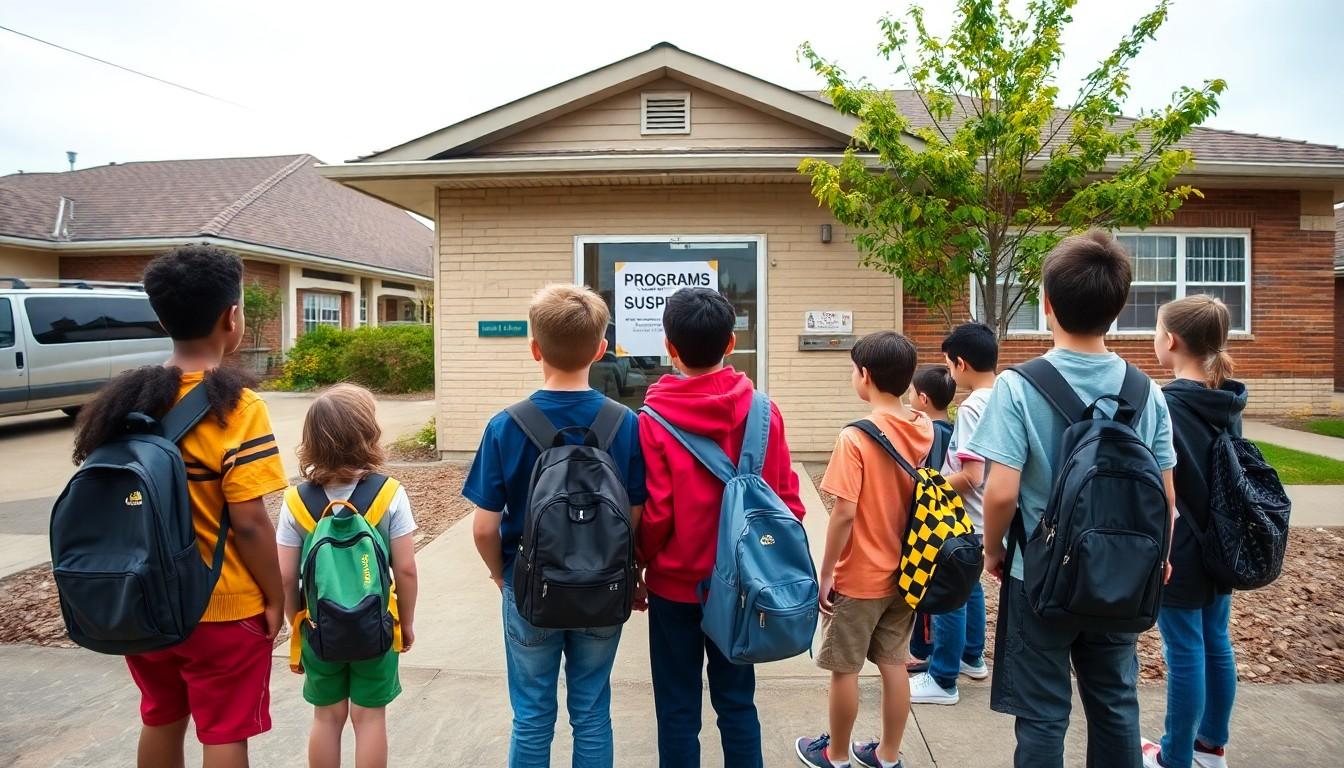

A crackdown on federal funding has led to the cancellation of outdoor trips and programmes for thousands of American children, risking long-term impacts on environmental awareness and mental health.
A summer hiking trip can be life-changing for a teenager who has rarely been outdoors, as Nazma Begum discovered after arriving in Detroit from Bangladesh. What began as a school notice about a camping excursion to Michigan’s Upper Peninsula became, for her, the start of a lasting relationship with nature and an outdoor club she later helped to found. But this year, such opportunities are becoming scarcer, with outdoor education groups warning that federal funding cuts have forced the cancellation of hikes, camping trips and other programmes for thousands of children.
Advocates say the impact is broader than a lost week away from school. Julia Hurwit, campaign manager for the Sierra Club’s Outdoor Alliance for Kids, told the publication that early contact with the outdoors helps create lifelong environmental stewards, while also giving children a break from heavy screen use. Her concerns come as policymakers and educators increasingly link outdoor learning with better mental health, stronger academic engagement and healthier habits, particularly in communities with limited access to green space.
The scale of the disruption became clearer after the Trump administration cut nearly $400 million in AmeriCorps grant funding in February 2025, according to the Sierra Club. Even where some money was later restored, many programmes had already been scrapped. Among the losses were trips for nearly 24,000 students in Maryland and 3,000 young people in Wisconsin, where the Girl Scouts of the Northwestern Great Lakes shut down its Reaching Out programme. In Alaska, some Denali Discovery Camp trips were also called off after an education programme manager was laid off.
The cancellations sit within a wider pattern of pressure on youth learning programmes. The National League of Cities said in July that the US Department of Education withheld $6.8 billion in K-12 funding, raising fears for after-school and summer activities. At the same time, environmental education providers in several states have faced state-level retrenchment as well. IslandWood in Washington said the state’s final budget for the 2025-27 biennium eliminated more than $40 million for outdoor school programmes, including the School Overnight Programme.
Some groups are trying to soften the blow by turning to private fundraising and volunteer support. The Sierra Club has launched One Million Kids Outdoors, a campaign aimed at expanding access to outdoor learning and building momentum for future policy changes. More than 150 organisations have joined, helping 50,000 children connect with nature so far. Detroit Outdoors, a partnership involving the Sierra Club and the city’s parks department, recently took teenagers to Yosemite for a week of climbing, photography, poetry, painting and swimming, and also runs overnight trips and teacher training closer to home.
Yet even supporters of outdoor education say the demand is not the real problem. Phillip Kilbridge, president and chief executive of NatureBridge, told the publication that students still need time away from screens and opportunities to learn science in the field, but that many schools are making decisions under growing financial uncertainty. NatureBridge raises more than $1 million a year for scholarships so pupils eligible for free or reduced-price lunches can take part, illustrating how, in the absence of reliable public funding, access increasingly depends on philanthropy.
Disclaimer: This content is for informational purposes only and is not intended to be a substitute for professional medical judgment, advice, diagnosis, or treatment.