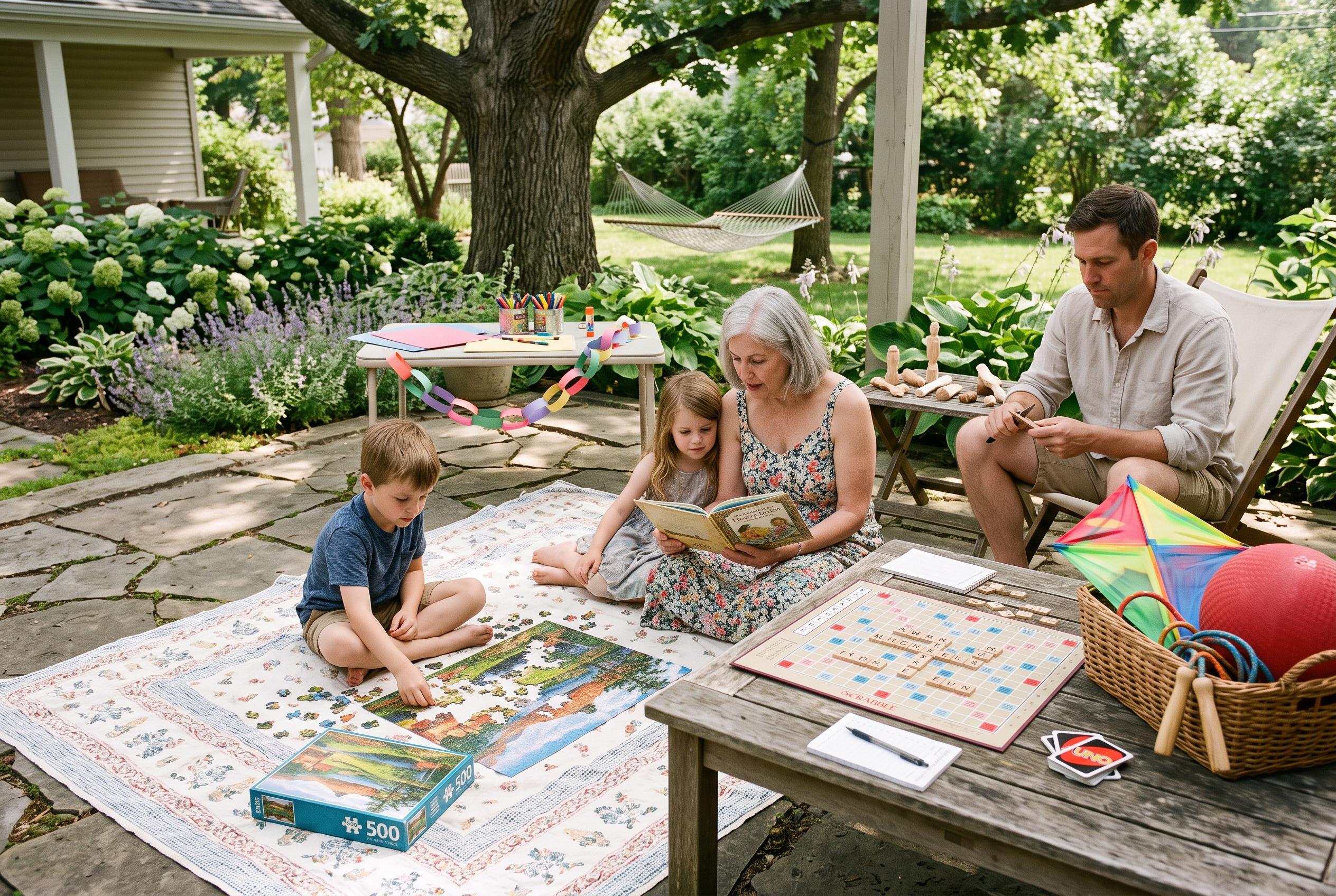

A family’s three-week experiment of eliminating recreational screen entertainment has led to restored traditions, increased family engagement, and a reconsideration of summer routines, highlighting broader concerns about excessive screen time among children.
Three weeks into a family experiment to cut out recreational screen entertainment for the rest of summer, the household at the centre of the account says the change has done more than reduce background viewing. It has brought back a string of old habits and created new ones, from nightly Rummikub matches and darts tournaments to card-house contests, riddles, home-made desserts and impromptu piano sessions. The writer says the effect was not carefully planned; rather, it seemed to happen almost by itself once screens stopped filling so much of the day.
That experience fits with wider advice from paediatric specialists, who say school holidays are often when screen use quietly expands. Cleveland Clinic has warned that summer can make it easier for children to drift into excessive screen time, while St. Louis Children’s Hospital recommends clear limits, device-free spaces and more active alternatives to keep habits in check. The CDC, meanwhile, advises at least 60 minutes of physical activity a day and encourages outdoor play, varied foods and new activities to support children’s wellbeing during the summer months.
The family’s experiment also shows how much time is at stake. The writer calculates that children can spend roughly 240 to 260 hours on recreational screen entertainment over a typical 10-week summer, with teenagers spending even more. Over a full year, that adds up to about 1,100 hours for an average child and 1,500 hours for an average teen. Those hours, the piece argues, could instead be used for reading, sport, music, travel, service or simply being together.
The shift has not been entirely smooth. One son, the last to agree to the arrangement, objected that he had been forced into it, and the writer admits to moments of wanting an easy distraction as well. But the household has also found substitutes for the usual pull of digital entertainment, including pottery painting for Utah’s Pioneer Day and a home-style sundaes-and-slumber-party evening. The writer says the absence of constant “media time” requests has itself made family life feel calmer.
By the halfway point of the summer, the family says it has seen more shared activity, not less. Basketball, reading, an online class, a neighbourhood softball game and a trip to Willard Bay have all appeared alongside the re-emergence of focused, imaginative play, including customised versions of Monopoly. Whether the experiment continues through the school year remains to be seen, but the larger conclusion is clear enough: once the screens were pulled back, a lot of family life that seemed to have disappeared began to surface again.
Disclaimer: This content is for informational purposes only and is not intended to be a substitute for professional medical judgment, advice, diagnosis, or treatment.