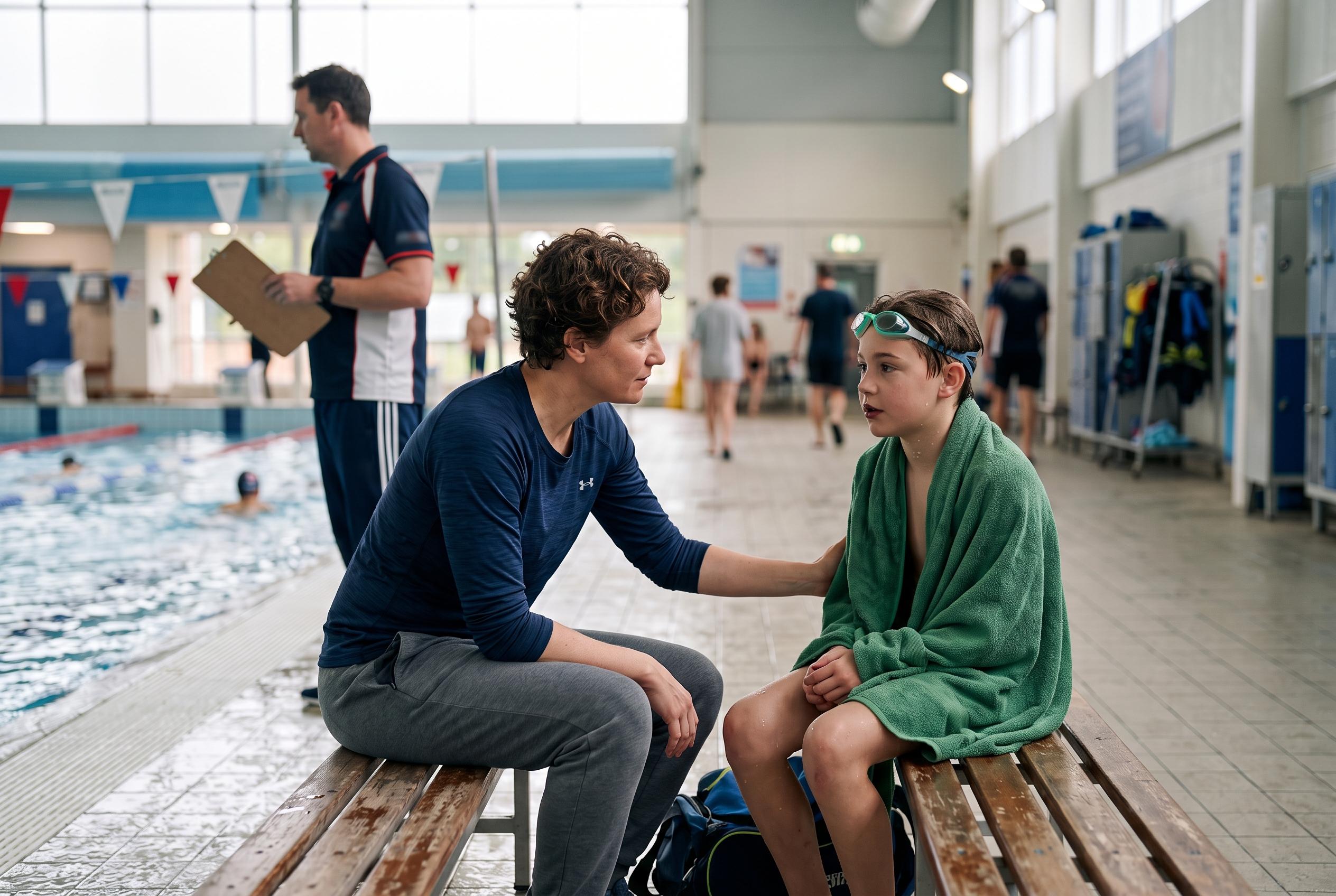

A family of competitive swimmers has initiated a campaign to bring attention to mental health issues among young athletes, advocating for integrated support, safer environments, and early intervention in grassroots sport.
A family of competitive swimmers has launched a campaign aimed at bringing youth-athlete mental health out of the shadows, arguing that young competitors are often expected to cope with pressure long before they are taught how. Andrea, Jack and India Brown say the initiative grew out of their own experience in the sport and from wider concerns that anxiety, burnout and silence around distress are still too common in youth training environments.
The campaign includes a documentary featuring sports and safeguarding specialists, a free mental health first aid class and an e-book offered at no charge. Jake Brown, a performance psychologist involved in the project, says the assumption that children and teenagers should simply absorb stress without support is misplaced. The Browns hope the material will be taken up by families, coaches and clubs at grassroots level, where attitudes to wellbeing are often shaped earliest.
Forensic psychiatrist Kike Anunobi, who appears in the documentary, says young athletes face many more pressures than most adults realise and argues that sport should do more to prepare them for life beyond competition. He warns that the consequences of ignoring mental wellbeing can last far beyond a season or a podium finish, affecting education, relationships and work. Ed Sinclair, an Olympian and founder of Maximum Performances, says the sport is increasingly decided by mental resilience as much as physical ability.
The campaign also points to a wider safeguarding problem in sport. It says some reporting systems remain opaque and insufficiently independent, leaving athletes and families worried about speaking up because the people handling complaints may also influence progression through the ranks. That concern echoes guidance from Johns Hopkins Medicine, the American Academy of Pediatrics and Stanford Medicine Children’s Health, all of which say young athletes can be vulnerable to perfectionism, burnout and anxiety, and that parents, coaches and doctors should create safer spaces for open discussion and early support. The Browns say they want to reduce stigma, encourage conversation and make mental health part of routine sporting education rather than an afterthought.
Disclaimer: This content is for informational purposes only and is not intended to be a substitute for professional medical judgment, advice, diagnosis, or treatment.