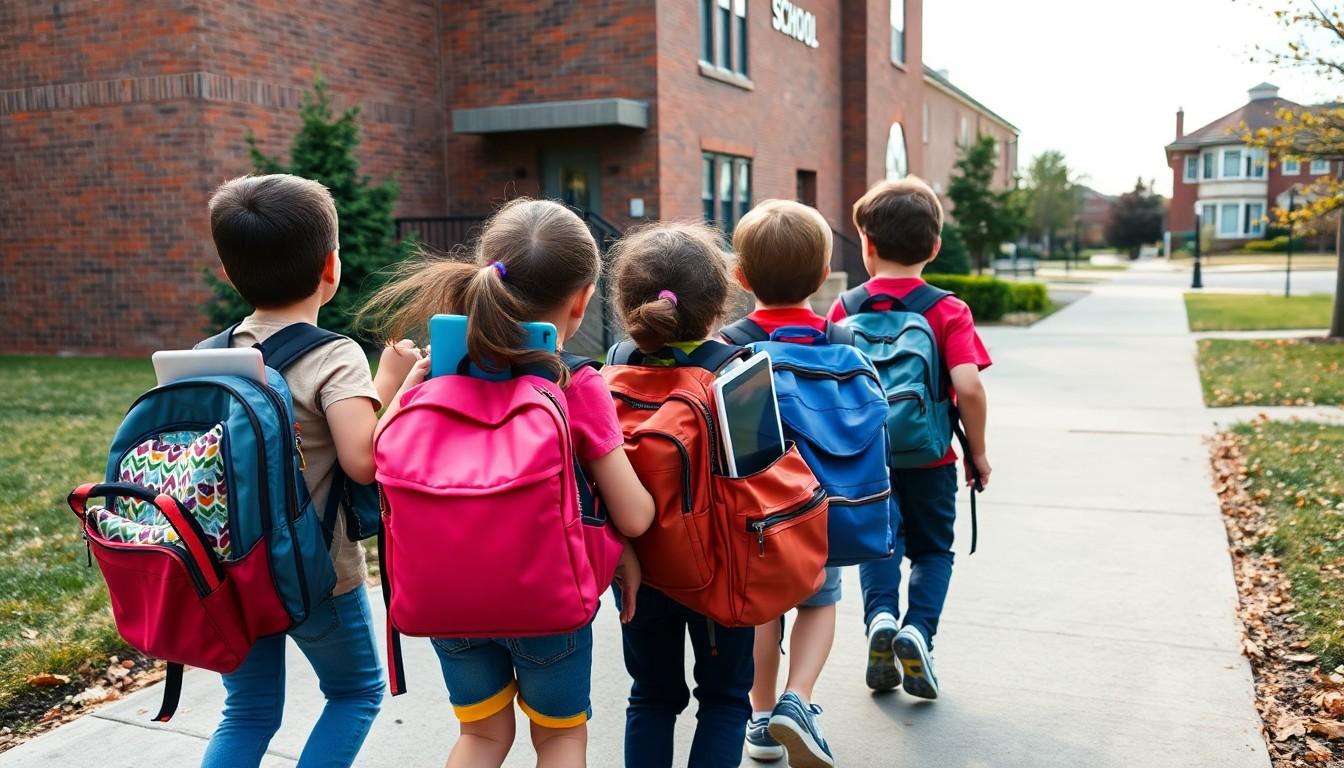

As students return to school, health experts highlight the rising concern over heavy backpacks, with digital and print materials complicating the load children carry daily, prompting calls for smarter packing and lighter loads.
As the new school year approaches, families are once again weighing not just supplies, but the load children are expected to carry. Backpacks filled with laptops, tablets, textbooks, musical instruments, lunch boxes, water bottles and sports kit can quickly become more than a child’s frame is meant to bear, according to the American Academy of Pediatrics and the Associated Press report behind this guidance. The problem is not only discomfort: a child who is leaning forward to compensate for weight, struggling to walk or complaining of straps cutting into the shoulders may already be carrying too much.
Experts say there is no perfect formula that fits every child, even though the familiar rule of thumb that a backpack should weigh no more than 10% to 15% of body weight is often repeated. Dr Sadika Kendi, who leads injury-prevention work at the American Academy of Pediatrics, told the Associated Press that children vary too much in size, strength and daily routine for a single limit to suit everyone. The safer approach, she said, is to keep bags as light as possible and to act before a child starts reporting pain.
The issue has become more complicated as classrooms have gone digital, while some schools are also moving back towards printed books. In Phoenix, history teacher Samantha Ness told the Associated Press that parents should focus on essentials rather than trendy extras, noting that some students now carry laptops and chargers every day even when textbooks are already available in class. In Fairfax County, Virginia, parents campaigning for more intentional use of technology have welcomed the return of maths textbooks, but that shift has also revived old questions about whether children need to bring both a device and a book home each day. Alix Fetch, speaking on behalf of the group Fairfax County Parents for Intentional Technology, said younger children in particular can end up carrying little more than lunch, a water bottle and homework, yet still feel weighed down.
Health organisations including Cleveland Clinic, Johns Hopkins Medicine, Children’s Healthcare of Atlanta, Rady Children’s Health and WebMD all advise choosing a backpack that fits closely, has two wide padded shoulder straps and helps spread weight evenly. They also recommend packing only what is necessary, using compartments to balance the load and teaching children to lift the bag by bending at the knees rather than the waist. Wheeled bags can help some pupils, but they are not ideal everywhere, particularly in crowded corridors or schools with stairs.
Kendi also warned that children should take backpacks off before travelling in a car, because a bag left on during a crash or sudden stop can affect how a seat belt works. Regular clean-outs can help too, catching unnecessary clutter, leaking drink bottles and forgotten paperwork before they add up. In the end, the advice from doctors and teachers is much the same: make the bag useful, not overloaded, and treat every extra pound as something that may make the school day harder than it needs to be.
Disclaimer: This content is for informational purposes only and is not intended to be a substitute for professional medical judgment, advice, diagnosis, or treatment.