

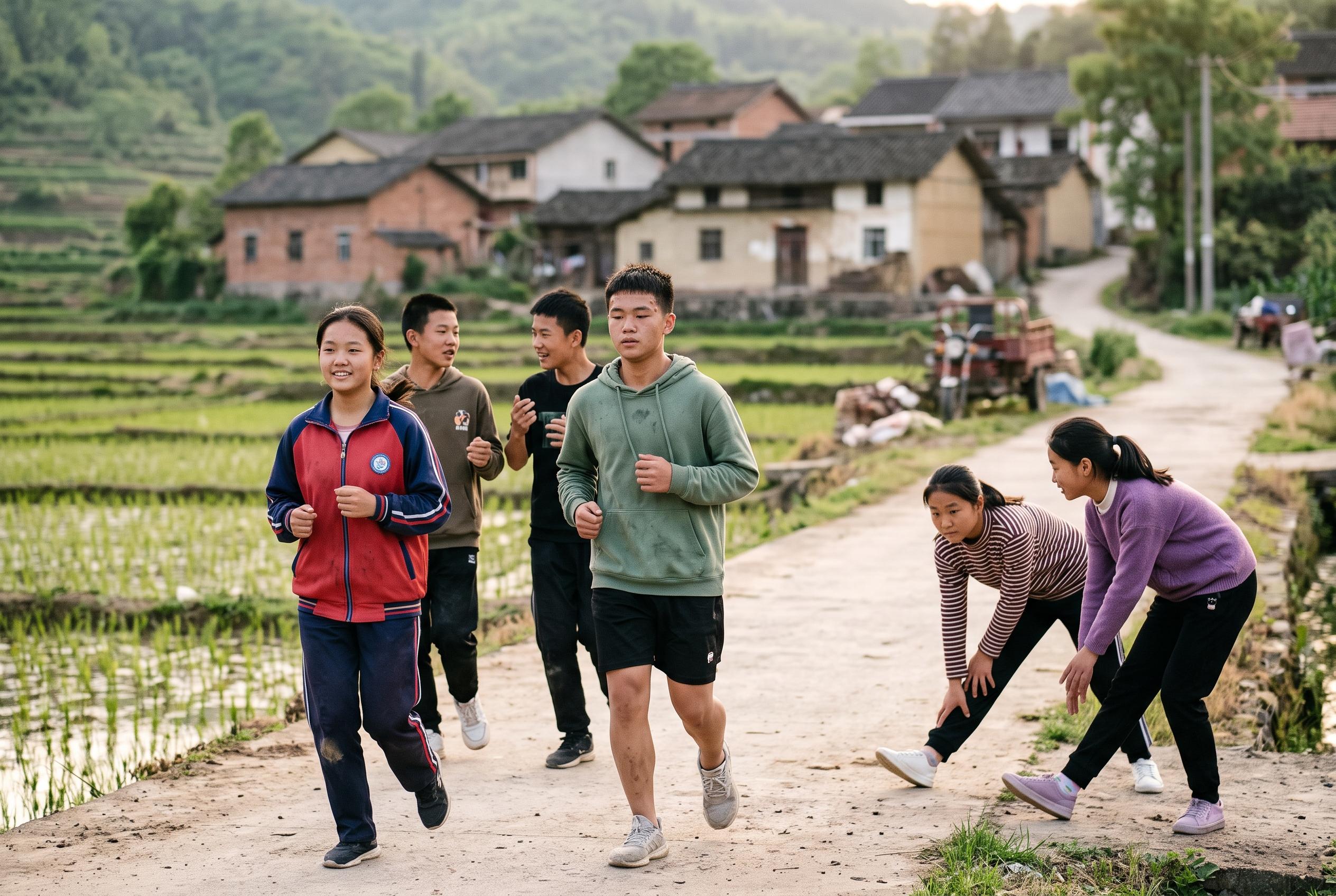

Research among 1,399 rural students links regular exercise with lower psychological distress, with general self-efficacy emerging as the strongest mediating factor.
A study of rural adolescents in China suggests that regular physical exercise is linked with lower psychological distress, with the strongest explanatory role coming from general self-efficacy, or the belief that one can handle difficulties and complete tasks successfully. Emotional intelligence also appeared to play an important part, and the pattern was stronger for girls than for boys, according to the research published in Frontiers in Psychology.
The researchers surveyed 1,399 left-behind secondary school students from rural areas in Yunnan, Guizhou and Guangxi between late February and mid-March 2025. The term “left-behind” refers to children whose parents have migrated for work and who remain in the care of relatives or other guardians. The sample was drawn from 23 rural schools in western China, and the authors said the regional concentration means the results should be interpreted cautiously rather than treated as nationally representative.
Using standard questionnaires on exercise, self-efficacy, emotional intelligence and psychological distress, the team found that students who reported more physical activity also tended to report less distress. Exercise was positively associated with both self-efficacy and emotional intelligence, while both of those psychological resources were linked to lower distress. The researchers said the association was not explained by one factor alone: self-efficacy had the largest mediating role, emotional intelligence also mattered, and a serial pathway suggested exercise may first support self-belief and then emotional processing.
In statistical terms, the indirect pathways accounted for most of the overall association between exercise and distress. The study found that the pathway through general self-efficacy was the strongest, while the route through emotional intelligence alone was smaller but still significant. A combined pathway, in which exercise was linked to higher self-efficacy and then better emotional intelligence before relating to lower distress, was also significant. The authors said this pattern fits earlier work suggesting that physical activity may support adolescent mental health not only through biological effects, but also by strengthening coping-related psychological skills.
Gender added another layer. The relationship between emotional intelligence and distress was stronger among girls, and the indirect effects tied to emotional intelligence were also more pronounced in female students. The researchers said this may reflect broader gender differences in adolescent emotional development and stress responses, although they stressed that the study cannot prove cause and effect because it was cross-sectional. They called for longitudinal and intervention studies to test whether exercise programmes can directly improve self-efficacy, emotional intelligence and mental health over time.
The authors said the findings may help shape mental health promotion efforts for left-behind adolescents, a group often exposed to family separation, reduced supervision and other social pressures. They argued that school-based exercise programmes could be especially useful if they are designed not only to increase movement, but also to build confidence and emotional skills. Still, they cautioned that the data came from self-reported questionnaires and from a specific region of western China, so broader studies will be needed before the results can be applied more widely.
Disclaimer: This content is for informational purposes only and is not intended to be a substitute for professional medical judgment, advice, diagnosis, or treatment.



