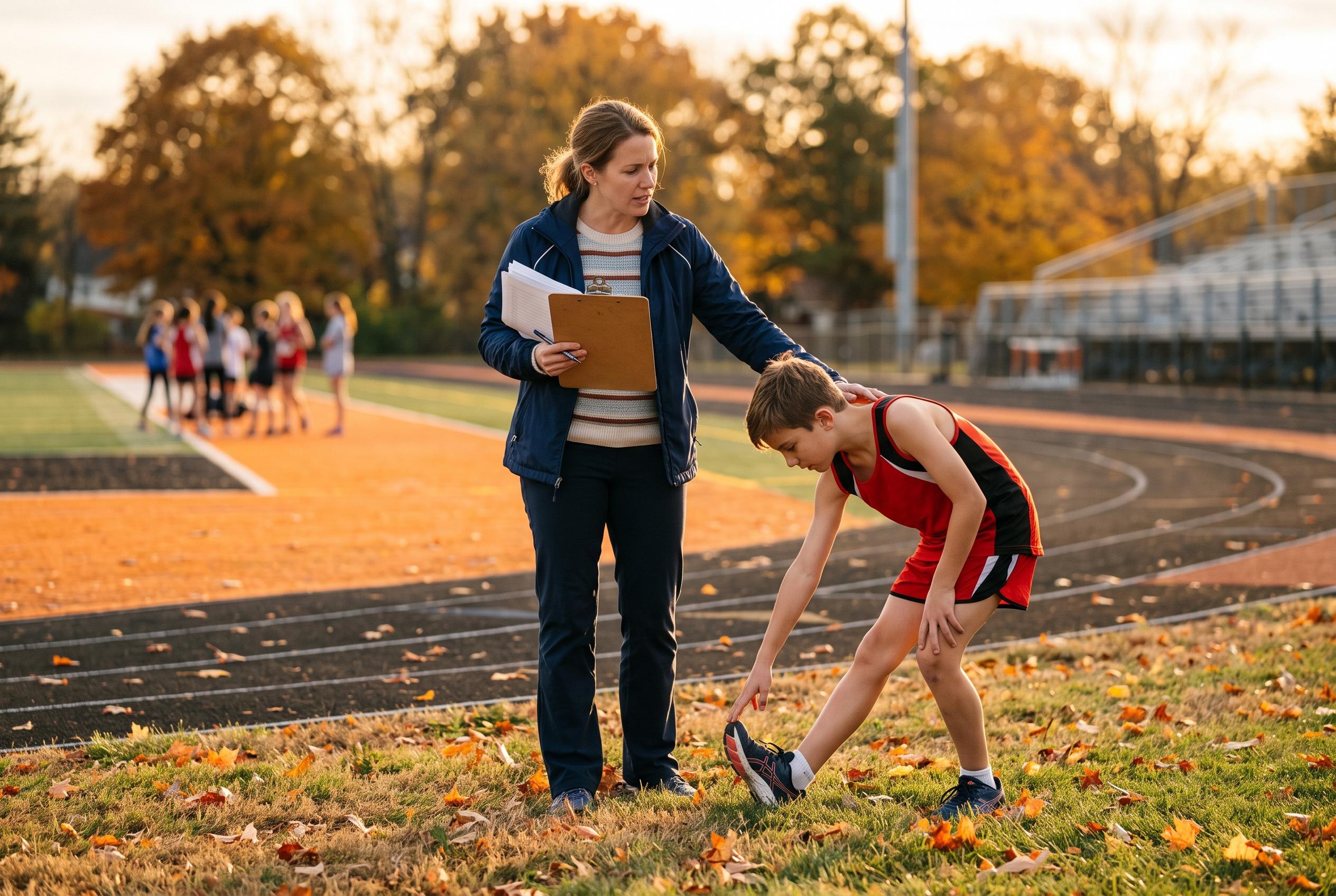

Parents are advised to start pre-season preparations well in advance, focusing on physical assessments, injury prevention, vaccinations, and recognising subtle signs of overtraining or injury in young athletes, to ensure a safer sporting season.
Parents getting children ready for autumn sport may need to think further ahead than many schools require. The American Academy of Pediatrics says a pre-participation physical should ideally be carried out by the child’s primary care clinician during a routine health supervision visit and, if that cannot happen, at least six weeks before the first pre-season practice so there is time for extra tests or treatment if anything unusual turns up. (aap.org)
That longer runway matters because many of the injuries doctors worry about are not dramatic one-off incidents but problems that build through repetition. Roger Lee, a family and sports medicine physician with Providence Medical Group in Marysville, said: “Sprains and concussions are the most common injuries we see. But a lot of what leads to those injuries starts before the season even begins.” Mayo Clinic Health System defines overuse injuries as muscle or joint problems such as tendinitis or stress fractures caused by repetitive trauma, and says they often stem from training or technique errors. Its advice is practical: vary activity, avoid loading the same body parts over and over, and do not increase intensity or duration by much more than 10% a week. (mayoclinichealthsystem.org)
Concussion is another area where parents are often dealing with delayed or easily missed warning signs. The US Centers for Disease Control and Prevention says symptoms in children do not always show up straight away and may take hours or even days to become obvious. A child may complain of headache, dizziness, nausea, vision problems or feeling foggy, while adults around them may notice that they seem dazed, answer more slowly, look clumsier than usual or suddenly struggle to remember and concentrate. The CDC also notes emotional and sleep changes, including irritability, nervousness, sadness and sleeping more or less than usual. (cdc.gov)
Lee’s advice is that a rolled ankle, swelling or trouble walking can often be assessed in urgent care, but head injuries demand more caution. The CDC draws a sharper line between a suspected concussion and an emergency: families should call 911 or go to the nearest emergency department after a bump, blow or jolt to the head if a child has repeated vomiting, seizures, worsening headache, slurred speech, unusual behaviour, increasing confusion, weakness, numbness, decreased co-ordination, double vision or one pupil larger than the other. (cdc.gov)
For wrestlers and other athletes in close-contact sports, the risk is not confined to bruises and sprains. A CDC field report says skin infections account for 8.5% of all adverse events among wrestlers because of the sustained skin-to-skin contact involved in training and competition. In an Arizona outbreak investigated after a January 2014 tournament, health officials identified 47 cases, 37 of them confirmed. Impetigo was the most common diagnosis, followed by HSV-1 infection, with smaller numbers of ringworm and MRSA. That helps explain why Lee urges athletes not to share towels, to wash daily and to stay away from practice if they have a rash or are unwell. (cdc.gov)
Lee also highlights a warning sign that can be easy to miss in girls who are training hard: a previously regular menstrual cycle becoming irregular. He said: “If a previously regular menstrual cycle becomes irregular, it can be an early sign of overtraining. That warrants a closer look at training load and nutrition.” Clinical guidance from Nationwide Children’s Hospital suggests that assessment of menstrual problems may include iron, thyroid or hormone tests, while a pelvic exam is usually not needed in young teenagers who are not sexually active. In other words, families should not assume a cycle change is simply part of sport or adolescence and leave it there. (nationwidechildrens.org)
Vaccination is another piece of pre-season planning that goes beyond the individual athlete. CDC guidance says everyone aged six months and older should receive a flu vaccine each year, and for most children who need one dose, September and October are good times to get it done, ideally by the end of October. The agency says annual vaccination reduces flu illness, doctors’ visits and missed school days, and lowers the risk of hospital admission and death. It also reports that 297 paediatric flu deaths were recorded in the 2024-25 season, while statistical modelling suggests the true toll may have been about 790; roughly 90% of the reported deaths were in children who were not fully vaccinated. (cdc.gov)
Taken together, the guidance suggests that “ready for the season” means more than having the right boots and a signed form. The AAP’s preference for an early appointment in a child’s usual source of care creates space to review training load, sleep, diet and past injuries before the first whistle. Mayo Clinic Health System says poor recovery after two or three days of rest can be a signal to look more closely, and the CDC reminds parents that mood changes, anxiety and trouble concentrating can be part of concussion as well as the general strain of a demanding season. Lee’s broader point is that parents should pay attention not only to pain after a match, but to the quieter signs that a child may be carrying too much before the season has properly begun. (aap.org)
Disclaimer: This content is for informational purposes only and is not intended to be a substitute for professional medical judgment, advice, diagnosis, or treatment.