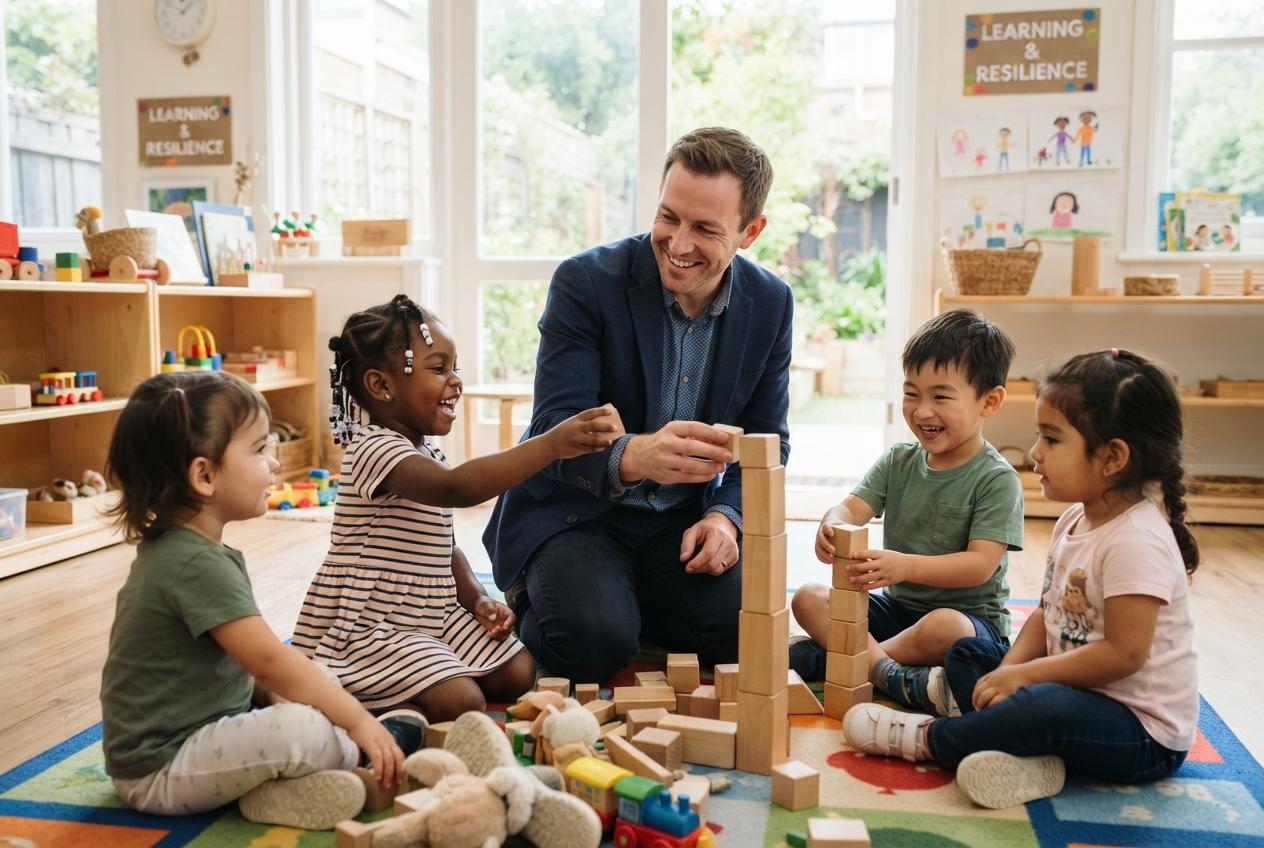

Stuart Armistead from the Australian International School in Singapore advocates for a holistic approach to early years learning, emphasising play, social skills and emotional resilience over early academic pressure, backed by research from Harvard’s Centre on the Developing Child.
At Australian International School in Singapore, the message from Stuart Armistead, the school’s Head of Early Years, is clear: the earliest years are about far more than teaching children to read, write and count. They are a period for building the wider capacities that underpin later learning, from confidence and curiosity to social awareness, resilience and self-control. Research from Harvard’s Centre on the Developing Child supports that view, showing that early experiences shape brain architecture and that responsive interactions with adults help organise the neural pathways children will use for future learning, behaviour and health.
That matters because the brain develops at remarkable speed in the first years of life. The Science Insights article notes that infants are born with around 100 billion neurons, while connections between those cells are formed and refined rapidly between birth and age five. Harvard similarly says more than one million new neural connections can form every second in the earliest years, with the brain building from simple links into more complex systems. In practical terms, that means the foundations for language, memory, emotional regulation and problem-solving are being laid long before formal schooling begins.
Armistead argues that chasing academic milestones too early can crowd out those broader foundations. Rather than treating young children as passive recipients of information, he says early education should give them space to ask questions, make choices and work through difficulties. That approach is consistent with guidance from child-development resources, which stress that play is the primary way young children learn and that both structured and unstructured play support creativity, physical development, social skills and problem-solving.
Play-based learning, he suggests, is anything but casual. It is intentional and demanding, whether children are role-playing, building with blocks, exploring outdoors or making music and art. These activities encourage collaboration, imagination and independent decision-making, while also helping children develop the confidence to try, fail and try again. The Education Endowment Foundation says play-based approaches can have a positive effect on early learning, especially in language, literacy and numeracy, although it also notes that the evidence base remains limited and that more research is needed to pinpoint what works best.
He also places strong emphasis on the relationship between schools and families. Children, he says, need consistent support from the adults around them if they are to take healthy risks and grow in independence. That is in line with early-years guidance from the sector, which highlights the value of responsive, trusting interactions and shared expectations between home and school. The broader point is that the best preparation for an unpredictable future is not narrow academic acceleration, but a secure foundation of language, emotional security, curiosity and persistence.
Disclaimer: This content is for informational purposes only and is not intended to be a substitute for professional medical judgment, advice, diagnosis, or treatment.