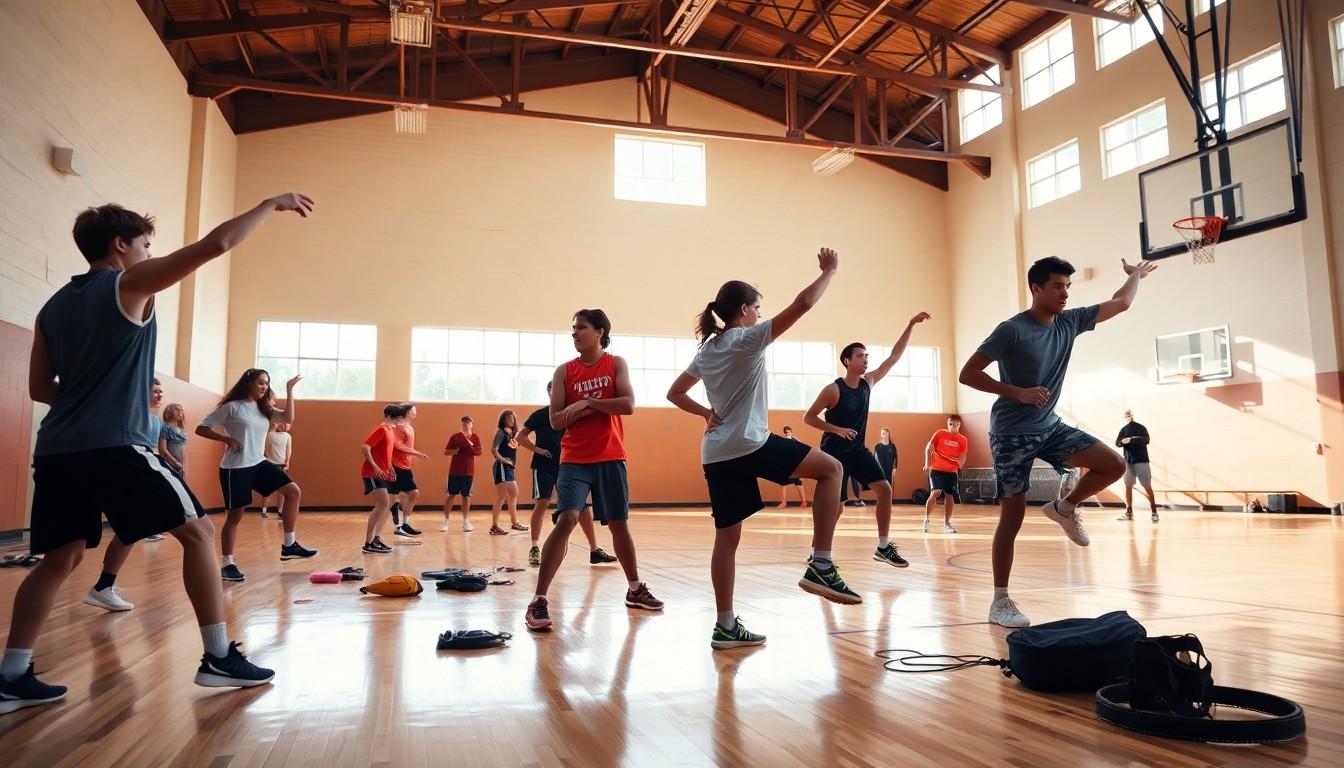

Coaches and sports medicine experts stress the importance of dynamic warm-up routines to help student athletes prepare physically, reduce injury risk, and optimise performance across various sports.
For student athletes, the minutes before a workout or match can matter almost as much as the session itself. Coaches and sports medicine specialists increasingly emphasise dynamic warm-ups, which raise heart rate, loosen muscles and joints, and prepare the body for faster, more explosive movement. Houston Methodist says a full-body routine can help reduce the chance of injury, while Johns Hopkins Medicine and the Michigan High School Athletic Association both stress that preparation is a basic part of safe participation in sport.
A typical routine starts with movement rather than holding stretches. Exercises such as jogging, high knees, butt kicks, shuffles and carioca help activate the large muscle groups used in running, cutting and changing direction. More structured versions add walking knee hugs, quad stretches, lunges with rotation, groin stretches, hurdle walks, RDL walks and acceleration drills, which together work mobility, balance and coordination. UConn Student Health & Wellness says even brief warm-ups can be effective when they gradually build temperature and range of motion.
The exact sequence can be adapted to the sport. Johns Hopkins Medicine notes that soccer warm-ups should prepare players for repeated sprints and lateral movement, while the Michigan High School Athletic Association advises athletes to focus on gradual activation rather than abrupt effort. For younger athletes, the routine should stay simple and engaging; for older students, it can be extended with more sport-specific drills. Most versions require little or no equipment, making them easy to use on a school field, in a gym or beside the pitch.
The key is consistency. Sports medicine experts say warm-ups should be treated as a standard part of every practice and competition, not an optional extra. A well-designed routine can help athletes feel sharper, move more freely and begin training in a better physical state, which is especially important during busy school sports seasons when fatigue and overuse can raise the risk of injury.
Disclaimer: This content is for informational purposes only and is not intended to be a substitute for professional medical judgment, advice, diagnosis, or treatment.