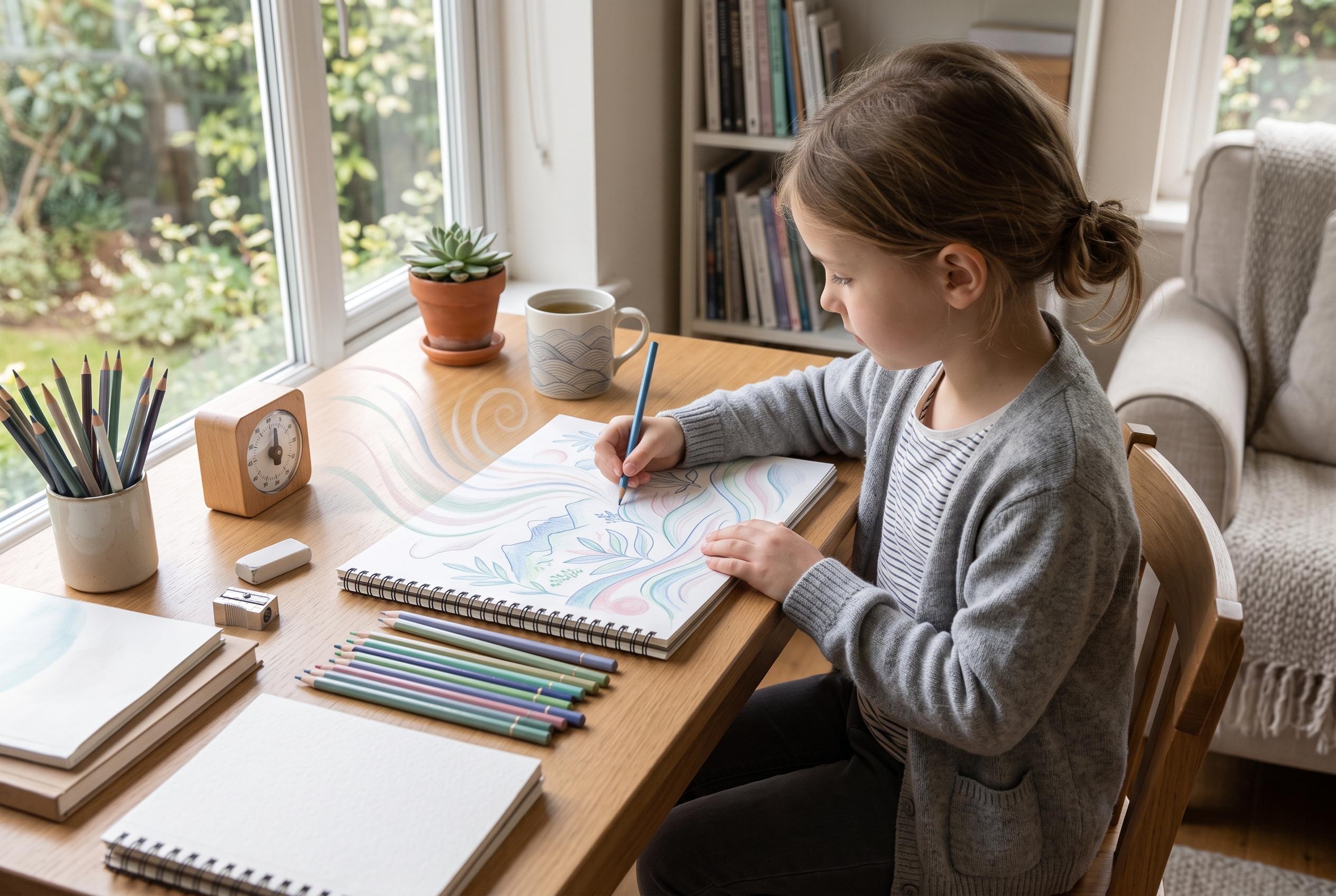

Simple, accessible drawing techniques may help regulate nervous system and reduce stress, supported by emerging research and expert insights into the calming effects of art on mental health.
Ten minutes with a pencil and paper may be enough to help shift the body out of stress mode, according to a recent report by Al Arabiya that drew on research and expert commentary from the Washington Post. In an age of constant notifications and screen time, the appeal is partly practical: drawing is simple, cheap and accessible, and it does not require any artistic training to be useful.
The idea has gained fresh momentum as online interest in spontaneous sketching, sensory drawing and art therapy has grown, alongside wider discussion of nervous system regulation. Soma Sengupta, a neurologist at Tufts Medical Centre, explained that stress activates the body’s fight-or-flight response, raising heart rate, muscle tension, blood pressure and stress hormones such as cortisol. Drawing, by contrast, appears to redirect attention and encourage the parasympathetic nervous system, which helps the body slow down and recover.
That calming effect may come less from making something impressive than from the act of focusing itself. Drawing engages the eyes, hands, attention and decision-making at the same time, giving the brain a task that can interrupt anxious thought loops and overthinking. It can also provide a non-verbal outlet for emotion, allowing feelings to be translated into colour, shape or line rather than words. Sengupta said the process can support a steadier state by helping the mind settle on the present moment.
Evidence cited in the report suggests the benefits are not limited to traditional sketching. A small study published in 2016 in the journal Art Therapy found that 45 minutes of art-making reduced cortisol levels in participants, while more recent research published in 2026 indicated that both paper-based and digital art activities lowered state anxiety. Other studies have also found that doodling and stress-focused drawing can reduce perceived stress, even for people who do not consider themselves naturally creative. For some, that discomfort may be part of the value: practising something slightly challenging can help build tolerance for distress as well as a sense of calm.
Disclaimer: This content is for informational purposes only and is not intended to be a substitute for professional medical judgment, advice, diagnosis, or treatment.