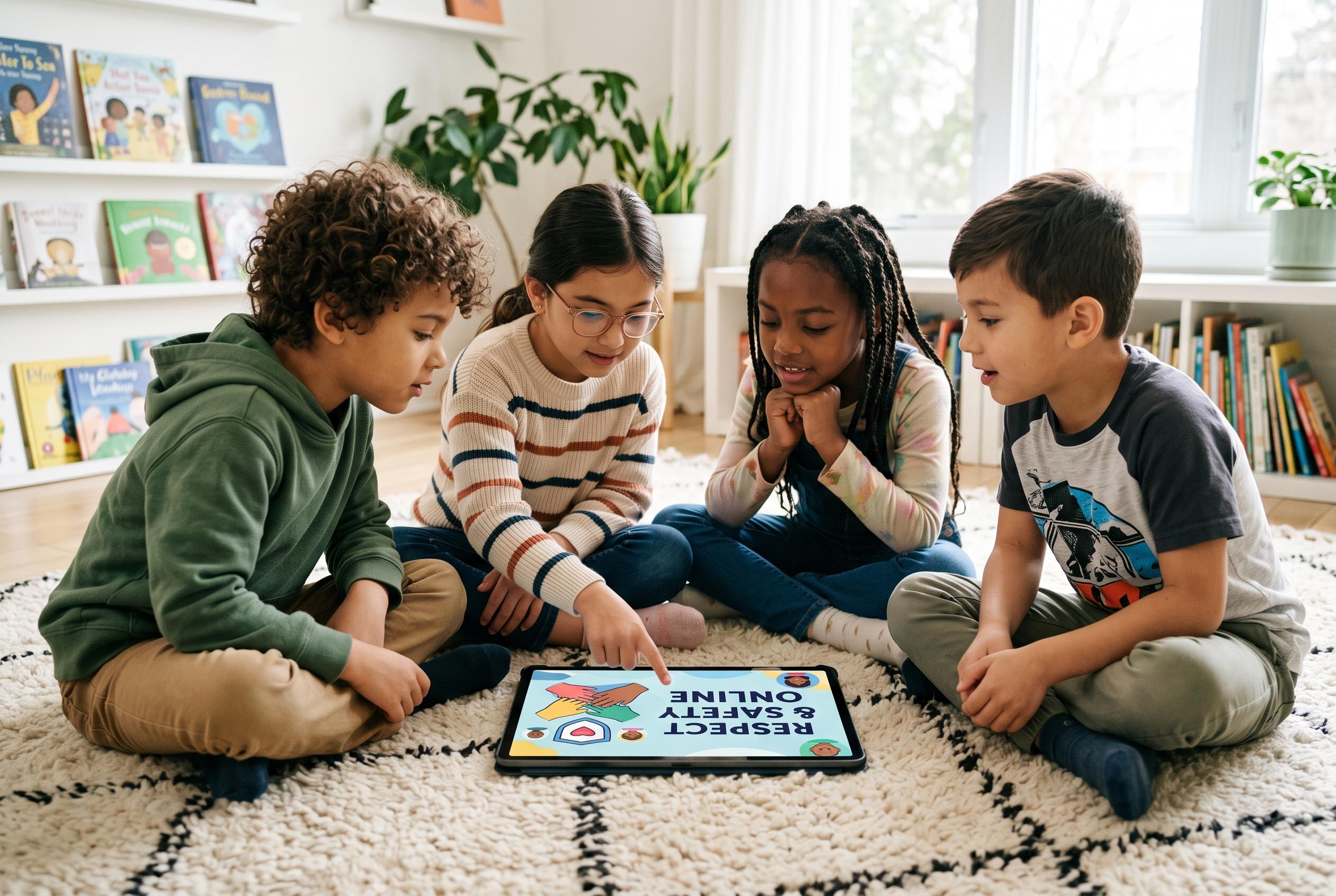

As digital citizenship becomes a fundamental part of childhood education, experts highlight the importance of ongoing lessons in online safety, respect, information literacy, and responsible behaviour to prepare children for a connected world.
Digital citizenship is increasingly being treated as a basic life skill for children rather than a niche tech topic. At its simplest, it means learning to use the internet safely, responsibly and with consideration for other people. That covers everything from protecting personal information to recognising that a careless comment, post or share can have lasting consequences.
One of the clearest lessons for children is online safety. The Utah Education Network says digital citizenship includes internet safety, privacy, cyberbullying and responsible technology use. In practical terms, that means teaching children to use strong passwords, avoid oversharing and know when to tell a trusted adult if something online feels wrong. StopBullying.gov also links digital citizenship to reducing cyberbullying by helping young people understand how to behave appropriately across social media, websites and forums.
Respect for others is another core part of the picture. Fairfax County Public Schools describes digital citizenship as a shared responsibility between teachers, parents and students, a point that matters because children rarely learn online habits in isolation. Good digital manners online are not simply about avoiding rude language; they also involve empathy, restraint and understanding that messages sent through a screen can still hurt.
Children also need help separating reliable information from misinformation. The MamaTeaches article points to games and lessons that encourage children to question what they read online rather than assuming that anything published on the internet must be true. That lesson is reinforced by education resources that stress information literacy as part of responsible internet use, especially as children begin to research for school or spend more time on social platforms.
Another important element is a child’s digital footprint. What children post, search for and share can be recorded long after they have moved on, which makes early guidance especially valuable. Kidpower International says parental controls can help, but they are not enough on their own. Open conversation with trusted adults remains essential, because children need to understand not just what they should avoid online but why their choices matter over time.
The most effective teaching tends to be ongoing rather than occasional. The best advice from education and child-safety groups is for adults to learn alongside children, revisit the subject regularly and stay involved in what apps, games and websites they use. That can include checking privacy settings, using parental controls where appropriate and keeping screen time in balance with offline activities. Digital citizenship, in other words, is not a one-off internet lesson. It is a continuing part of helping children grow into careful, confident and considerate users of technology.
Disclaimer: This content is for informational purposes only and is not intended to be a substitute for professional medical judgment, advice, diagnosis, or treatment.