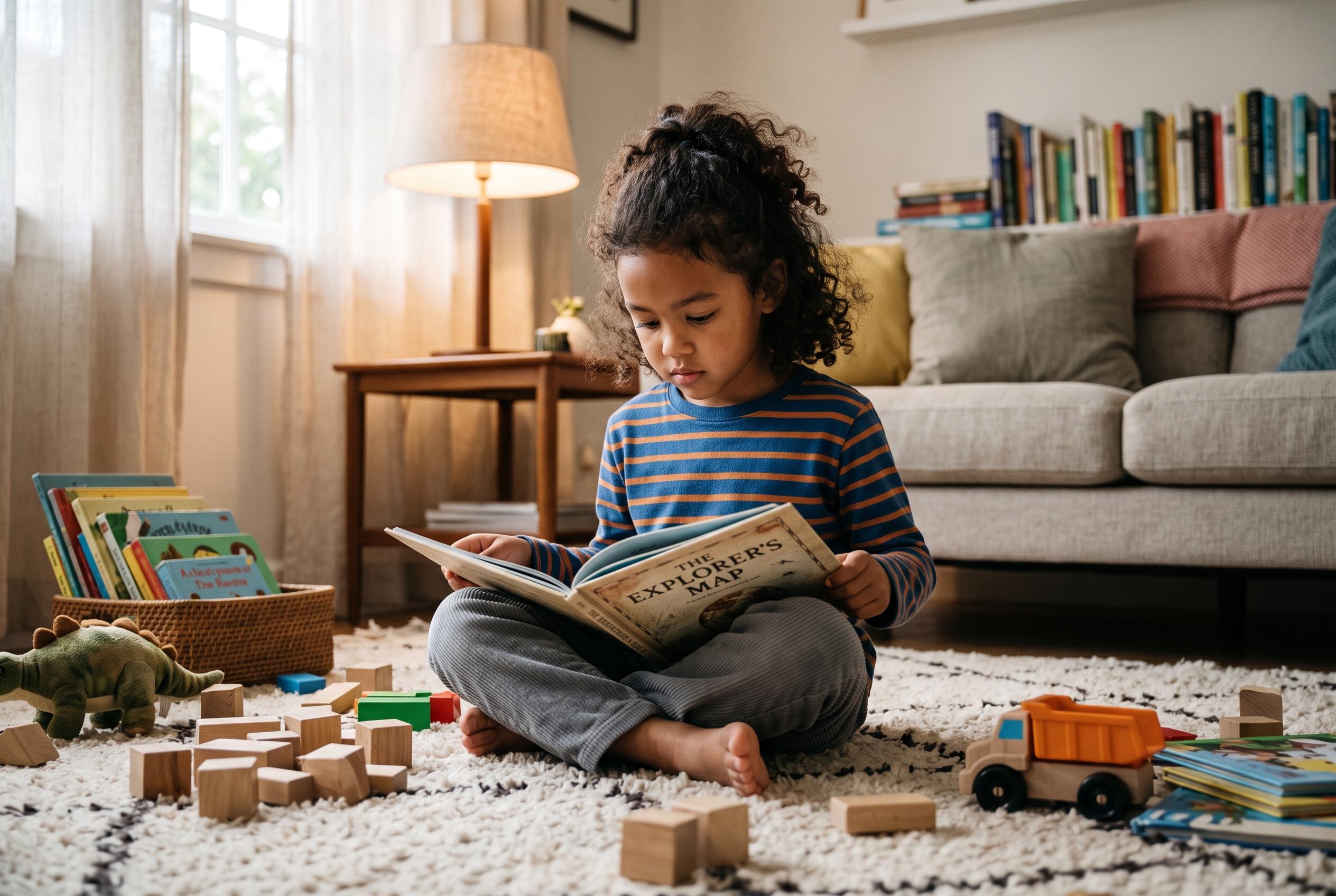

A survey commissioned by Nosy Crow reveals that children who read daily develop significantly greater concentration for reading and other activities, highlighting the importance of establishing regular reading routines for early development and lifelong learning.
Daily reading appears to do far more than help children decode words on a page. A new survey commissioned by Nosy Crow suggests that children aged 0 to 12 who read independently every day can concentrate for longer not only on books, but also on homework, arts and crafts, puzzles, sports and imaginative play than those who read less than once a week.
According to Nosy Crow, daily readers showed more than twice the reading stamina of irregular readers, with the strongest gains seen in focused activities that require patience and sustained attention. The publisher said children who read every day could concentrate on homework for 39% longer, arts and crafts for 49% longer and puzzles for 45% longer. The survey also found that children who read daily were able to focus on playing with another child, listening to a story and taking part in sport for longer periods than those who rarely read.
The findings, released during the National Year of Reading and to mark Nosy Crow’s 15th anniversary, also point to a sharp age pattern. Daily independent reading was highest at age 10, before falling away in the early teenage years, while shared reading with an adult peaked at ages 3 and 4. Nosy Crow said boys were just as likely as girls to read every day when reading with an adult, although girls were more likely to read independently. Parents and carers also said children felt happy, calm and relaxed after reading, while phone and tablet use was more likely to leave them overstimulated.
Kate Wilson, Nosy Crow’s managing director and co-founder, said the results underline the value of building reading stamina early. The company has also published a set of practical tips for families, including reading in short bursts, letting children choose what they want to read, revisiting favourite books, using audiobooks and making reading part of everyday conversation. Guidance from schools and literacy groups echoes that advice, stressing that shared reading, regular routines and books that match a child’s interests can all help turn reading into a lasting habit. For parents preparing children for the new school year, the message is simple: the more reading becomes part of daily life, the more it may support learning well beyond literacy itself.
Disclaimer: This content is for informational purposes only and is not intended to be a substitute for professional medical judgment, advice, diagnosis, or treatment.