


As participation remains below its peak and parents voice concerns about contact, a French coaching philosophy is offering English rugby a different route to growth.
At a time when English rugby is still trying to recover its place in the sporting landscape, an old French coaching idea is attracting fresh attention. Sport England’s latest Active Lives adult survey, as summarised by Statista, shows rugby union participation in England in 2024-25 remained below its 2015-16 peak of 259,600 players, underscoring how far the game still has to travel despite signs of recovery. At the same time, parental anxieties about contact remain a live issue, with the Drake Foundation reporting that many parents would like tackling removed from under-14 rugby and scrums banned in youth age groups.
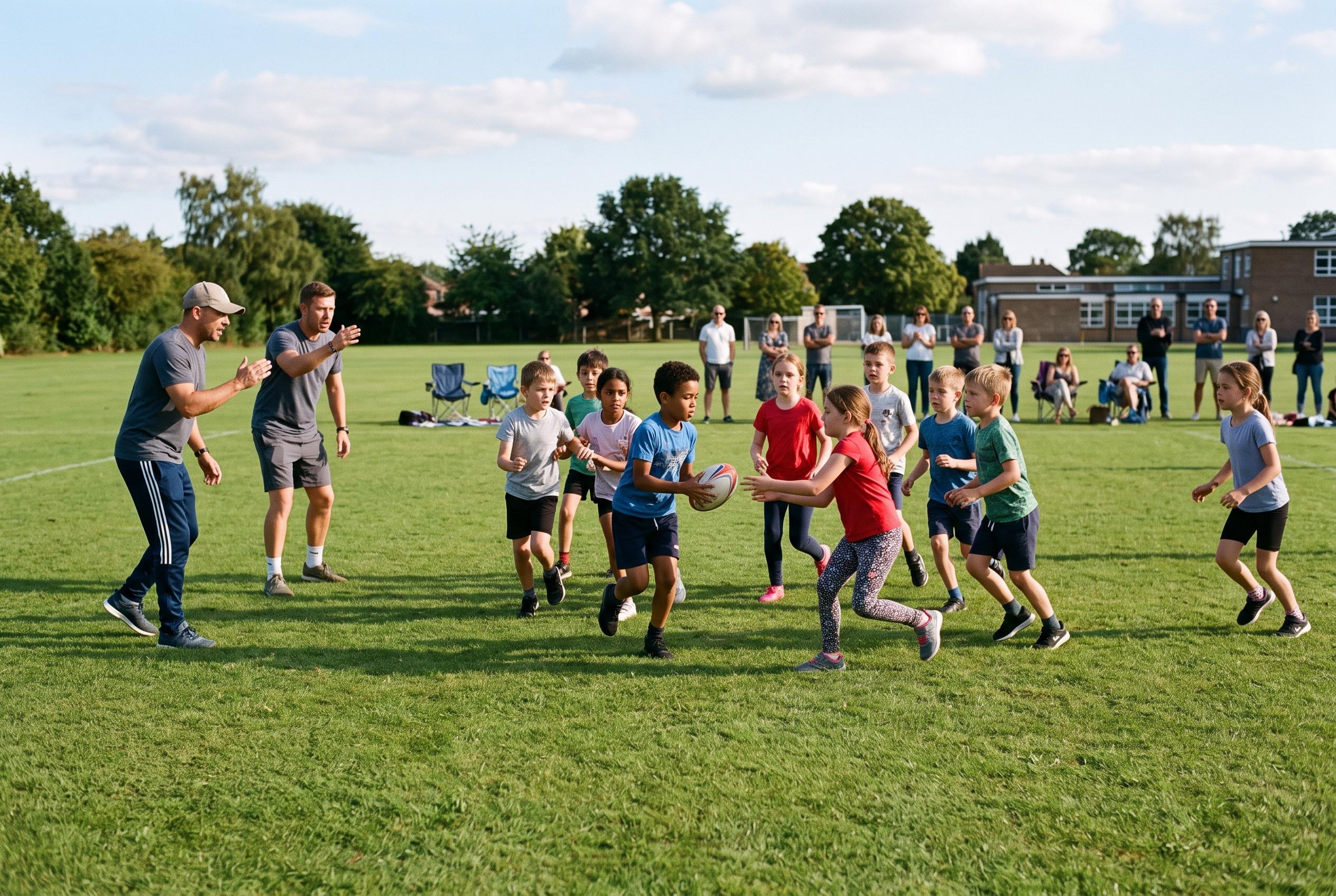
Against that backdrop, the appeal of Le Plaisir du Mouvement, or “the pleasure of movement”, is easy to see. The coaching philosophy, developed by the French rugby thinker Pierre Villepreux, has found a small but growing foothold in Britain through LPM Rugby UK. Rather than asking children to meet force with force, the method encourages them to move into space, stay in support and make decisions for themselves. In practice, that means less of the direct collision that often dominates English age-grade rugby and more emphasis on handling, positioning and awareness.
That approach was on show at a recent camp in Oxfordshire, where coaches and players were introduced to Villepreux’s ideas in both theory and practice. One of the central lessons, as recounted by Richard Dixon, an English coach involved with LPM in Britain, came from Villepreux’s work with Oxford University in the late 1980s. After watching a training session, he asked players how they would leave a room. When one replied that he would use the door, Villepreux’s point was blunt: if that is how you leave a room, why keep trying to run through walls on the pitch?
The method has struck a chord with coaches working at different levels of the game. According to those involved in the British courses, the style appears to help smaller players feel more confident, because they are encouraged to exploit space rather than challenge bigger opponents head-on. Coaches also say it improves retention, because children are more likely to stay engaged when rugby rewards skill, movement and imagination rather than simple physical dominance. The game that emerges is often quicker and more varied, with players forced to handle, pass and think more often, regardless of their position.
That is not just a technical point. It also speaks to a wider debate about what youth rugby should be for. If the sport wants to win back families who are uneasy about contact, then the answer may not lie only in changing laws or removing core elements of the game. The LPM approach suggests another possibility: preserve rugby’s essence, but coach it differently. In a period when English rugby is searching for a pathway back to growth, that may be the most interesting lesson of all.
Disclaimer: This content is for informational purposes only and is not intended to be a substitute for professional medical judgment, advice, diagnosis, or treatment.



