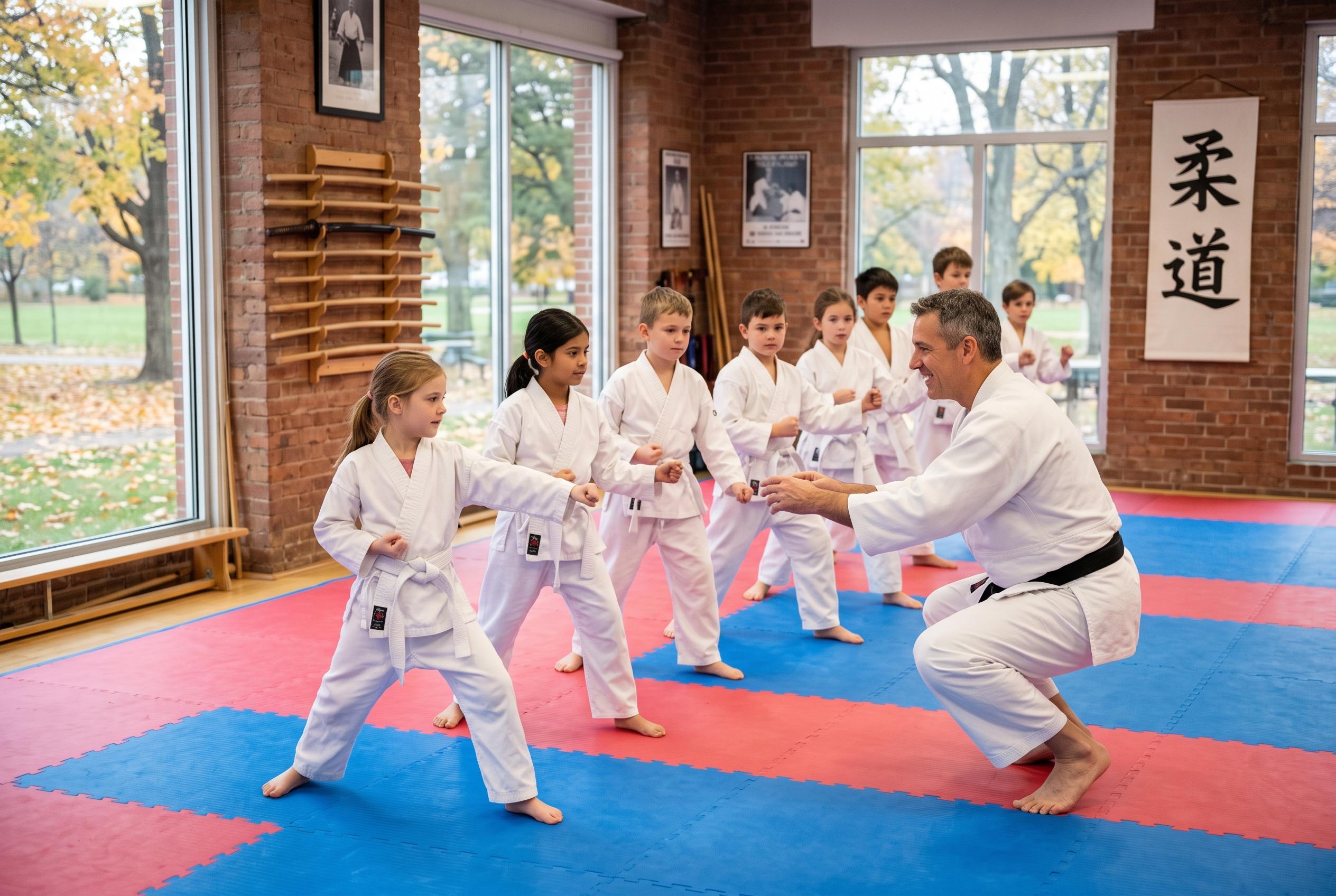

Parents seeking quality children’s martial arts classes should look beyond kicks and punches, prioritising programmes that foster confidence, focus, and respect through safe, structured, and engaging training environments.
Parents trying to judge a children’s martial arts class are usually looking for more than kicks and punches. The strongest programmes combine movement, structure and age-appropriate expectations, with sessions designed to build confidence, focus and respect as much as physical ability. The American Academy of Pediatrics says martial arts can be a rewarding form of exercise for children when it is taught safely, while the British Martial Arts and Boxing Association stresses that parents should expect clear safeguarding arrangements and a responsible training environment.
A well-run class normally follows a familiar pattern. Children are first brought through a warm-up that raises their heart rate, loosens muscles and helps them settle into the session. After that comes technical teaching, broken into small, manageable steps so children can understand the basics before moving on. The class should end with a cool-down, giving young students time to recover physically and mentally before they leave.
Good teaching is usually active rather than static. Children learn by doing, so the best instructors combine direct instruction with supervised partner drills, pad work and short games that reinforce the day’s techniques. These activities are not filler. Used properly, they help children practise balance, footwork, timing and control in a way that feels engaging rather than repetitive. That balance matters because children are more likely to stay involved when the class feels purposeful and varied.
Behaviour is another important marker of quality. Martial arts organisations and child health specialists alike point to discipline, focus, self-control and respect as central benefits of training. In a strong class, instructors set those expectations clearly from the start and reinforce them through calm, consistent praise. Effort should be noticed, improvement should be encouraged and children should be corrected without humiliation. That approach can be especially helpful for children who need structure, including those who struggle with attention or emotional regulation, because it gives them a predictable framework in which to succeed.
Parents should also watch for warning signs. A class that feels poorly supervised, tolerates rough behaviour or seems to reward aggression is not a good fit for children. The same applies if instructors seem more interested in winning than learning. The American Academy of Pediatrics advises parents to think carefully about contact training and competition, especially for younger children, and to look for programmes that prioritise control, safety and gradual progression.
The simplest test is whether a child leaves class feeling challenged, supported and eager to return. A quality martial arts programme should offer clear teaching, careful supervision and steady progress in a setting that builds confidence as well as skill.
Disclaimer: This content is for informational purposes only and is not intended to be a substitute for professional medical judgment, advice, diagnosis, or treatment.