

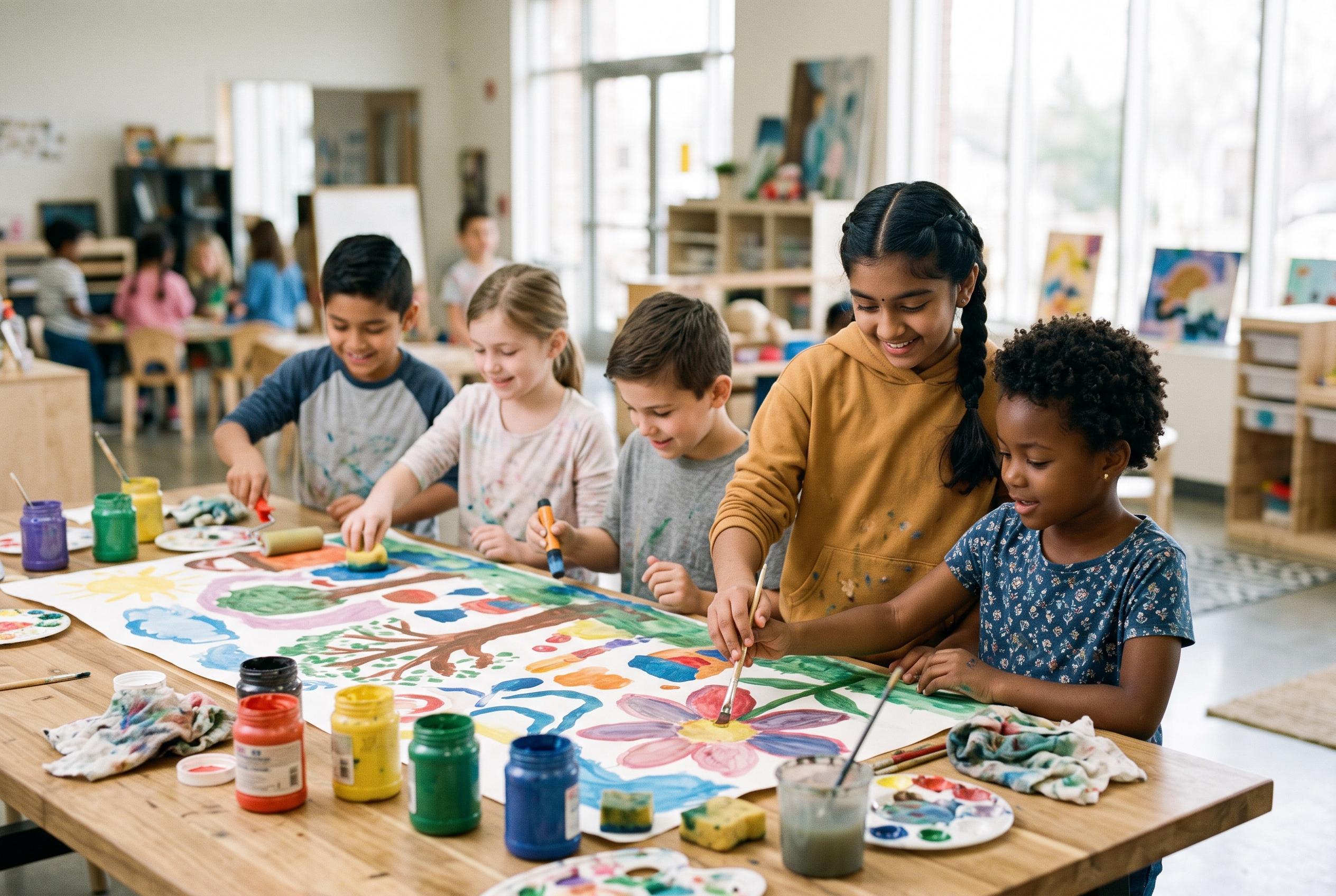

A Danish survey reveals children now prioritise participating in organised leisure activities alongside friends, highlighting social dynamics and inclusion challenges in youth sports and arts.
Children are increasingly choosing organised leisure activities because their friends are already going, rather than because they hope to meet new people, according to a new Danish survey from the Centre for Youth Studies and the Mary Foundation. The findings suggest that companionship has become central to children’s decisions about sport, music and other after-school pursuits, even if making new friends still matters to many of them.
In the survey of pupils in Years 3 to 6, 75% said one of the most important reasons to take part was to be with friends, while 83% said they prefer to start a new activity alongside someone they already know. By contrast, 36% said they joined in to make new friends. Ayse Kosar Larsen, the centre director at the Centre for Youth Studies, said the shift was not necessarily worrying in itself, but it becomes a problem if friendship groups close themselves off to children who arrive alone.
Larsen said coaches and activity leaders should build in social exercises and regularly check how the group is functioning. That advice fits with wider research showing that organised activities can support children’s social and emotional development, while participation is often uneven across family income levels. Studies in Europe and elsewhere have found that children from lower-income households are less likely to join extracurricular activities, which can limit access to social experiences and age-appropriate development.
The Danish survey also found that nine in 10 children take part in at least one regular leisure activity, a level Larsen described as stable compared with the previous year. Fun remained the top overall motive, with 85% saying that was important. The most popular activities included football, gymnastics, swimming, dance and music lessons. Other research has linked extracurricular arts and sport to better mental health, fewer externalising behaviours and stronger social skills, underlining why the quality of inclusion inside these activities matters as much as participation itself.
Disclaimer: This content is for informational purposes only and is not intended to be a substitute for professional medical judgment, advice, diagnosis, or treatment.



