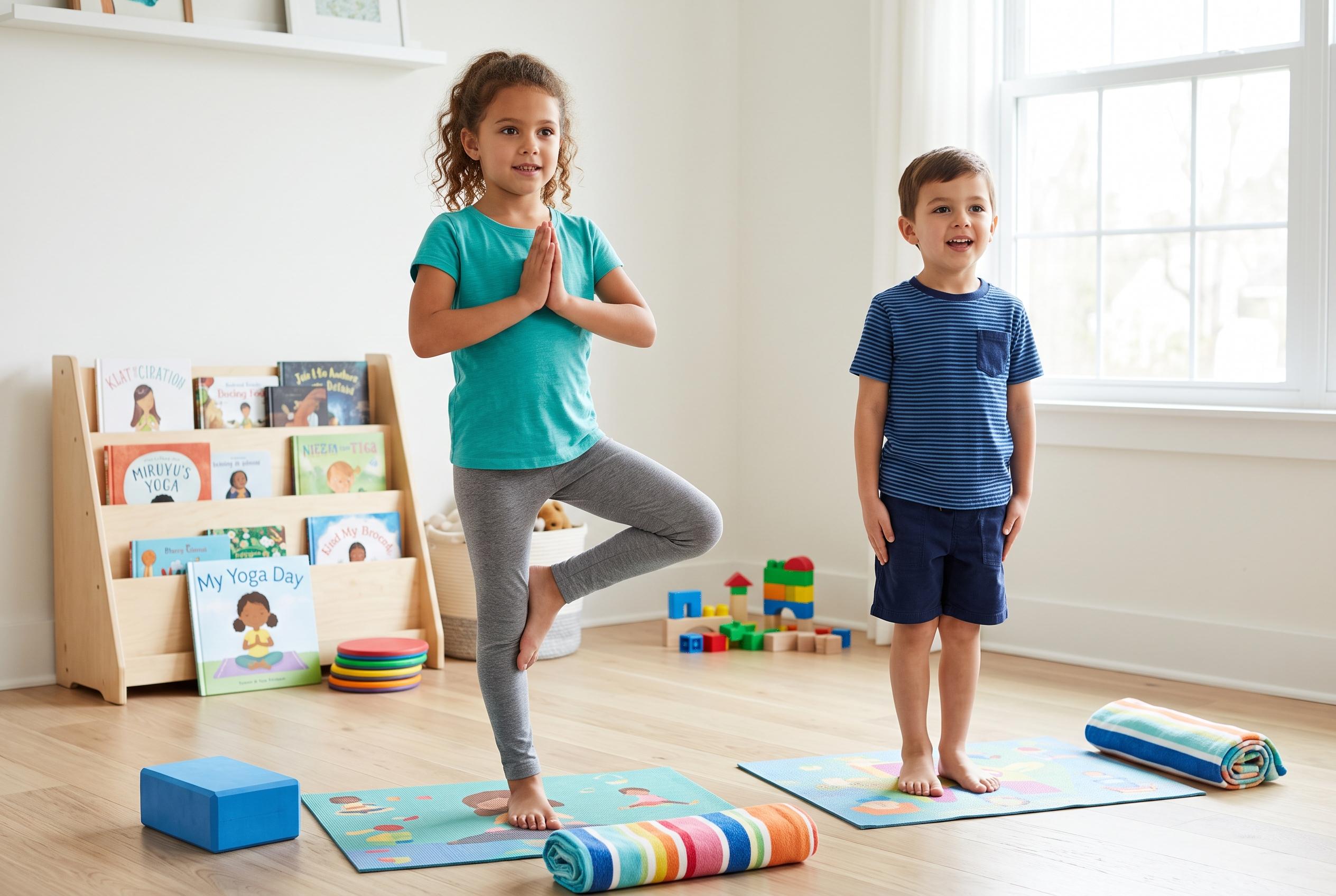

Simple, enjoyable yoga routines can help children develop strength, flexibility, and confidence, offering a healthy counterbalance to long periods of sitting and screen time.
Yoga can offer children a gentle counterbalance to modern routines that keep them seated for long stretches. According to the Cleveland Clinic, child-friendly poses can support balance, strength, flexibility and confidence, while Physiopaedia notes that yoga in paediatrics is also linked with better posture, improved attention and reduced stress. For growing children, the point is not perfect form but steady movement, body awareness and a sense of play.
Breath is a simple place to begin. Teaching a child to sit comfortably, rest both hands on the belly and take a few slow breaths can settle a restless mood before any poses begin. From there, easy movements such as Tree Pose and Cat-Cow help children practise balance and spinal mobility without feeling like exercise. NDTV says these kinds of basic postures can also improve coordination and concentration, which makes them useful both at home and in the classroom.
Several common poses are especially well suited to children. Tree Pose builds focus and leg strength, Cat-Cow keeps the spine moving, Downward Dog strengthens the arms, shoulders and legs while lengthening the back and Cobra opens the chest and supports the muscles that help hold an upright posture. Physiopaedia says these physical gains matter because children’s habits often shape how they sit, stand and move later in life.
Hip-opening work can be just as valuable. Butterfly Pose, which is widely recommended in children’s yoga guides, encourages flexibility in the hips, an area that can tighten when children spend too much time sitting. Mylittlemoppet and Emedihealth both highlight simple poses such as Sukhasana, Baddha Konasana and Cat-Cow as accessible options that help children relax while also supporting posture, flexibility and calm.
The broader message from specialists is that yoga works best for children when it remains light, safe and enjoyable. Short sessions, simple instructions and poses that invite curiosity are more likely to hold a child’s attention than strict routines. Used this way, yoga can become a practical habit that supports strength, steadier breathing and better posture without taking the fun out of movement.
Disclaimer: This content is for informational purposes only and is not intended to be a substitute for professional medical judgment, advice, diagnosis, or treatment.