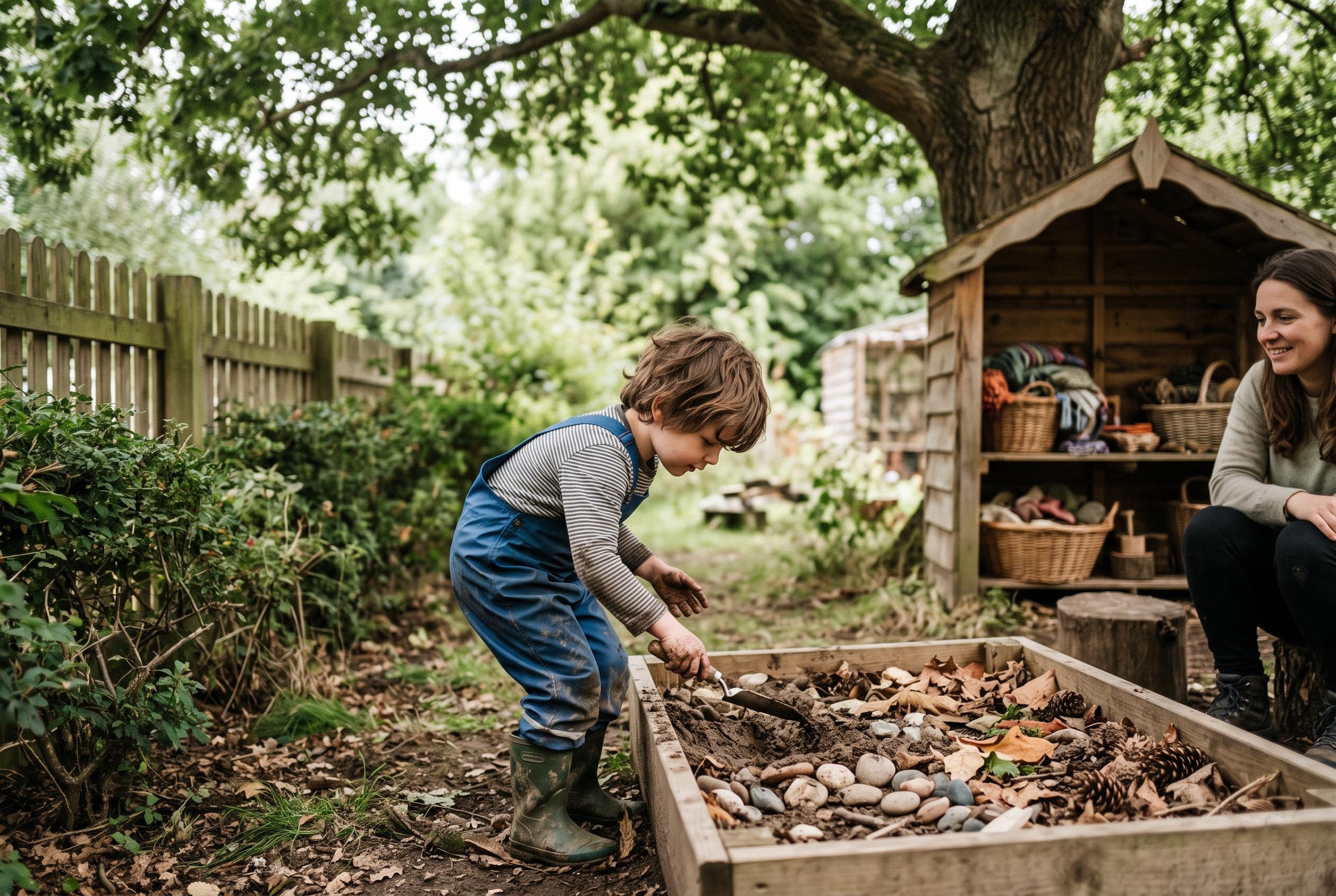

A shift in understanding how children learn emphasises the importance of movement, emotional security, sleep, and rich experiences over mere content and pressure, highlighting that optimal conditions foster true growth.
Before asking a child to learn more, the first question should often be whether the conditions for learning are right.
When a child cannot settle, gives up quickly or falls short of the performance adults expect, the instinct is usually to add more: more exercises, more explanation, more study time, perhaps another tutoring session. That approach assumes the problem is a lack of information and that the answer must therefore be more information. Sometimes that is true. Knowledge matters, and children with a broader base of facts, concepts and experiences have more tools for understanding something new. But there are many moments when the issue is not content at all, but whether the brain is in a state that allows a child to use what is already there.
A tired child does not become attentive because an extra worksheet is placed in front of them. A child who fears mistakes does not become curious because an adult repeats the importance of learning. A child whose adults solve every difficulty for them does not become independent simply because, one day, they are told to manage alone. In neuroscience, the idea of allostasis describes how the body constantly anticipates demands and reallocates resources to meet them. In other words, before a child can solve a maths problem, the brain and body have to support the wider system that makes effort possible.
That is why movement matters so much. The American Academy of Pediatrics’ HealthyChildren site says regular physical activity strengthens children’s bodies and supports wellbeing, while a recent narrative review in the medical literature found that both short bursts and longer-term exercise can improve executive functions, including inhibition, working memory and cognitive flexibility. For children, movement can mean sport, dance, swimming, cycling, climbing, martial arts or even cooking and gardening, as long as it includes a challenge: learning a sequence, adapting to rules, coordinating the body and trying again after failure. The point is not simply to burn energy. It is to prepare the brain for effort.
Children also need difficulty, but not helplessness. The brain learns when reality does not quite match what it expected. If everything is too easy, there is little reason to revise a strategy. If everything is far too hard, the child stops exploring and starts trying to escape. The best kind of frustration is manageable: enough to require effort, but not so much that the child loses the sense that progress is possible. That is the difference between rescuing a child and supporting them. One message says, “You cannot do this without me”. The other says, “This is hard, and I think you can find the next step”.
Psychological safety matters just as much. The American Academy of Pediatrics says poor sleep can affect attention, mood and behaviour, and its guidance on sleep for children stresses the importance of regular routines and healthy sleep habits. Other reviews also link sleep with learning and memory consolidation. That should not be treated as another perfectionist standard for parents to chase, but as a reminder that an extra hour of study at night may do more harm than good if a child is chronically short of sleep. Sometimes the most useful intervention for concentration is a predictable evening routine, fewer screens before bed and a schedule that does not treat rest as the leftover piece of the day.
The same logic applies to stress. Not all stress is harmful. A deadline, a presentation or the challenge of learning something difficult can sharpen focus when the pressure is manageable and a trusted adult is nearby. But when stress is intense or prolonged, and the child has little support in regulating it, the brain shifts resources towards threat detection and self-protection. In that state, curiosity, flexibility and sustained attention become much harder. Safety does not mean there are no limits. It means that correction does not threaten the relationship. A child can hear that a behaviour was wrong without being told that they themselves are wrong.
Food, too, should be understood in practical rather than moral terms. Research interest in the gut-brain axis and the microbiome is real, but the evidence in children is still limited and does not support simple claims that one bacterium or probiotic will improve attention or school performance. What is far more defensible, according to common paediatric guidance, is a varied diet with enough fibre, vegetables, fruit, legumes and minimally processed foods. Children do not need anxiety around every biscuit. They need a pattern of eating that supports their body most of the time, with sweets and ultra-processed foods kept as occasional parts of a normal life rather than tools for soothing or rewarding every effort.
Autonomy also builds the mind. Children make sense of new experiences by linking them to what they already know. The more stories, perspectives, concepts and real-life situations they have encountered, the richer their internal map becomes. That is why memory and thinking are not enemies. Facts are the raw material of reasoning, but only if children are encouraged to compare, question and apply them in new settings. Letting a child choose between real options, plan a small outing, handle some money, cook, build, navigate or repair a mistake gives them more than independence. It gives them experience with consequence. Stories do something similar: they let children test choices, imagine other minds and explore conflict without real danger. That is why reading, discussion and reflection remain such powerful tools for critical thinking.
The broader lesson is simple. A child’s potential is not unlocked by a trick or a single lesson. It grows through repeated experiences in which the body is rested and active, the mind is challenged, the relationship stays safe and the child gradually takes more ownership of their choices. According to the argument set out in the original essay, the role of parents is less about optimising a child like a project and more about building the conditions in which development can happen: movement, sleep, nourishment, manageable difficulty, emotional security, rich experiences and increasing responsibility. In that sense, the best learning does not begin with more pressure. It begins with a better foundation.
Disclaimer: This content is for informational purposes only and is not intended to be a substitute for professional medical judgment, advice, diagnosis, or treatment.