

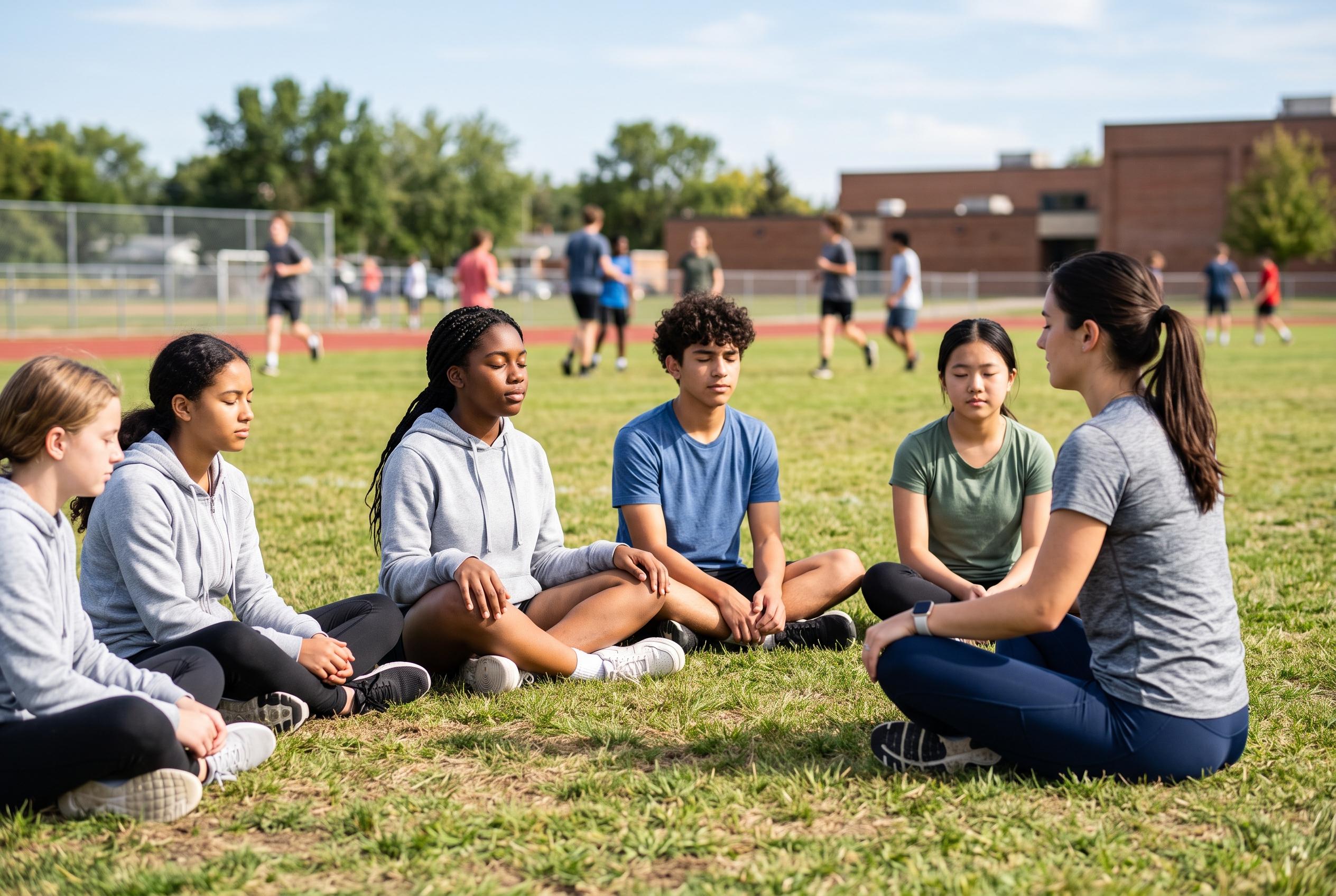

A small Tunis study found that adding short mindfulness and self-regulation exercises to PE lessons was associated with lower self-reported aggression and impulsivity, but researchers say larger trials are needed.
A small study in Tunis suggests that a brief mindfulness-based programme built into physical education lessons may help reduce some aggressive and impulsive tendencies in teenagers, although the authors caution that the findings are preliminary and should not be treated as proof that classroom behaviour changed. Published in Frontiers in Psychology, the research followed 39 high school students aged about 16 who were randomly assigned to either an eight-week mindfulness-informed intervention or standard PE alone. The intervention combined short breathing and body-awareness exercises with psychoeducational tools such as self-encouragement, positive affirmations and imagery. According to the paper, the students who took part in the programme showed lower self-reported verbal aggression, physical aggression, hostility and some forms of impulsivity than those in the control group. The researchers said the results support the feasibility of introducing brief mindfulness-based activities into school sport settings, while noting that the measures captured general tendencies rather than behaviour observed directly during PE.
The study was carried out in a single class at a secondary school in central Tunis and used sex-stratified randomisation to assign 20 pupils to the mindfulness group and 19 to the control group. Participants completed Arabic-language questionnaires measuring aggression and impulsivity before and after the intervention. The authors reported that the two groups were broadly similar at baseline in age, height, body mass and psychological scores. The programme was delivered twice a week during regular PE lessons, with each session lasting roughly 5 to 15 minutes, and attendance was complete: every planned session was delivered and every student in the intervention group attended all 16 sessions. The paper says no injuries or intervention-related adverse events were reported, although adverse psychological effects were not formally tracked with a standard checklist.
Results were strongest for verbal and physical aggression, where the study found significant group-by-time differences. In the mindfulness group, self-reported verbal aggression fell by 33.5% and physical aggression by 32.4%, while the control group showed an increase in verbal aggression and a rise in hostility. The programme was also associated with lower non-planned impulsivity and lower total impulsivity relative to the control condition. Motor impulsivity fell within the intervention group, but the authors said that change was not large enough to count as a clear differential effect versus the control group. The study did not find a clear effect for cognitive impulsivity.
The authors place the findings in the wider context of growing interest in mindfulness in schools. Previous research has suggested that mindfulness-based approaches can help with anger, anxiety and self-regulation, and a 2014 review in Frontiers in Psychology found school mindfulness programmes could improve emotional well-being. More recent work cited by the authors has also linked mindfulness with lower aggression and better self-control in adolescents. Still, the Tunis study has important limits. Its sample was small, drawn from one school and one class, and it relied entirely on self-report rather than teacher ratings, behaviour logs or direct observation. The intervention was also multicomponent, so it is not possible to say whether mindfulness itself, the psychoeducational elements or simply extra adult attention produced the gains. The researchers say larger studies with active comparison groups and longer follow-up are needed before schools consider routine adoption.
Disclaimer: This content is for informational purposes only and is not intended to be a substitute for professional medical judgment, advice, diagnosis, or treatment.



