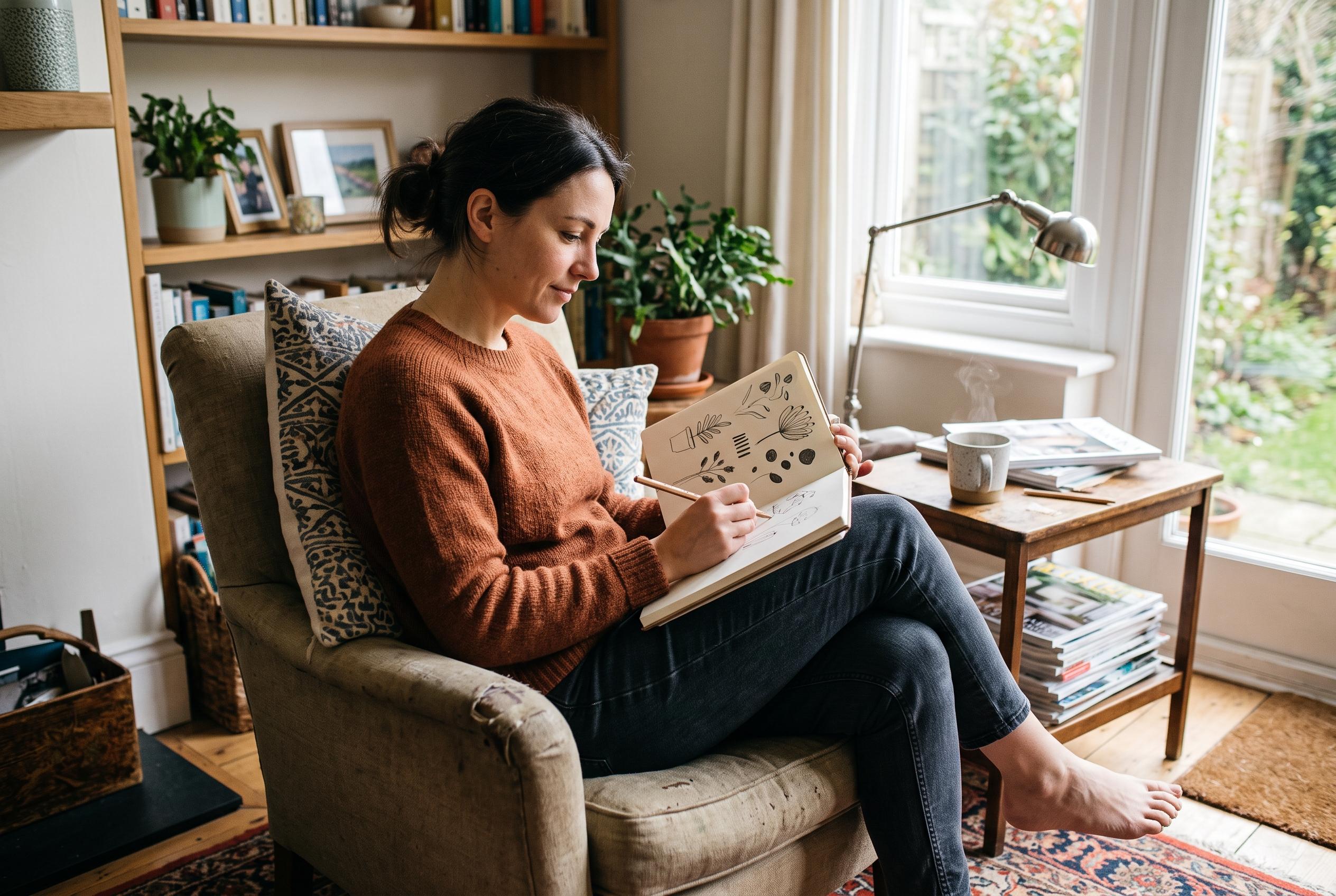

Experts highlight that just a few minutes of spontaneous drawing can help calm the nervous system, ease stress, and boost well-being, with increasing online popularity and scientific backing for its benefits.
Just a few minutes with a pencil and paper may be enough to ease stress, calm the nervous system and lift mood, according to experts who study how simple drawing affects the brain and the body’s response to pressure.
What looks like a basic pastime has drawn growing attention because it can offer a quick route back towards calm, even when people spend only a short time sketching. Interest in spontaneous doodling, sensory drawing and art therapy has surged online, with videos on social media attracting millions of views as more people look for practical ways to settle the nervous system after a tense day.
Reina Lombardi, an art therapist and founder of Florida Art Therapy Services, says many people are under sustained strain from financial and social pressures, while constant phone use adds to the problem. Notifications and app design, she says, keep the body on alert and make it harder to fully switch off. In that setting, drawing can serve as a simple, accessible counterweight to daily tension.
Soma Sengupta, a neurologist at Tufts Medical Centre, explains that stress activates the sympathetic nervous system, the body’s fight-or-flight response. Heart rate, blood pressure and muscle tension rise, while cortisol and other stress hormones increase. Drawing can help move the body towards the parasympathetic system, which supports rest, recovery and digestion, returning it to a calmer state.
Researchers say the effect is not only physical. When people draw, areas of the brain involved in sight, movement, attention and decision-making are engaged at once, helping anchor attention in the present moment and reduce repetitive worry. Lines, shapes and colour can also sharpen sensory awareness and provide a non-verbal way to express feelings, which may make emotions easier to understand and manage.
A study published in a 2026 issue of a science journal found that art-making could help regulate stress after a standard stressor, compared with a neutral structured task. Earlier research published in 2023 and a separate 2025 study both found that digital art and traditional materials such as oil pastels were similarly effective in reducing state stress or anxiety after stress induction. That suggests the calming benefit may come less from the medium than from the act of making art itself.
As a drawing progresses, the brain’s reward system may also be activated, with small bursts of dopamine linked to pleasure, motivation and reinforcement. In some cases, people may enter a state of flow, becoming so absorbed that self-consciousness fades and concentration deepens.
The science has not settled on one ideal length of time for the benefit to appear. One 2016 study found that 45 minutes of creative activity could lower cortisol levels, but Sengupta says much shorter sessions may still help. Around 10 minutes of creative work can interrupt the stress response without turning drawing into another obligation, and even five to 20 minutes may reduce intrusive thoughts, ease immediate pressure and improve mood.
Disclaimer: This content is for informational purposes only and is not intended to be a substitute for professional medical judgment, advice, diagnosis, or treatment.