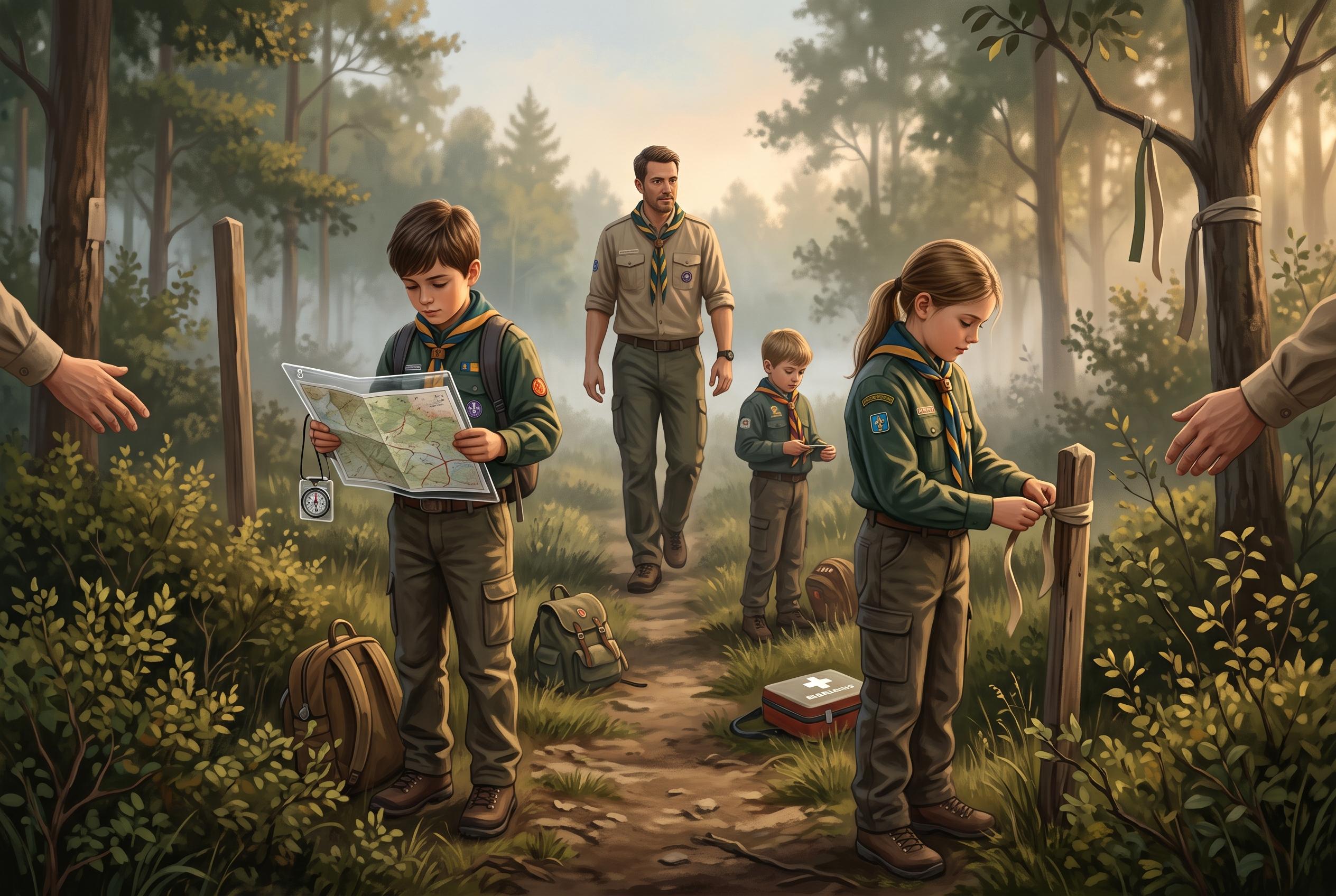

In Belgium, a traditional scouting exercise called ‘dropping’ is fostering children’s autonomy by encouraging navigation and decision-making without constant adult supervision, challenging modern parenting norms and the pervasive digital oversight of today’s childhood.
In Belgium, a summer activity known as “dropping” is giving children a rare chance to navigate without constant adult oversight. Groups are taken to an unfamiliar place and told to find their own way to a destination, often carrying their own bags and relying on maps, roadside clues and, when needed, directions from strangers. In some camps, the exercise can stretch over two days, with an overnight stop at another scouts’ camp, and children aged roughly 11 to 14 may cover as much as 30 kilometres in a single day.
The format is built around gradual responsibility. On shorter routes, children are helped by hints at junctions, while longer journeys demand more independent wayfinding. Safety is still part of the design: two children in each group carry a phone for emergencies or to contact organisers, and an adult can step in quickly if someone becomes unwell.
The practice has taken root in a country where scouting and other youth groups remain hugely popular. According to the figures cited in the Belgian coverage, about one in five children in Flanders belongs to such an organisation, while the share is around one in six in Wallonia and Brussels. That scale makes it possible for camps to experiment with challenges that would be harder to organise elsewhere.
The experience is meant to teach practical self-reliance, and organisers say it often does. Children have been seen taking over a younger member’s backpack when it becomes too heavy, or recovering from wrong turns by crossing streams and rough ground to get back on track. There can also be unscripted encounters with local people: one group was reportedly bought two large platters of food by a passer-by, while some residents in the Ardennes have not always welcomed scouts knocking at their doors.
The Belgian approach stands in sharp contrast to the tightly monitored childhood common in many European homes, where parents can track a child’s location on a smartphone and stay in near-constant contact. At the same time, children and teenagers are spending more time on screens and less time outdoors, feeding concern about physical and mental wellbeing. Jonathan Haidt has argued that children need more autonomy, unsupervised play and real responsibility, saying that constant supervision can deny them the chance to judge risk for themselves and learn through shared experience.
For the young scouts involved, the benefits are immediate and concrete: they learn to pack, cook, adapt and cope with setbacks over days away from family. The appeal of dropping, in effect, lies in giving children temporary freedom from digital oversight just long enough for them to discover what they can do on their own.
Disclaimer: This content is for informational purposes only and is not intended to be a substitute for professional medical judgment, advice, diagnosis, or treatment.