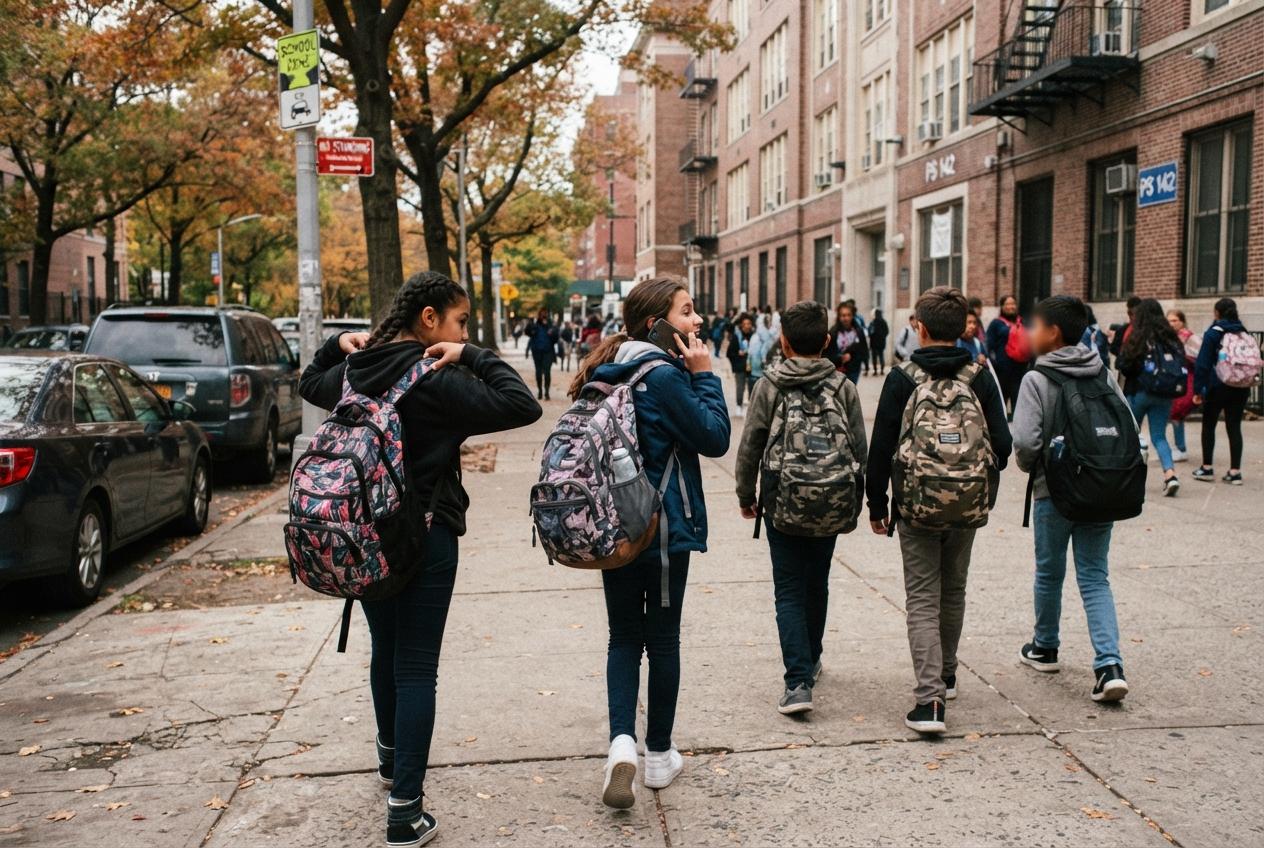

As back-to-school season prompts renewed concerns over heavy backpacks, experts emphasise smarter packing habits and lightweight designs to prevent discomfort and injury among schoolchildren.
Back-to-school season is bringing renewed attention to a problem that is familiar to many parents and teachers: children carrying backpacks that are simply too heavy. As laptops, tablets, textbooks, sports kit, water bottles and lunch containers are all packed in, the load can quickly become more than a young body is comfortable managing. The American Academy of Paediatrics says warning signs include a child leaning forward to compensate or struggling to walk properly, while straps that dig into the shoulders are another clue that the bag needs to be lightened. According to the academy, there is no perfect weight rule for every child, even though the 10% to 15% of body weight guideline is often cited.
Experts say the safest approach is to think less about fashion or convenience and more about what is truly necessary for the school day. A teacher quoted by the Associated Press said families should ask whether every item in a bag will actually help a child succeed in class, especially where schools already provide textbooks or where children carry a laptop and charger every day. In some districts, the return of printed textbooks has reignited debate over how much technology should travel home, while block scheduling can mean older pupils do not need every book every day.
Guidance from Johns Hopkins Medicine and the American Academy of Paediatrics points to a simple set of design and carrying habits that can reduce strain. Backpacks should have two wide, padded shoulder straps, a padded back, and ideally a chest or waist strap to spread the load more evenly. They should fit close to the body, be worn on both shoulders, and be lifted by bending at the knees rather than the waist. Johns Hopkins also advises keeping the bag lightweight and sturdy, and says children should not carry unnecessary items.
Research cited in AAP Grand Rounds suggests there is real reason for caution. In a study of 531 middle- and high-school pupils in Northern California, nearly half reported back or shoulder pain, and those with pain tended to carry a higher percentage of their body weight in their backpacks. The findings do not prove that weight alone causes pain, but they do support a practical conclusion shared by clinicians and school staff alike: less is usually better, and regular clear-outs can help prevent both discomfort and forgotten homework. Rolling bags may help some children, though stairs and crowded corridors can make them awkward in school, and backpacks should be removed in moving vehicles because they can interfere with seat belts.
Disclaimer: This content is for informational purposes only and is not intended to be a substitute for professional medical judgment, advice, diagnosis, or treatment.