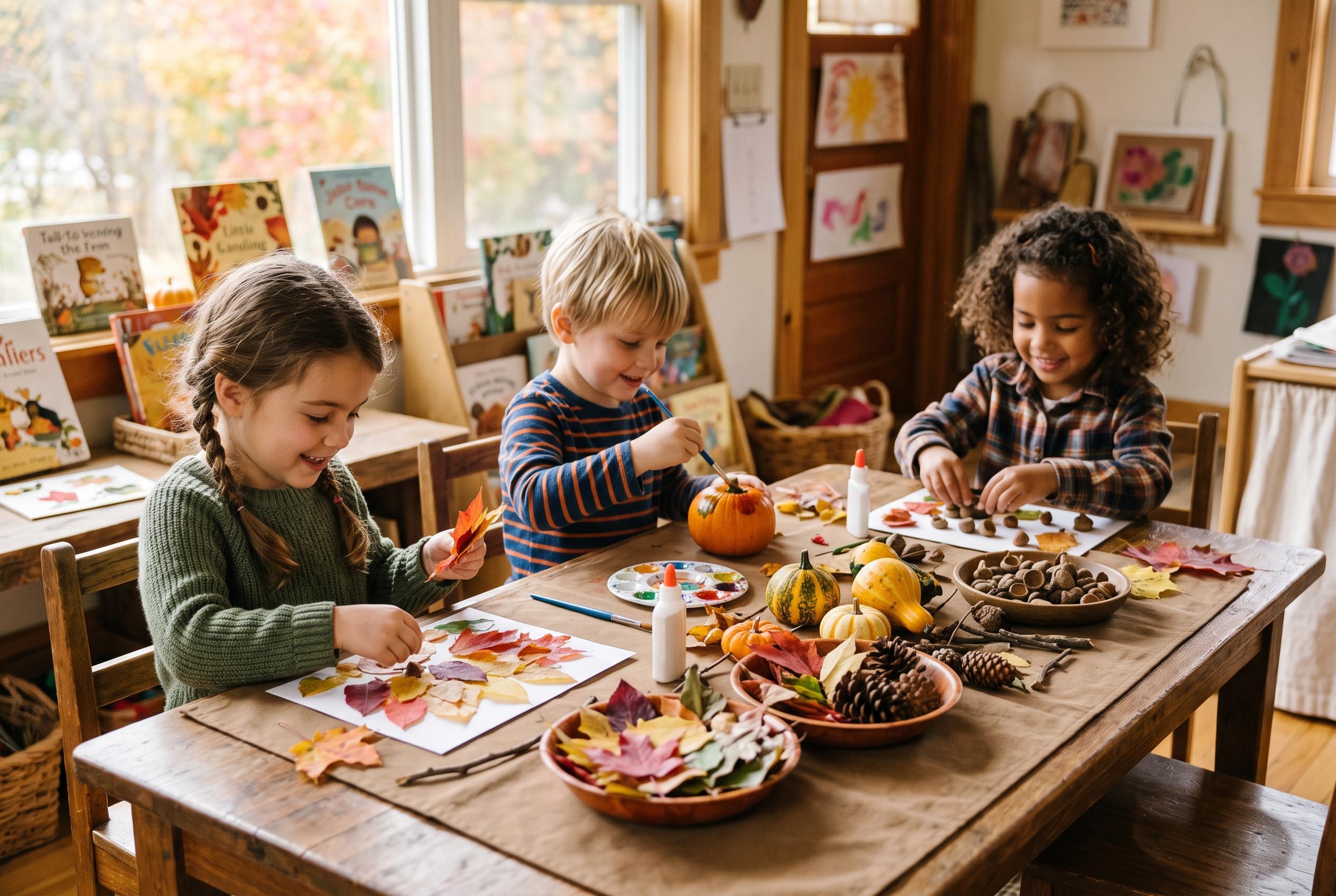

Seasonal abundance offers children a rich and versatile palette of natural materials for fall art, fostering creativity, observation, and cross-curricular learning through simple, adaptable projects using leaves, pumpkins, gourds, and additional natural finds.
Autumn offers children an unusually rich palette to work with: fallen leaves, pumpkins, gourds, acorns and twigs arrive almost ready-made for the classroom or kitchen table. That seasonal abundance is what makes fall art especially useful for parents, teachers and after-school leaders, because the materials are low-cost, tactile and easy to adapt for different ages and abilities. Penn State Extension says leaf printing in particular helps children learn about leaf structure and surface texture while building botanical vocabulary.
Among the simplest and most effective ideas is leaf art. Children can rub, stamp, print or collage real leaves, and older students can take the same material into more ambitious mixed-media work or watercolour resist studies. The appeal lies in its flexibility: a preschooler can make a quick print, while a middle school student can turn the same idea into a detailed study of shape, vein pattern and colour. Cornell’s garden-based learning programme also points to the wider value of working with natural materials as a way to connect creativity with observation.
Pumpkins and gourds remain the season’s most recognisable symbols, but the best versions of these projects avoid the mess and risk of carving. Child-safe decorating ideas highlighted by the CCRC and Scholastic include paint, stickers, pipe cleaners, paper accessories and other simple embellishments that let children personalise pumpkins without knives. Cornell Garden-Based Learning says gourds can also be dyed, painted or embellished with natural materials such as stones and feathers, making them useful for both art lessons and harvest displays.
Nature collection projects go further by turning a walk outdoors into the first stage of the artwork. Acorns, seed pods, bark, pinecones and moss can become sculptures, woven pieces or textured compositions, and they work well for children who learn best by handling objects and testing materials. Family-focused craft guidance from I’m the Chef Too also shows how pumpkins and gourds can bridge art and cooking, which gives the season an easy cross-curricular link.
For younger children, apple and harvest-themed activities are especially effective because they are quick, readable and accessible. Apple stamping, for example, offers a straightforward process with a strong visual result, while still leaving room for colour experiments and pattern-making. For older students, fall landscapes offer more room for composition, perspective and colour theory, whether through paint, pastel or collage. The best autumn art projects are not the most elaborate ones, but the ones that let children notice the season closely and turn what they see into something personal.
Disclaimer: This content is for informational purposes only and is not intended to be a substitute for professional medical judgment, advice, diagnosis, or treatment.