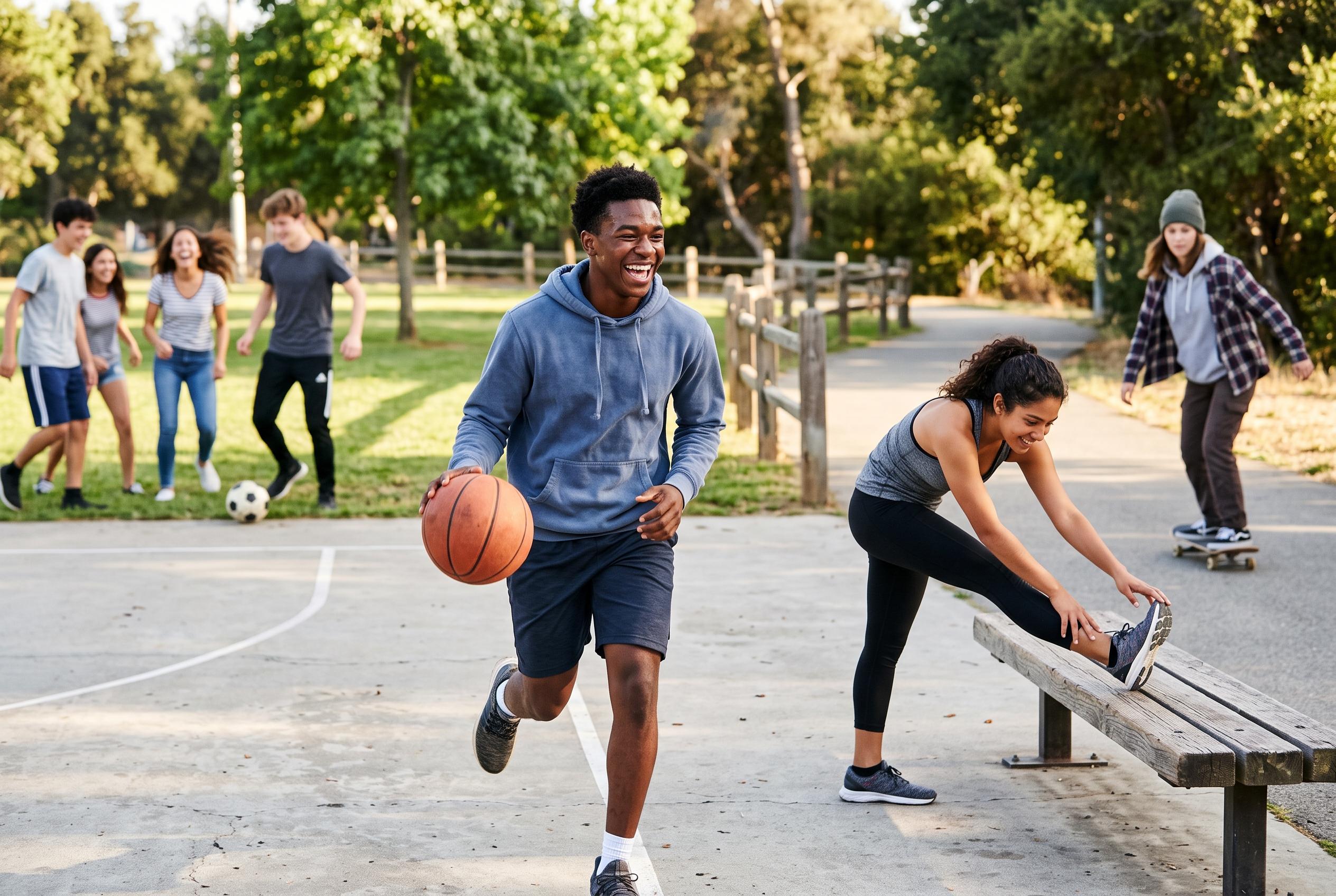

Research indicates that adolescents who exercise for intrinsic reasons or personal value are more physically active, highlighting the importance of motivation in promoting healthy habits among young people.
A new study in Frontiers in Psychology suggests that adolescents who are more autonomously motivated to exercise are also more physically active, adding to evidence that the way young people think about exercise can matter as much as the opportunities they are given.
Researchers examined baseline data from the Global Health Program, a school-based initiative running in 48 public schools in Québec. The analysis drew on 664 students from 22 schools, with an average age of 14 and a majority of boys. Students completed online questionnaires on motivation and activity levels, and the researchers used mixed-effects modelling to account for differences between schools.
The strongest links with activity were seen for identified regulation and intrinsic regulation, two forms of autonomous motivation. Identified regulation reflects valuing exercise and seeing it as personally important, while intrinsic regulation means being active for enjoyment. Introjected regulation, which is driven more by guilt or pressure, was also associated with activity, though less strongly. By contrast, amotivation and external regulation were not significantly related to physical activity in this sample.
The study also found that perceived support from school leaders and peer affiliation did not significantly change the relationship between motivation and activity. Duration of participation did matter, however: the positive link between autonomous motivation and physical activity was stronger among students who had been in the programme for longer. The authors say the findings support self-determination theory, which argues that people are more likely to sustain healthy behaviours when they feel a sense of choice and personal value.
The results fit with earlier research. A school-based intervention indexed by PubMed found that autonomy-supportive teaching improved exercise intentions and leisure-time activity among pupils, while a systematic review published in a medical journal reported that school interventions can boost motivation, especially self-determined motivation and task goal orientation. Another study in adolescents found that different forms of motivation were linked with moderate-to-vigorous physical activity across school, home and weekend settings, suggesting that context still shapes how motivation translates into movement.
Disclaimer: This content is for informational purposes only and is not intended to be a substitute for professional medical judgment, advice, diagnosis, or treatment.