

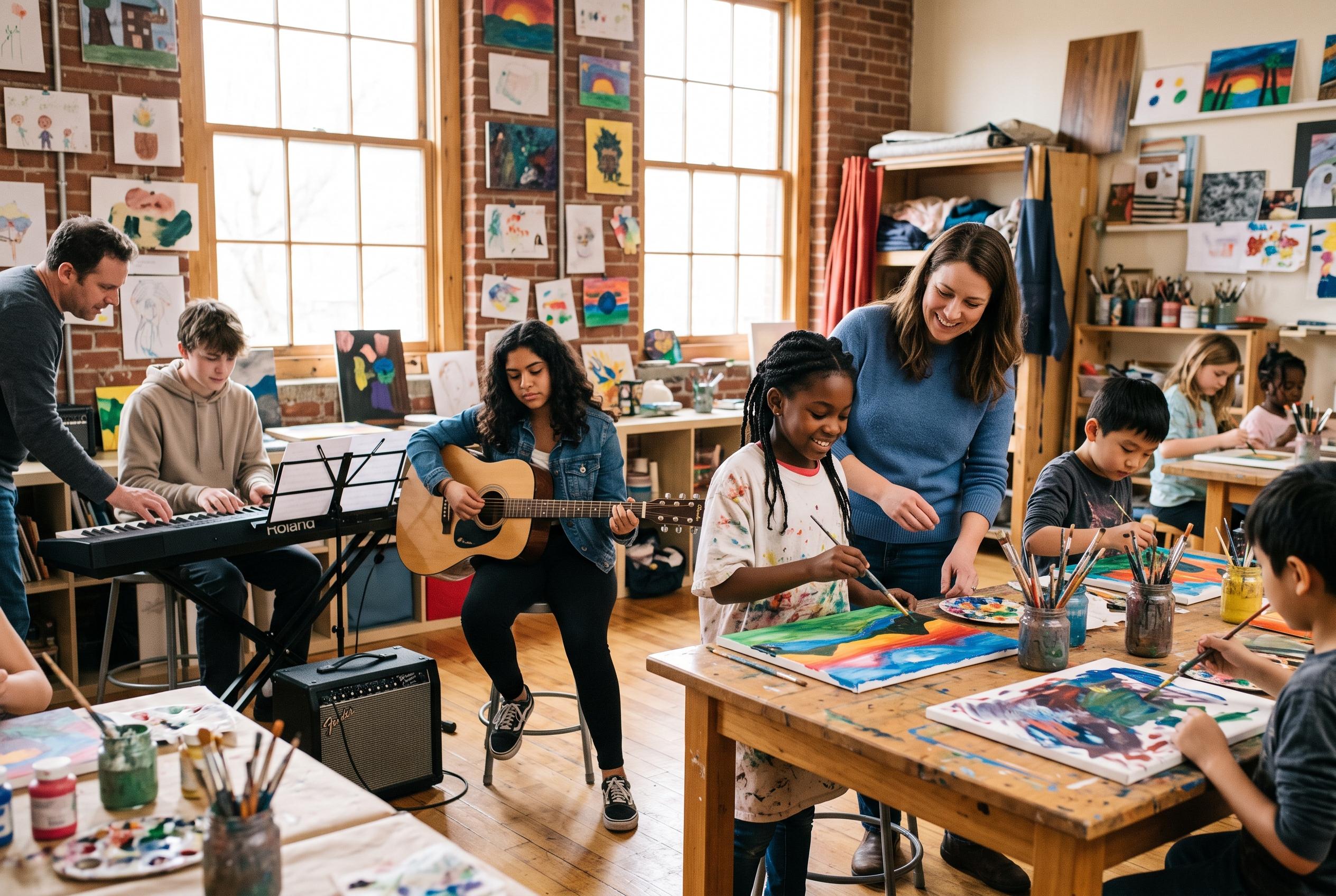

Families are turning to affordable community programmes for music, visual art and performance as school-based opportunities shrink across Seattle.
For 11-year-old Aliza Crystal, the arts are not an extracurricular luxury but a core part of daily life. The West Seattle sixth-grader plays clarinet, has studied piano and choir, and has taken classes ranging from fine art to anime. Now she is focusing on drawing, moving from stylised characters towards more realistic work, while still finding time for music and dance with friends. Her experience reflects a wider pattern in Seattle, where families are increasingly building arts educations outside school as district programmes have been pared back.
Community organisations across the city are helping to fill that gap, offering everything from low-cost lessons to free teen workshops. The Seattle Times reported that this local network has become more important as school-based opportunities shrink, with parents and carers choosing programmes that suit different budgets, ages and levels of experience. On any given afternoon, young people can be found learning instruments, making prints, painting portraits or mounting their own performances in spaces that range from neighbourhood studios to city venues.
Mode Music and Performing Arts in West Seattle is one example of that shift. The nonprofit arm of Mode Music School says it served more than 350 young people on a pay-what-you-can basis during the 2025-26 school year, using familiar songs to make musical concepts feel approachable. Erin Rubin, the owner, said instructors aim to help children “speak the instrument” before they are pushed into notation, a method designed to build confidence first and technical reading later. The organisation says its wider mission is to promote confidence, empathy and equity through music and performance.
Arts Corps has also become a key part of Seattle’s arts landscape. Shawn Roberts, the group’s executive director of art education, said the organisation serves about 2,300 students a year through partnerships and programmes, and is gradually recovering from the disruption caused by the pandemic. During remote learning, the group even delivered art supplies to homes so children could continue classes over Zoom. Angela Moorer, its marketing and communications manager, said recent summer work, including young people forming rap groups and performing at Seattle Centre, showed how quickly children can create when given space, support and trust.
Other institutions are broadening the pipeline in different ways. Seattle JazzED offers lessons for children as young as eight months through older students, using jazz to connect music education with the city’s Black musical heritage. Its organisers say school budget pressures have made community programmes more important because music and art are often the first areas cut. Meanwhile, groups such as Pratt Fine Arts Centre, Coyote Central, Gage Academy of Art, Seattle Children’s Theatre, The Rhapsody Project and Community Hub all provide distinct routes into creative learning, from glasswork and sculpture to theatre, cultural music education and free teen workshops.
Taken together, those programmes point to a citywide ecosystem that is helping families preserve access to the arts even as school offerings contract. Many of the organisations use sliding-scale fees, scholarships or free provision, and several deliberately serve young people who might otherwise be excluded by cost, transport or other barriers. For children like Aliza, the result is not simply an after-school activity, but a patchwork of opportunities that can shape confidence, identity and friendships as much as talent.
Disclaimer: This content is for informational purposes only and is not intended to be a substitute for professional medical judgment, advice, diagnosis, or treatment.



