

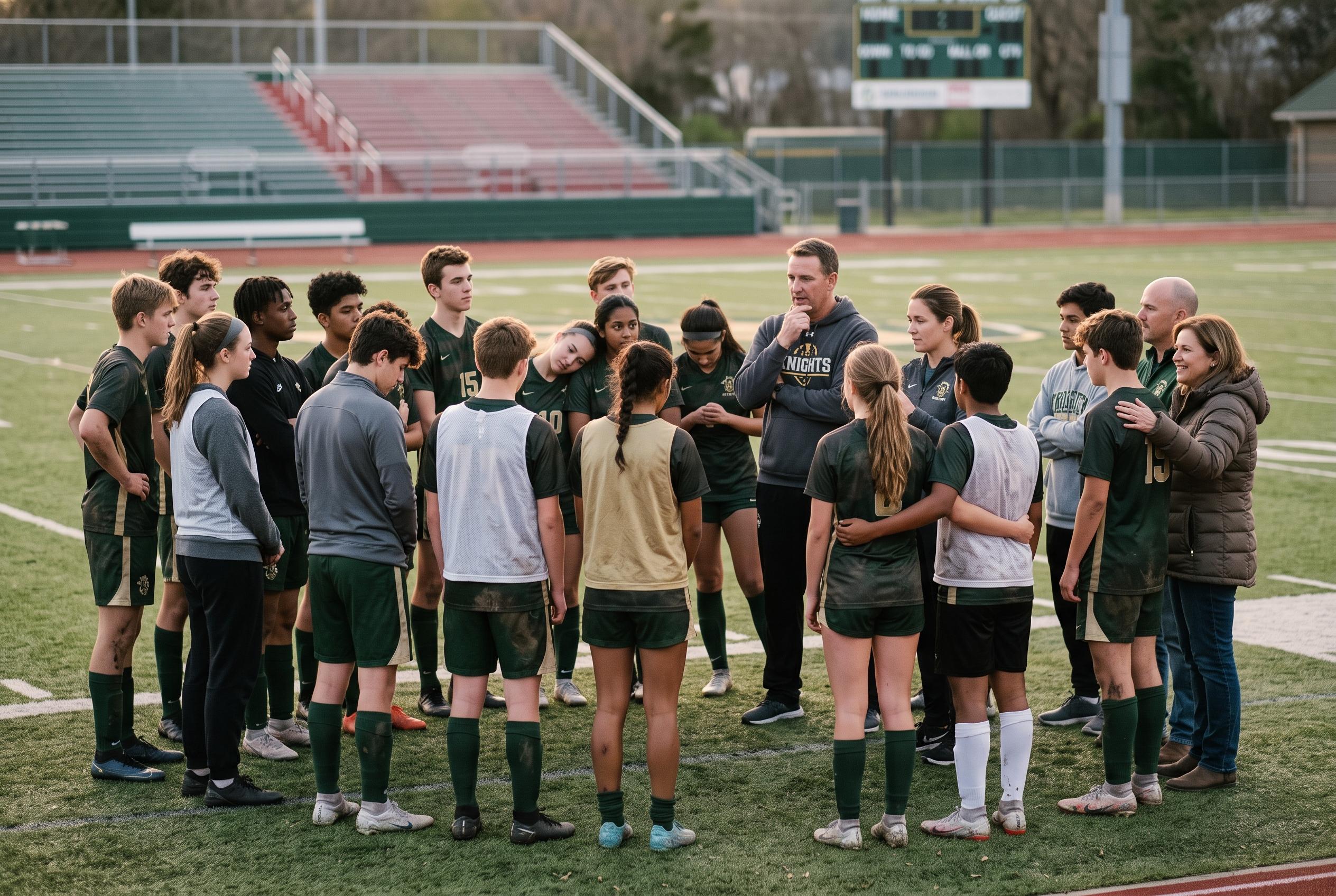

AHSAA executive director Paul Agnew says players, coaches, parents and spectators must protect the character-building purpose of interscholastic athletics.
High school sport in Alabama is supposed to teach more than tactics, conditioning and how to win. In an opinion essay for Alabama Reporter, AHSAA executive director Paul Agnew argued that every contest also tests whether adults are helping young people absorb discipline, respect and self-control, or allowing pressure to win to distort the lesson.
Agnew, who said his view was shaped by years as a teacher, coach, administrator and school leader, made the case that interscholastic athletics should be treated as part of the classroom, not as a smaller version of college or professional sport. That distinction matters because, as he wrote, the point is not simply to stage games but to build character traits that schools are meant to reinforce: accountability, resilience, humility, teamwork, respect and integrity.
His broader argument aligns with the way other high school governing bodies frame the issue. The National Federation of State High School Associations says sportsmanship is the foundation of a worthwhile athletic experience, while the Wisconsin Interscholastic Athletic Association defines it as a commitment to fair play, ethical behaviour and integrity, with respect for rules and self-control at the centre of the concept. Across those groups, the message is the same: sportsmanship is not an optional extra but part of what makes school sport educational.
Agnew also emphasised that the responsibility does not rest only with players. Coaches, officials, parents, bands, cheerleaders, announcers, contest workers and spectators all shape the atmosphere around a game, and adults in particular set the tone. That warning is echoed in school athletics guidance elsewhere. Frederick County Public Schools in Maryland, for example, urges student-athletes to avoid trash-talking, follow the rules and show appreciation for fans, while also reminding families that respectful behaviour is part of the event. The Virginia High School League tells spectators that good sportsmanship matters more than victory, that visiting teams and officials should be treated as guests, and that winners should be modest and losers gracious.
The Alabama leader’s point about planning is equally important. Good behaviour, he argued, does not happen by chance; it has to be written into school expectations, crowd-management procedures, public address messaging and the supervision of games. That approach resembles the sportsmanship plans promoted by the Maryland Public Secondary Schools Athletic Association and school districts such as Harnett County in North Carolina, both of which stress accountability, respect for opponents and officials, and support for effort as well as results.
Ultimately, Agnew’s message was simple: communities can cheer hard without humiliating others, compete fiercely without crossing lines and demand discipline from students while modelling it themselves. In his telling, the real value of high school athletics lies not in championships alone but in whether they remain a place where young people learn how to win, lose and behave with dignity.
Disclaimer: This content is for informational purposes only and is not intended to be a substitute for professional medical judgment, advice, diagnosis, or treatment.



