

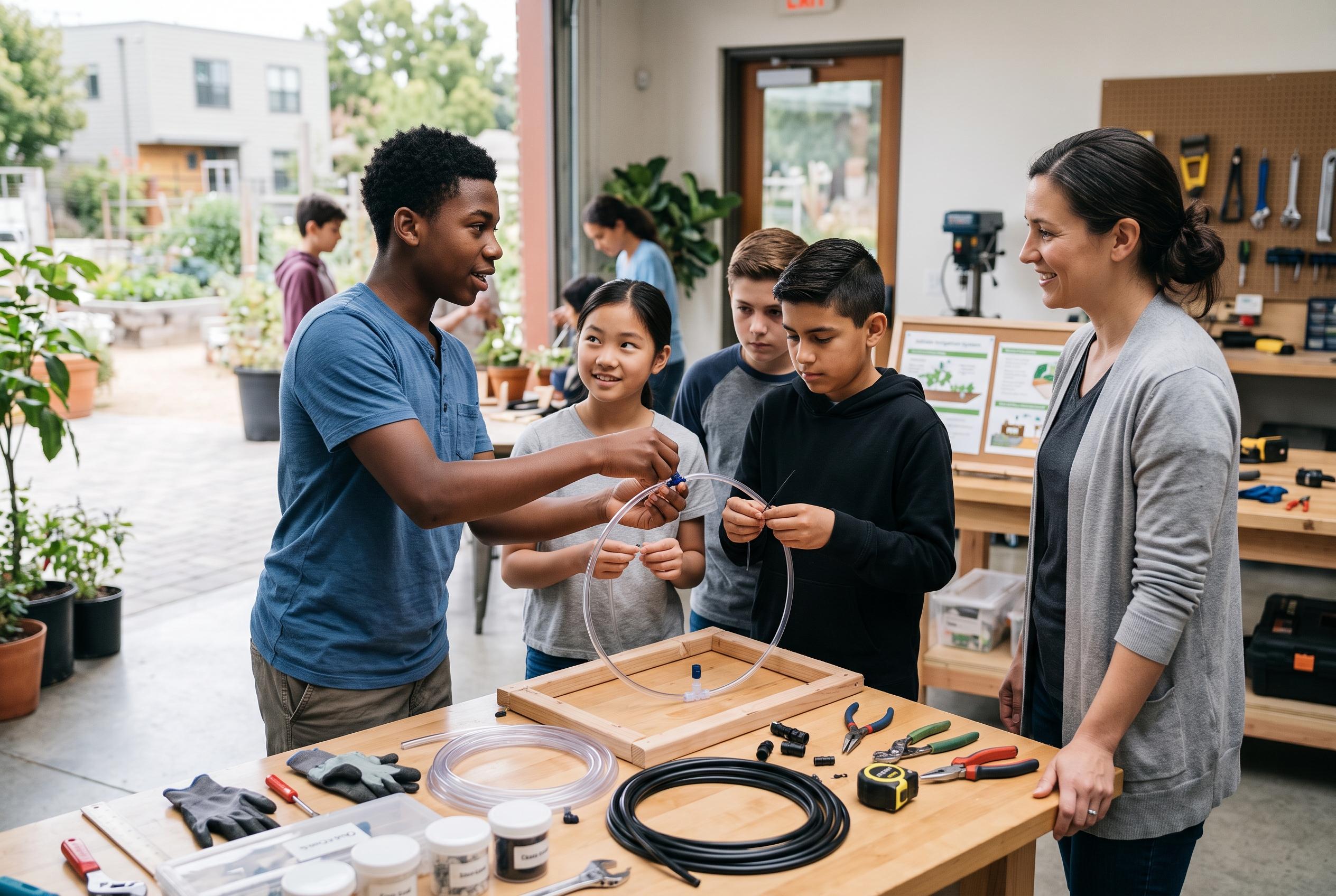

A century-old organisation, 4-H, adapts its hands-on approach to foster leadership, responsibility, and diverse skills in young people, ensuring their readiness for future challenges.
For more than a century, 4-H has helped young people develop skills that reach well beyond the fairground. While livestock shows remain a visible part of the programme, the modern organisation now offers projects in agriculture, animal science, cooking, photography, robotics, public speaking and community service, giving members a far wider range of ways to learn and contribute.
At its core, 4-H is built around practical learning and steady personal growth. The Iowa 4-H Foundation says the programme is based on positive youth development principles, combining challenging experiences with caring adult support and safe learning environments. Research associated with the 4-H Study of Positive Youth Development at Tufts University found that young people involved in 4-H are more likely to make healthier choices, take part in out-of-school science activities, contribute to their communities and feel competent and positive about their well-being.
That hands-on model is part of what makes the programme durable. Cornell Cooperative Extension describes 4-H as open to youth from age 5 to 19 and says it is designed to help them become competent, caring and contributing members of society. Across the country, it gives children and teenagers a chance to pursue interests at their own pace, whether that means photography, computers, rockets or raising sheep.
One of the clearest lessons 4-H teaches is responsibility. Many projects require regular effort and follow-through, whether a member is caring for an animal, preparing a presentation or finishing a photography assignment by a deadline. Those expectations help young people learn that achievement depends on consistency, planning and perseverance, not just enthusiasm.
Leadership is another central part of the experience. The University of Nevada, Reno says 4-H gives young people opportunities to build leadership, citizenship and life skills through clubs, school-based activities, after-school programmes and camps. Members may serve as officers, help organise events, mentor younger participants or take part in service projects, learning in the process how to listen, cooperate and make decisions with others.
Public speaking and communication are also woven into the programme. Members often give presentations, demonstrations and speeches, sometimes starting with a small club meeting before moving on to larger events. For many children, that repeated practice can ease the fear of speaking in front of others and help them learn how to organise ideas, answer questions and explain themselves clearly, skills that matter in school, at work and in everyday life.
The breadth of projects is another reason 4-H continues to attract families. According to the University of Nevada, Reno and East Central 4-H, members can explore STEM, healthy living, civic engagement, career development and agriculture, alongside more traditional activities. That variety can open unexpected paths: a child who joins for the animals may develop an interest in veterinary science, while someone drawn to cooking might later discover nutrition, hospitality or the food industry.
4-H also creates opportunities for community connection. The organisation’s supporters say the programme helps young people make friends, learn to work with different personalities and build a sense of belonging through clubs, fairs, contests and camps. Service projects can reinforce those lessons by showing members that they can play a real part in improving the places where they live.
For older participants, the benefits can carry into adult life. Leadership roles, project work, teamwork and public speaking can strengthen college applications, job prospects and scholarship opportunities. More importantly, the habits formed through 4-H , responsibility, problem-solving, communication and resilience , can remain useful long after membership ends. In that sense, the programme’s real value is not just what young people accomplish while they are involved, but what they learn to carry forward.
Disclaimer: This content is for informational purposes only and is not intended to be a substitute for professional medical judgment, advice, diagnosis, or treatment.



