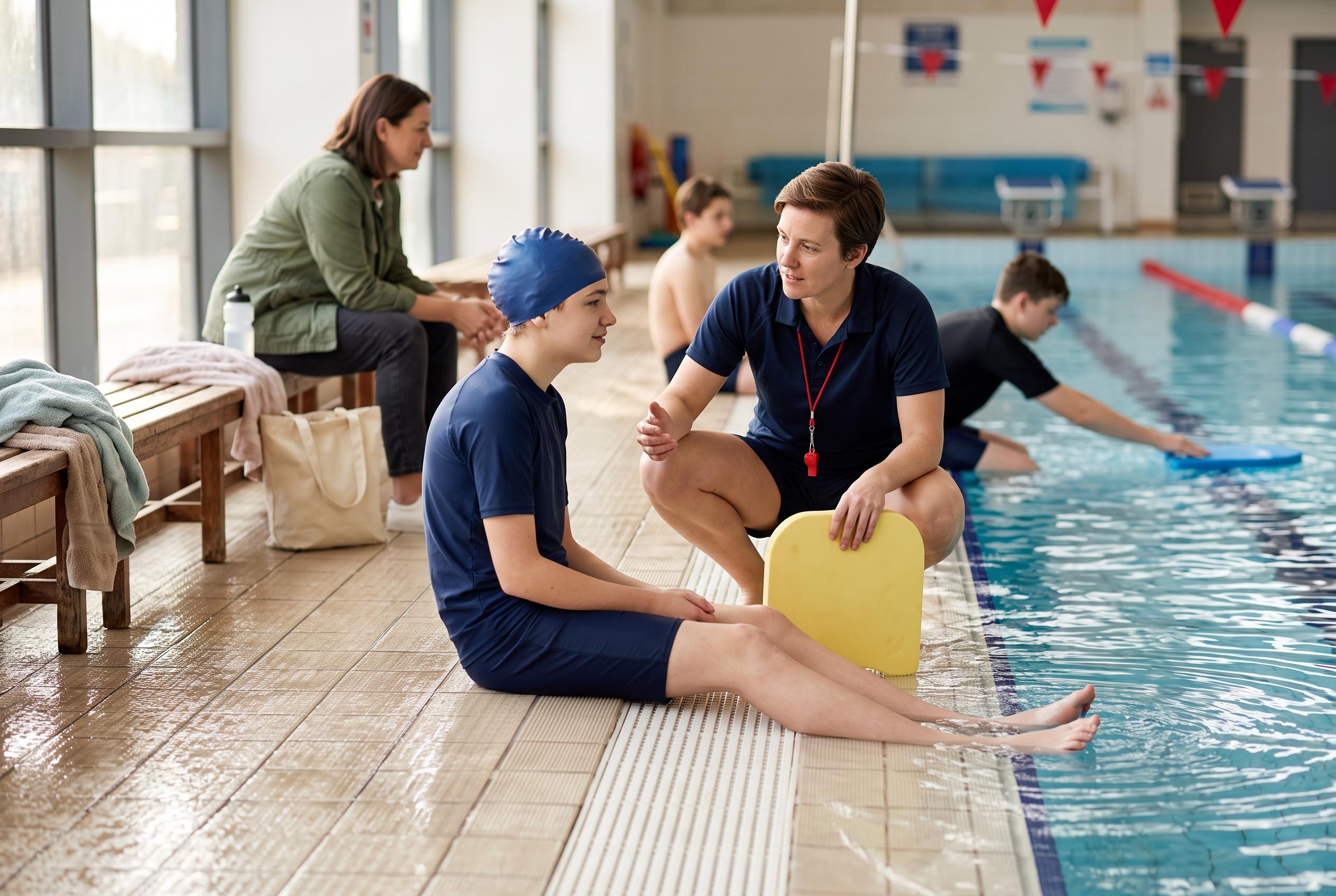

For many autistic teenagers, the swimming pool provides a calming environment that supports learning, confidence, and independence. Recent research highlights how aquatic activity can ease symptoms and foster inclusive social spaces, emphasising personalised approaches and water safety.
For many autistic teenagers, the swimming pool offers something the wider world often does not: a place that feels ordered, quieter and easier to read. In a composite portrait described by Autism Spectrum News, a 13-year-old called Brooks finds that once he dives in, the noise and pressure of everyday life seem to fall away. For parents and caregivers, that image captures why swimming can matter so much: the water is not merely a venue for exercise, but a setting where some autistic young people feel calm enough to learn, grow and simply be themselves.
Part of that appeal is sensory. Water presses evenly against the body, movement becomes lighter and the rhythm of strokes, breaths and turns creates a predictable pattern. Researchers have linked sensory processing and water competency in children on the autism spectrum, suggesting that aquatic activity may feel more manageable for some young people than land-based sport. A separate randomised trial found that a structured aquatic programme improved water competency, while a later systematic review and meta-analysis reported that aquatic exercise may ease overall autism-related symptoms and behaviours, even though evidence for specific motor gains remains limited.
Swimming may also suit the way some autistic teens prefer to learn. The sport rewards repetition, precision and steady progress, which can align well with focused, detail-oriented thinking. Practices usually follow a set sequence, and that regularity can reduce anxiety for swimmers who struggle with sudden change. A 2026 narrative review found that aquatic exercise may support cognitive, behavioural, motor and functional outcomes, while a pilot study using Halliwick-based aquatic exercise reported improvements in both social and motor skills. None of that means swimming is a cure; rather, it suggests that the right environment can make existing strengths easier to use.
The social side of swimming can be just as important. Unlike many team sports, it allows young people to train alongside others without constant social pressure, and the structure of sets and instructions often makes expectations clearer. That can help autistic teens feel included without being overwhelmed. Coaches who use visual demonstrations, brief directions and predictable routines are often better placed to unlock a swimmer’s confidence. Just as important is asking the athlete what helps, rather than assuming one approach fits all.
Even so, safety must come first. Stronger swimming skills do not make any child immune to drowning, and specialist instruction remains essential. Research published in 2026 on teaching swimming and water safety to people with autism found that structured interventions can improve both skills, but also stressed the need for continued study and careful supervision. For families, the message is practical: aquatic programmes can be valuable, but they work best when they are individualised, consistent and built around water safety as much as enjoyment.
In that sense, swimming does more than occupy a child’s time. For some autistic teenagers, it becomes a place to practise regulation, confidence, independence and resilience. The water does not change who they are. It can, however, create the conditions in which they are able to show what they can do.
Disclaimer: This content is for informational purposes only and is not intended to be a substitute for professional medical judgment, advice, diagnosis, or treatment.