

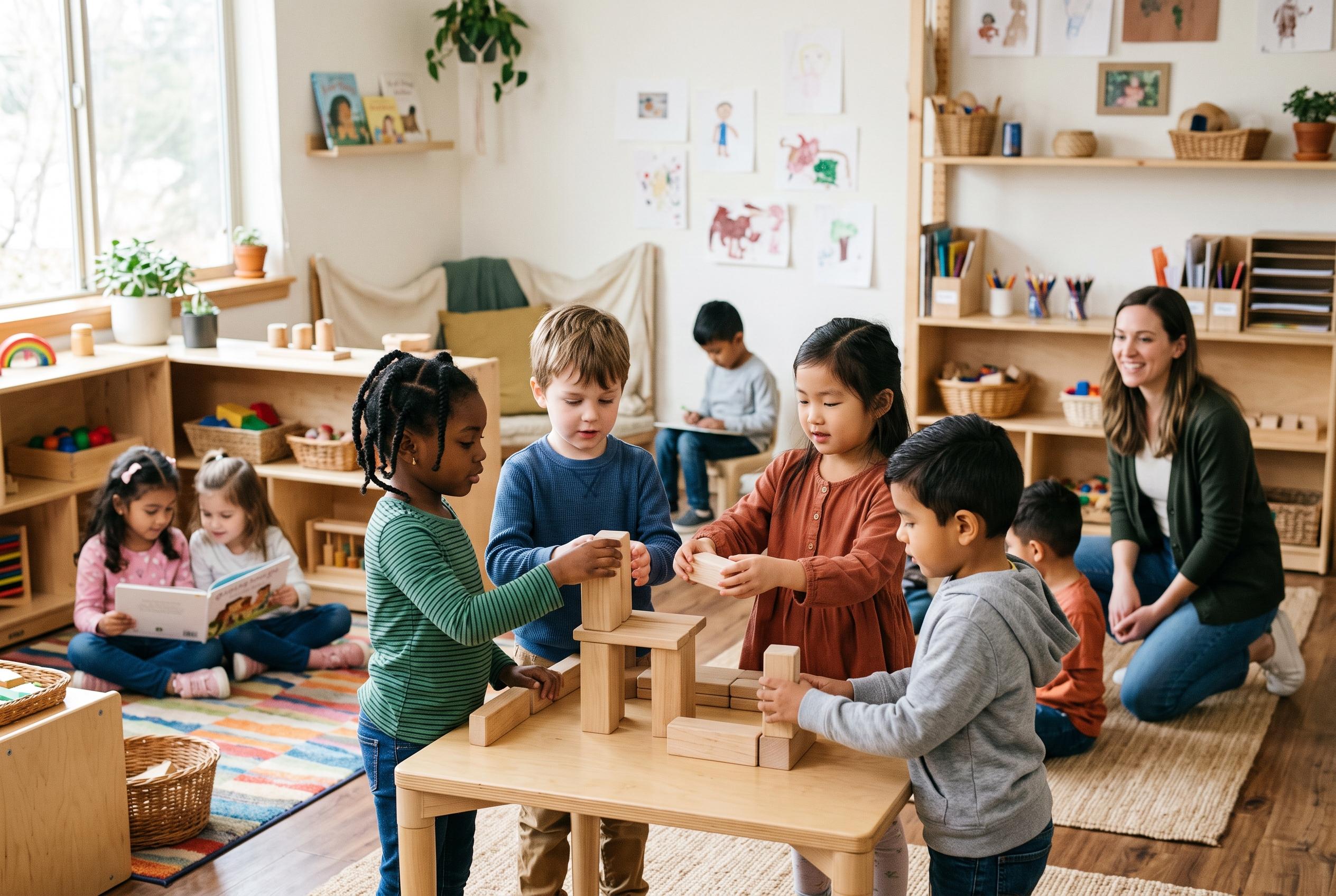

Experts say managing frustration, following routines and recovering from mistakes can be stronger signs of kindergarten readiness than knowing letters and numbers.
By the time children can recite the alphabet, count confidently and write their names, many parents assume the hard part is over. But early-childhood experts say those milestones tell only a small part of the story. What matters more, they argue, is whether a child can manage frustration, follow routines, recover from mistakes and ask for help when needed.
Dr Lauren Loquasto, senior vice president and chief academic officer at The Goddard School, says a child who has memorised letters but cannot cope with disappointment or communicate a need may struggle with the transition into the classroom. That view is consistent with the American Academy of Pediatrics, which frames school readiness across several areas, including physical development, language, cognition and social-emotional growth, rather than academic knowledge alone.
Research backs that broader view. A review published on PubMed Central found that social-emotional skills such as emotion knowledge and problem-solving are linked with stronger social competence and fewer behaviour problems, while executive function can help bridge those skills to academic outcomes. Another study in a Wiley journal found that different parts of executive function, including working memory and cognitive flexibility, are closely tied to both academic and social-emotional indicators of readiness.
That means the daily signs of readiness can look less like worksheets and more like ordinary life. Can a child follow a string of directions without repeated reminders? Can they wait for a turn, tolerate a small setback or try again when something goes wrong? Can they separate from a parent without a prolonged meltdown? According to Oregon State University, fine and gross motor development also matter, with motor skills linked to later social behaviour and executive function. Put together, these abilities suggest a child is learning how to operate in a group setting, not just how to complete a task.
The risk of pushing too hard, too soon, is that children can begin to see themselves as incapable when they are simply not developmentally ready for a particular environment. The American Academy of Pediatrics says schools should be ready for children, not the other way round. That is one reason inquiry-based classrooms, including The Goddard School’s Wonder of Learning approach, emphasise asking questions, testing ideas and learning through problem-solving. In that model, a child who wonders why one toy floats and another sinks is practising the same thinking, patience and flexibility that a kindergarten classroom demands.
For parents, the message is reassuring rather than alarming: readiness is not a perfect yes-or-no test. It is a pattern built over time through small responsibilities, social experiences and chances to solve problems independently. As Loquasto puts it, the goal is not for a child to know everything kindergarten will teach, but to arrive confident enough to learn it.
Disclaimer: This content is for informational purposes only and is not intended to be a substitute for professional medical judgment, advice, diagnosis, or treatment.



