

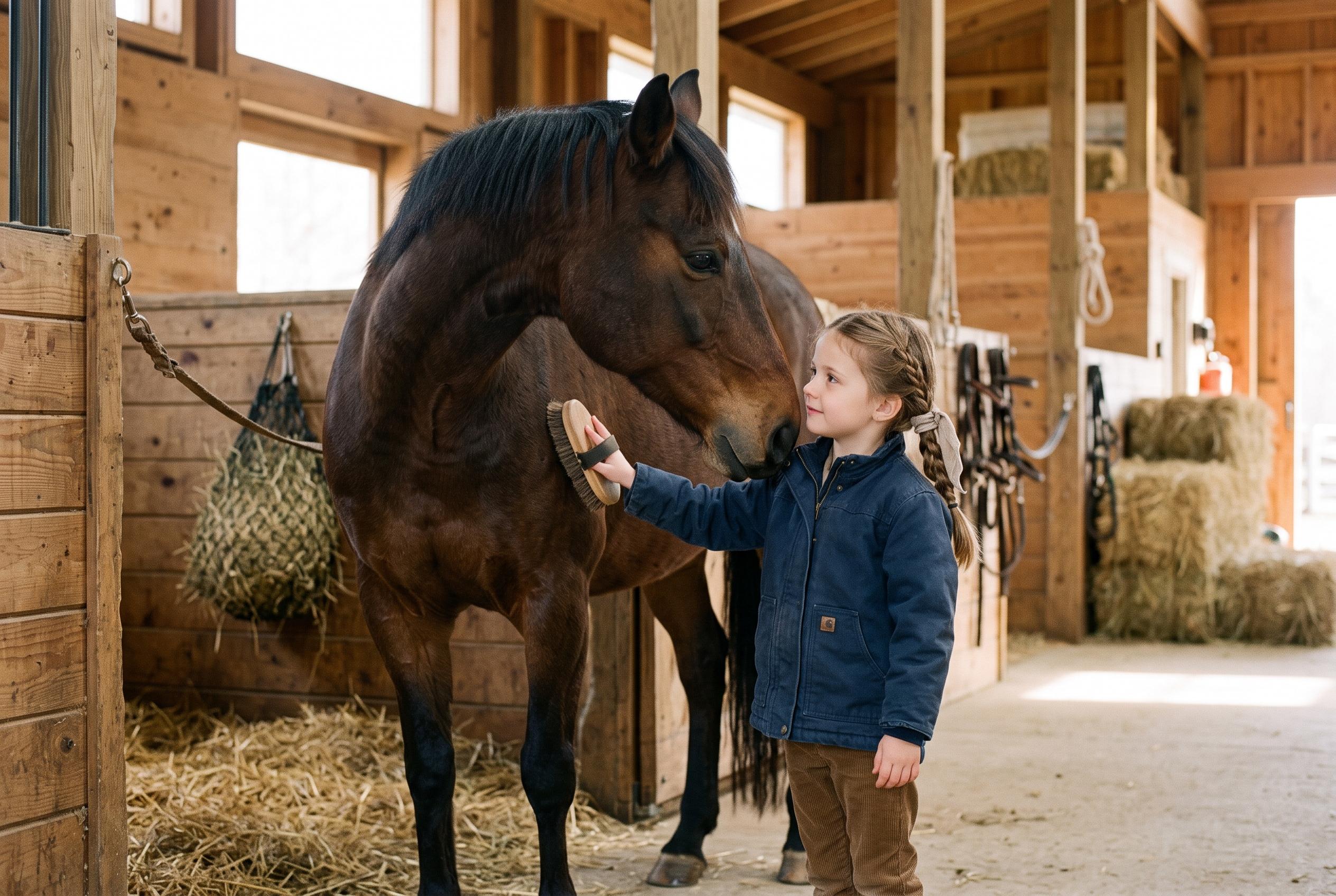

Barn routines and horses’ sensitivity to human behaviour can help some children practise emotional regulation, confidence and trust in a less confrontational setting.
Children who struggle with trauma or anxiety do not always respond well to a familiar therapy room. For some, the pressure of sitting still and talking through feelings can make distress worse. Around horses, though, the experience can be very different. According to the original article, many children who seem withdrawn or overwhelmed in other settings begin to settle after repeated visits to a barn, where the pace is slower and the expectations are less confrontational.
That shift is partly rooted in how horses behave. As prey animals, they are highly attuned to movement, tension and tone, which means they react quickly to a nervous child’s body language. Healthline says equine-assisted therapy can help ease anxiety, build self-confidence, improve self-awareness and encourage mindfulness, with common sessions involving grooming, feeding and leading horses. For children, that kind of interaction can turn emotional regulation into something concrete: breathe more steadily, move more calmly and the horse often responds in kind.
The appeal is also practical. A barn session pulls children into the present moment, which can be especially helpful when anxiety keeps them trapped in what might go wrong next. Repeated routines such as grooming, tacking up, riding and cooling down create a structure that many anxious children find reassuring. In this way, equine work can become less about talking through fear and more about practising coping skills in real time, while the movement of the horse offers a rhythmic, often soothing physical experience.
For children recovering from trauma, the lessons can be just as valuable. Horses do not reward rushed or aggressive behaviour, so children learn that trust, patience and consistency matter. They also get the experience of giving a clear cue and seeing a response, which can restore a sense of control for those who have felt powerless. The original article also notes that horses communicate boundaries plainly, whether through pinned ears or a step away, and that can help children understand both respect and self-protection.
Specialist programmes across the United States are built around those ideas. Rich at Heart Therapy Horses in San Antonio says its services are designed to help people with special needs build confidence and life skills, while Agape Riding Academy and Riding The Spectrum both describe equine-assisted work as a way to support emotional, social and physical growth. Healthline notes that although the evidence base is still developing, research has pointed to positive links between equine therapy and recovery from anxiety, depression and other conditions. For families considering it, the message is simple: the right programme, with trained staff and a child-led approach, may offer something that conventional therapy sometimes cannot.
Disclaimer: This content is for informational purposes only and is not intended to be a substitute for professional medical judgment, advice, diagnosis, or treatment.



