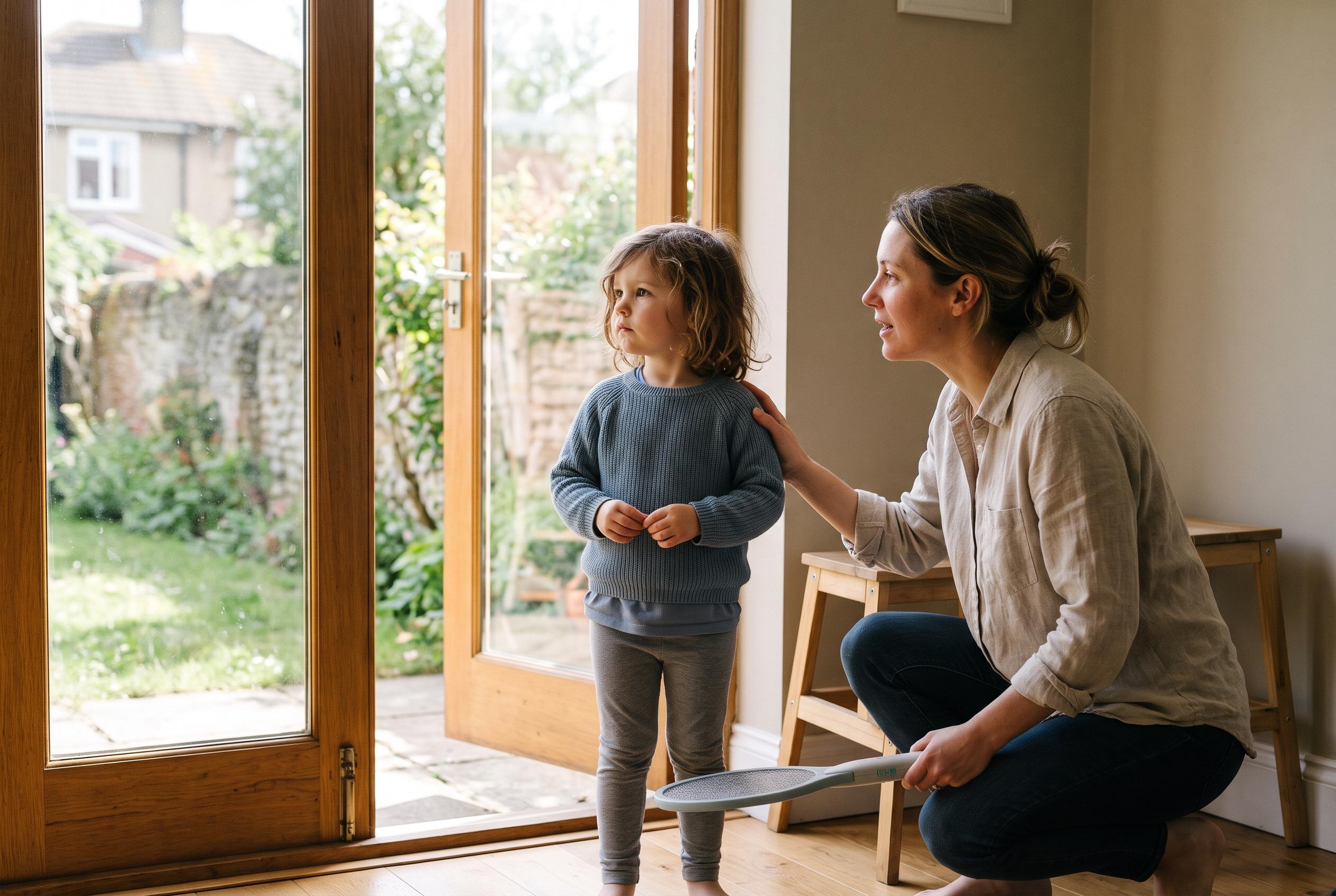

A brief sighting, bite or buzz can trigger escalating fear in some children. Experts suggest calm routines, practical pest checks and gradual support before avoidance takes hold.
For some children, a stray insect is more than a passing annoyance. Even a brief sighting, a bite or the faint sound of buzzing can set off a strong sense of alarm, especially in children who are already sensitive to sudden movement, touch or unexpected sensations. What looks minor to an adult can trigger bedtime resistance, repeated reassurance-seeking and a refusal to enter certain parts of the home.
According to the Cleveland Clinic, entomophobia is an intense fear of insects that can go well beyond simple dislike. Children with this kind of fear may cry, panic, shake, feel sick or develop a racing heartbeat when they see an insect, and the avoidance can start to affect ordinary routines. Parents should watch for patterns that continue over several weeks, such as repeated room checks, scanning walls before sleep or refusing to play outdoors.
Bites can also sharpen a child’s reaction to touch. Sensory Resources and other parenting and therapy guides describe tactile defensiveness as an unusually strong response to ordinary contact, so an itch, a seam in pyjamas or a brush of fabric may suddenly feel intolerable. That can lead to scratching, resistance to bedtime clothes or worries that something is crawling on the skin. If unexplained bites keep appearing, families should look for the source rather than assuming the problem is purely emotional. Simple steps such as washing bedding, vacuuming sleeping areas, fixing damaged screens and storing food securely can help. If pests continue to show up despite those measures, professional pest control may be worth considering.
The bigger risk is that one upsetting event can spread into a wider pattern of avoidance. A child who becomes frightened after seeing an insect in the bathroom may begin avoiding that room, then nearby spaces and eventually places outside the home that feel similar. Keeping the household predictable can help, but parents should avoid turning the house into a constant inspection project. One brief room check before bed, followed by a consistent calming routine, is usually more helpful than repeated searches. If anxiety starts to affect sleep, school attendance, bathing or play, the Cleveland Clinic says cognitive behavioural therapy and gradual exposure can be effective. In practice, that means helping the child face feared situations in small, planned steps, ideally with professional guidance when the fear is strong.
When panic does flare, the response should be calm and brief. Speak softly, move to a quiet place and help the child slow their breathing or notice the room around them. Once they are settled, deal with the insect discreetly and return to the activity without turning the moment into a major event. The message that matters most is that fear can pass, the body can settle and the child remained safe.
Disclaimer: This content is for informational purposes only and is not intended to be a substitute for professional medical judgment, advice, diagnosis, or treatment.