

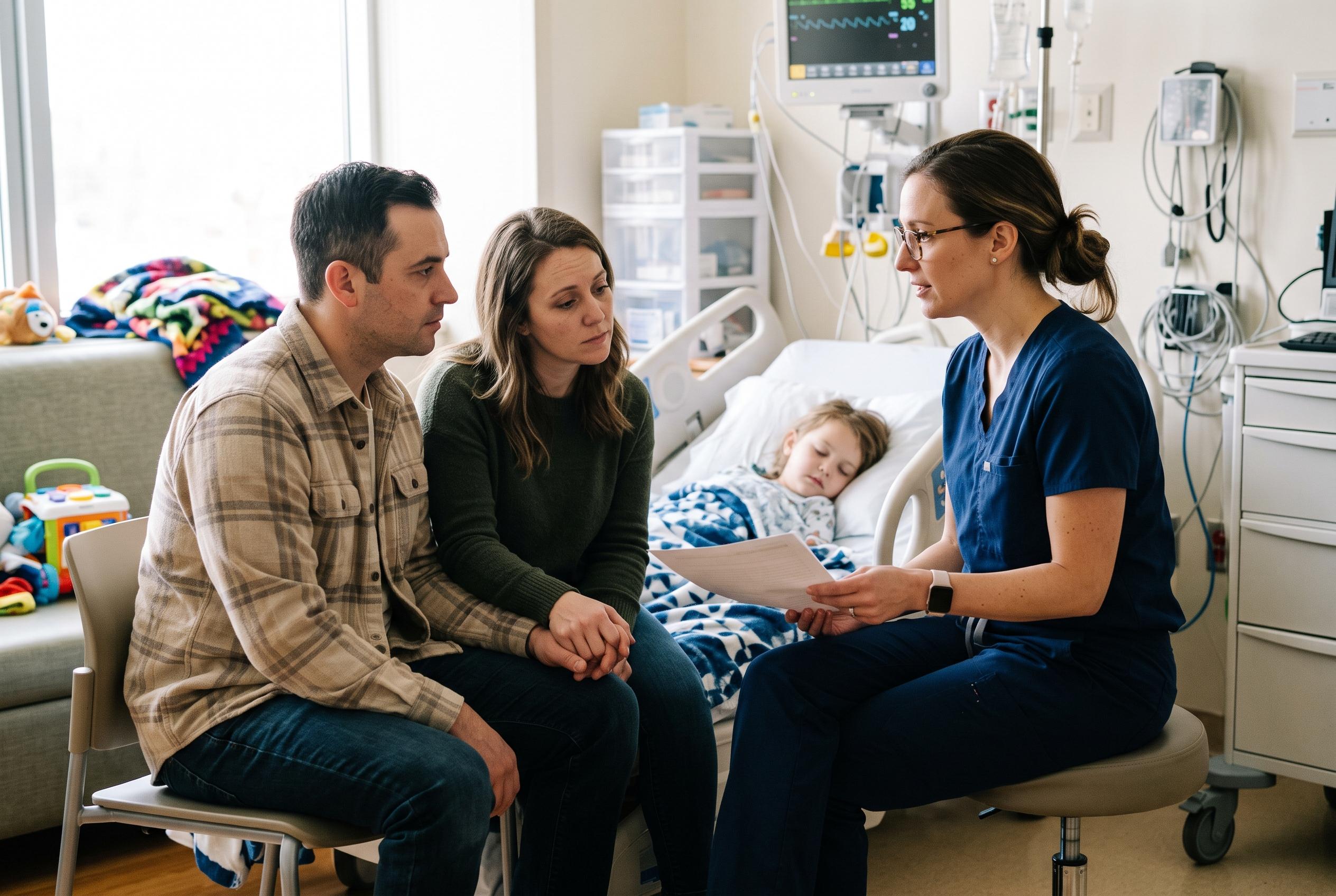

Conflicting diagnoses and treatment advice can leave families facing a painful stalemate, but structured discussion, shared decision-making and mediation may help resolve disputes.
When a child remains unwell and the adults around them cannot agree on what to do next, the problem is often bigger than a single diagnosis. Parents may see continuing pain, fatigue, dizziness, headaches or changes in behaviour and conclude that more treatment is needed. Doctors, meanwhile, may disagree about what the symptoms mean, whether the evidence supports a particular diagnosis, or whether further intervention is more likely to help than harm. The result can be a painful stalemate in which the child is still sick while decisions are delayed. According to the BMJ and other medical commentary on paediatric disputes, these disagreements are most often driven by uncertainty, not bad faith.
Doctors can reach different conclusions about the same child because they do not always look at the case through the same lens. One specialist may focus on neurological symptoms, another on joint pain, another on infection, and another on heart or circulation issues. That can be useful when a child’s illness affects several body systems, but it can also produce conflicting recommendations. A child’s symptoms may fit more than one explanation, and clinicians may differ on how much evidence is enough before starting treatment. The Science Media Centre has noted that conflict is more likely when families are desperate for answers and when unproven treatments are easy to find online.
Parents can also disagree with one another, even when they share the same goal of helping their child recover. One parent may focus on the child’s daily suffering and worry that an important condition has been missed. The other may be more concerned about side effects, the uncertainty of the diagnosis, or the risks of treatment that has not been clearly shown to work. The strain of long-term illness can deepen those differences, especially when school, work, finances and family routines are disrupted. As STAT has reported in coverage of these disputes, the emotional burden on families can become as significant as the medical questions themselves.
The situation becomes even harder when parents and doctors are all pulling in different directions at once. One clinician may advise more testing before treatment, while another feels treatment is justified on the evidence already available. In those cases, the central issue is not just which diagnosis is correct, but what decision needs to be made now and what can safely wait. The BMJ has argued that early listening and mediation can help reduce escalation, while legal and ethical advice may be needed when the conflict cannot be resolved through discussion.
Diagnostic uncertainty is one of the biggest reasons these disputes persist. Symptoms such as fatigue, headaches, dizziness, cognitive problems, sleep disturbance and joint pain are real, but they do not point to just one disease. Lab tests and imaging may be inconclusive, and a working diagnosis may later need to be reconsidered if symptoms change or treatment fails to help. That is particularly relevant in conditions where families and clinicians may disagree about whether a prior infection still explains the illness, or whether something else is going on. The Cleveland-style clinical approach described in the lead article is consistent with the broader paediatric ethics literature, which stresses the importance of weighing the evidence for and against each possibility.
Lyme disease is one example of how these disagreements can play out. A child with exposure risk and persistent symptoms may raise legitimate concern, yet the same symptoms can also appear in migraine, autonomic dysfunction, sleep disorders, inflammatory disease, nutritional problems or medication effects. Doctors may differ over how strongly the available evidence supports Lyme disease, and over whether more antibiotics are likely to help when objective signs of active infection are absent. The same kind of debate can arise in children with sudden behavioural change, including possible PANS or PANDAS, where experts may disagree about whether the right next step is psychiatric care, further medical investigation or treatment aimed at an immune or infectious trigger.
What often matters most, though, is how the child is functioning day to day. School absence, reduced activity, sleep problems, difficulty concentrating, dizziness, pain and emotional distress all give doctors and families a clearer picture of severity, even if they do not reveal the exact cause. The practical question is not only what the illness is, but what the child needs now: symptom relief, school adjustments, rehabilitation, monitoring or another opinion. The paediatric literature has repeatedly found that the most durable solutions come from structured discussion, shared decision-making and, when necessary, mediation or ethics review rather than from forcing one side to simply give in.
Disclaimer: This content is for informational purposes only and is not intended to be a substitute for professional medical judgment, advice, diagnosis, or treatment.



