

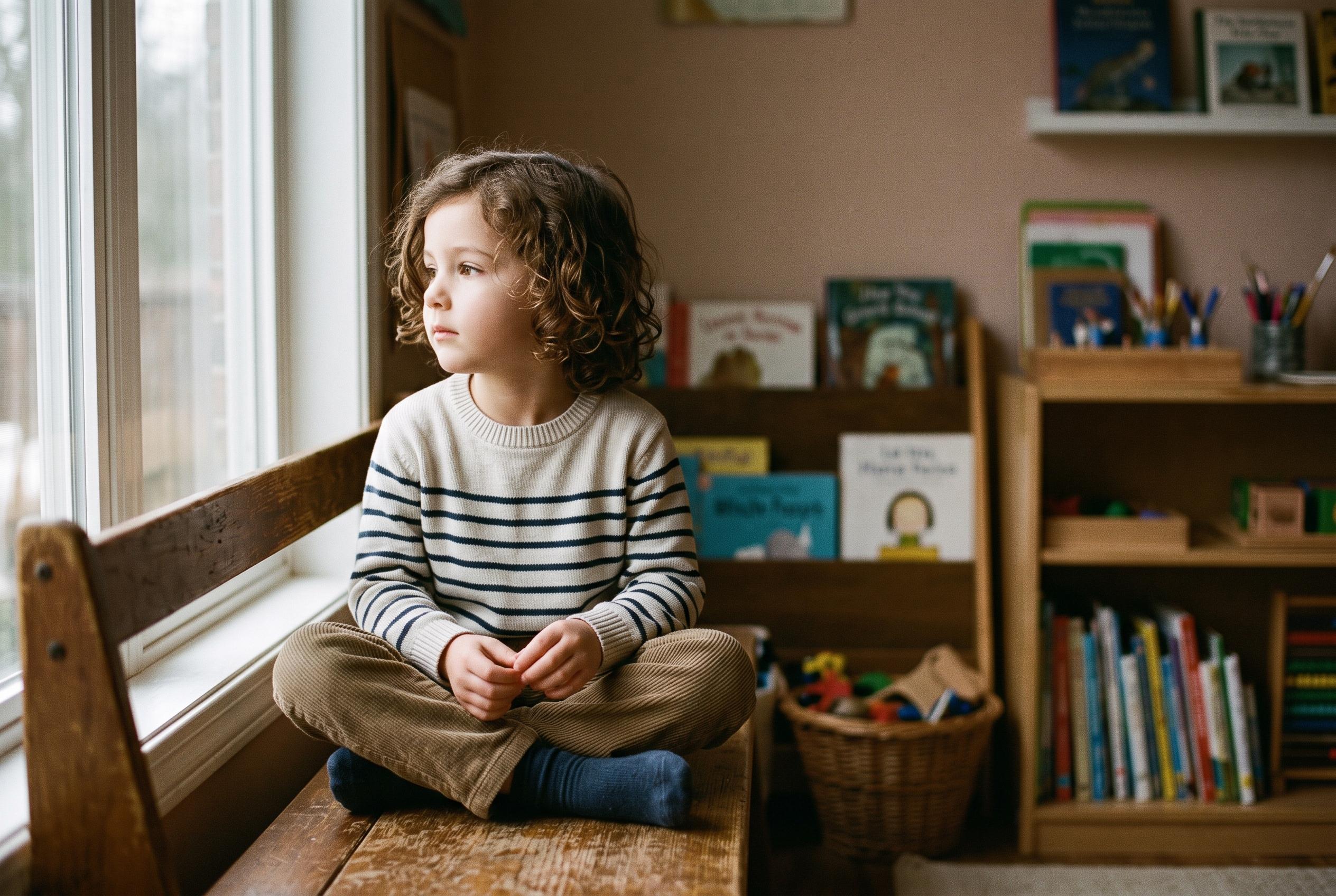

Quietness is often a child’s natural way of observing and adjusting, but sudden withdrawal, distress or silence in particular settings can point to anxiety or selective mutism.
A quiet child in a busy room can be easy to miss. They may watch from the side, speak little and take longer than others to warm up. For many children, that is simply temperament: a careful, observant way of moving into new situations rather than a sign that anything is wrong.
The key is not how much a child speaks, but whether their silence fits their usual manner. A child who is calm, engaged and slowly joins in may simply prefer to observe before taking part. By contrast, a child who has become markedly more withdrawn, stops joining activities they once enjoyed or seems distressed may be telling adults that something has changed.
That distinction matters because quietness can hide a range of very different experiences. In a multilingual home or preschool, for example, a child may be less verbal in one language while they are still gaining confidence in another. Specialists caution that bilingual development should not be mistaken for a speech problem, and children need to be assessed across the settings and languages they actually use.
There is also a more specific pattern that parents and educators should know about: selective mutism. Health professionals describe it as an anxiety-related condition in which a child who speaks comfortably in some situations is unable to speak in others, such as school. Research reviewed by the American Speech-Language-Hearing Association and other clinical literature shows that it is often linked with anxiety, behavioural inhibition and, in some cases, other developmental or psychiatric factors. The condition is not the same as refusal or stubbornness, and repeated pressure to “use your words” can make speaking feel even harder.
Because quiet children can be overlooked, careful observation is essential. Adults should look for changes over time, pay attention to how a child behaves at home and in other settings, and note whether silence comes with clinginess, physical complaints, sleep changes or avoidance. If a child seems comfortable, plays, builds relationships and gradually participates, their quietness may simply be part of who they are. If the pattern is new, persistent or linked to distress, it is worth seeking advice from a paediatrician, child psychologist or speech-language therapist.
For parents, the most helpful response is often gentle and patient. Naming what a child is doing, rather than labelling them as shy, can reduce pressure and leave room for them to develop at their own pace. The aim is not to turn a reserved child into a talkative one, but to understand when silence is just temperament and when it may be a sign that support is needed.
Disclaimer: This content is for informational purposes only and is not intended to be a substitute for professional medical judgment, advice, diagnosis, or treatment.



