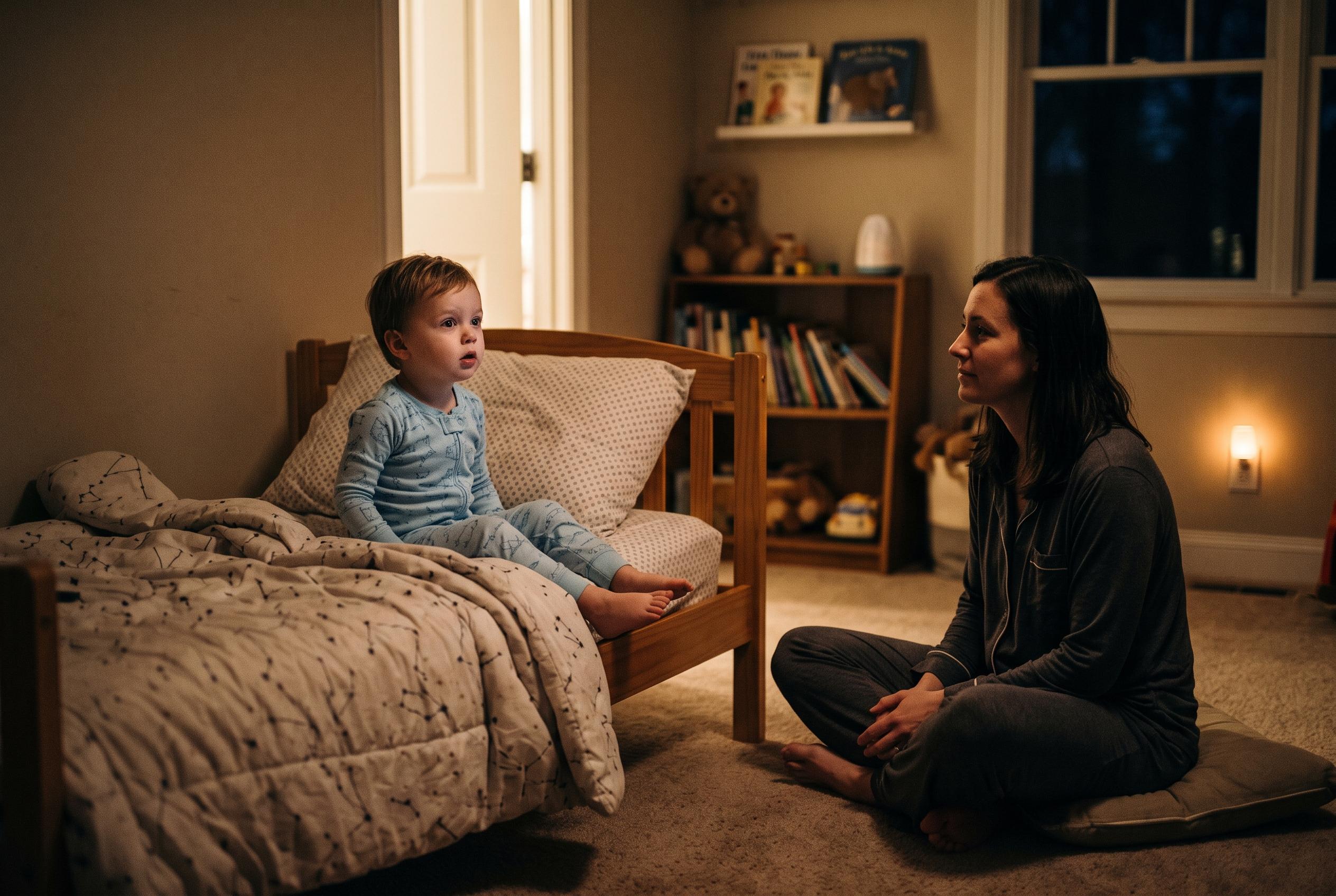

Night-time screams from toddlers’ rooms can signal different sleep issues: night terrors and nightmares. Recognising their distinct features and appropriate responses can help parents manage these common childhood disturbances effectively.
Night-time screaming from a toddler’s room can point to two very different sleep problems, and the distinction matters. Night terrors and nightmares may look similar from across the hall, but they happen in different parts of sleep, call for different responses and usually leave children with very different memories the next day. Johns Hopkins Medicine says night terrors happen during deep non-REM sleep, usually in the first half of the night, while nightmares arise during REM sleep and are more likely to wake a child in the early morning hours.
A child in the middle of a night terror often appears awake but is not truly alert. They may sit up, scream, sweat, thrash or seem frightened and confused, yet remain hard to comfort and may not recognise a parent. Johns Hopkins Medicine and Medical News Today both note that children typically have no recall of the episode afterwards. Night terrors are most often seen in early childhood and usually resolve on their own.
Nightmares look different. The child wakes fully, can usually describe the dream and often wants reassurance before settling again. Healthline and NewYork-Presbyterian explain that nightmares are frightening dreams, not partial awakenings, and they tend to happen later in the night when REM sleep is more common. In toddlers, the dream content often reflects ordinary fears, such as separation, monsters or darkness.
For parents, the practical response is almost the opposite in each case. During a night terror, the priority is safety: keep the child from falling, hitting furniture or wandering into danger, but do not try to wake them, as Medical News Today and Healthline advise that this can prolong the episode or make the child more disoriented. With nightmares, by contrast, comfort matters most. A calm voice, a hug, a night light or a favourite comfort object can help a child feel secure enough to return to sleep. Johns Hopkins Medicine says caregivers should stay calm and avoid overreacting in either situation.
The most common triggers for night terrors are plain old sleep disruption and stress. Medical News Today lists tiredness, fever, excitement, anxiety, sudden noise and changes in routine as possible triggers, while Healthline points to poor sleep and illness as frequent factors. The same logic applies to nightmares, where stress, scary bedtime content and daytime worries can carry over into sleep. Consistent routines, enough sleep and a calmer wind-down before bed can reduce both.
Parents should seek medical advice if episodes are frequent, prolonged, dangerous or begin to affect daytime behaviour. Johns Hopkins Medicine says persistent or severe cases may need a closer look, especially if the child seems unusually sleepy, has signs that could suggest seizures, or if the events continue as the child gets older. For most families, though, the outlook is reassuring: night terrors and nightmares are common childhood sleep disturbances, and both usually improve as children mature.
Disclaimer: This content is for informational purposes only and is not intended to be a substitute for professional medical judgment, advice, diagnosis, or treatment.