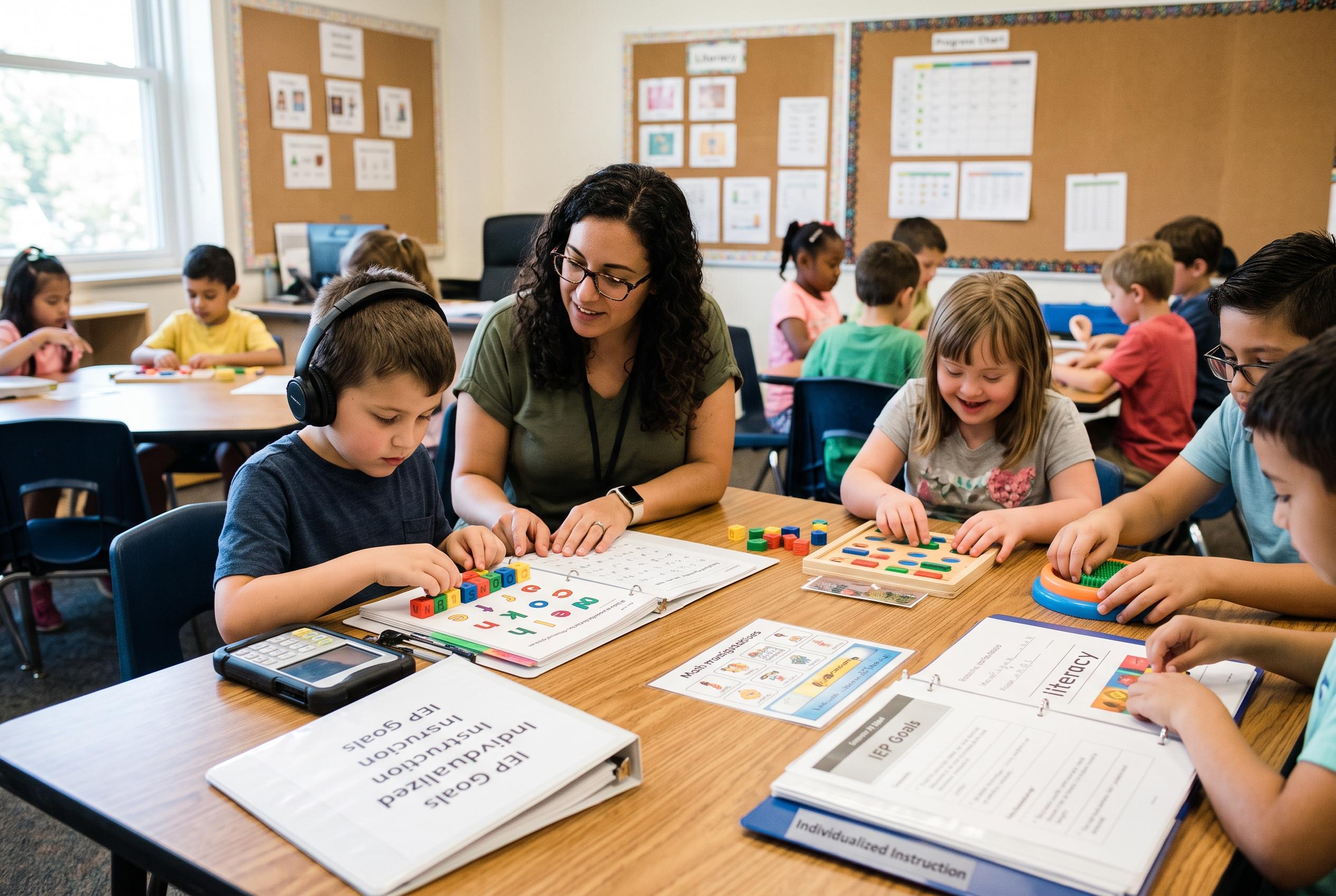

Expert insights highlight that student progress stalls not due to paperwork or accommodations, but because of the lack of targeted, evidence-based instruction tailored to individual needs within IEPs.
Students who stop short of their IEP goals are often blamed on absenteeism, staff shortages, behaviour issues or plans that look strong on paper but fail in practice. Yet special education experts say the deeper problem is usually far more basic: the child is not getting the specially designed instruction they need. That instruction, not the paperwork around it, is what turns an Individualised Education Programme into a working educational plan.
Specially designed instruction, or SDI, is the part of special education that changes content, teaching method or delivery to match a pupil’s disability-related needs. The United Federation of Teachers says it is central to special education, while the Colorado Department of Education and other school systems describe it as instruction shaped by evaluation data and the student’s individual profile. By contrast, accommodations such as extra time, preferential seating or text-to-speech tools help a child access learning, but they do not directly teach a missing skill.
That distinction matters because many families and educators still treat accommodations as the heart of an IEP. In reality, the law reserves an IEP for pupils whose disability requires specially designed instruction, not just adjustments to how work is completed. The El Paso and Plano school districts both stress that SDI is specific to special education and is separate from Section 504 supports and response-to-intervention systems. The Council for Exceptional Children likewise says SDI is distinct from differentiation, accommodations and modifications.
The article from The Intentional IEP argues that this is why progress can stall even when every support listed in a plan is delivered faithfully. A pupil may get notes, reminders and extended time, but if no one is explicitly teaching the skill gap behind the difficulty, growth may remain limited. Effective SDI, according to the education groups cited above, is intentional, evidence-based and tied directly to present levels of performance and IEP goals, with teachers adjusting methods as progress data comes in.
That is why IEP teams are urged to ask harder questions before rewriting goals or reaching for more accommodations. Is the pupil receiving instruction that directly addresses the disability-related barrier? Is it systematic, explicit and consistent? Is progress being monitored closely enough to guide changes? Those questions, special education specialists say, keep the focus on what the IEP is meant to do: not merely provide access, but build skill, confidence and independence over time.
Disclaimer: This content is for informational purposes only and is not intended to be a substitute for professional medical judgment, advice, diagnosis, or treatment.