

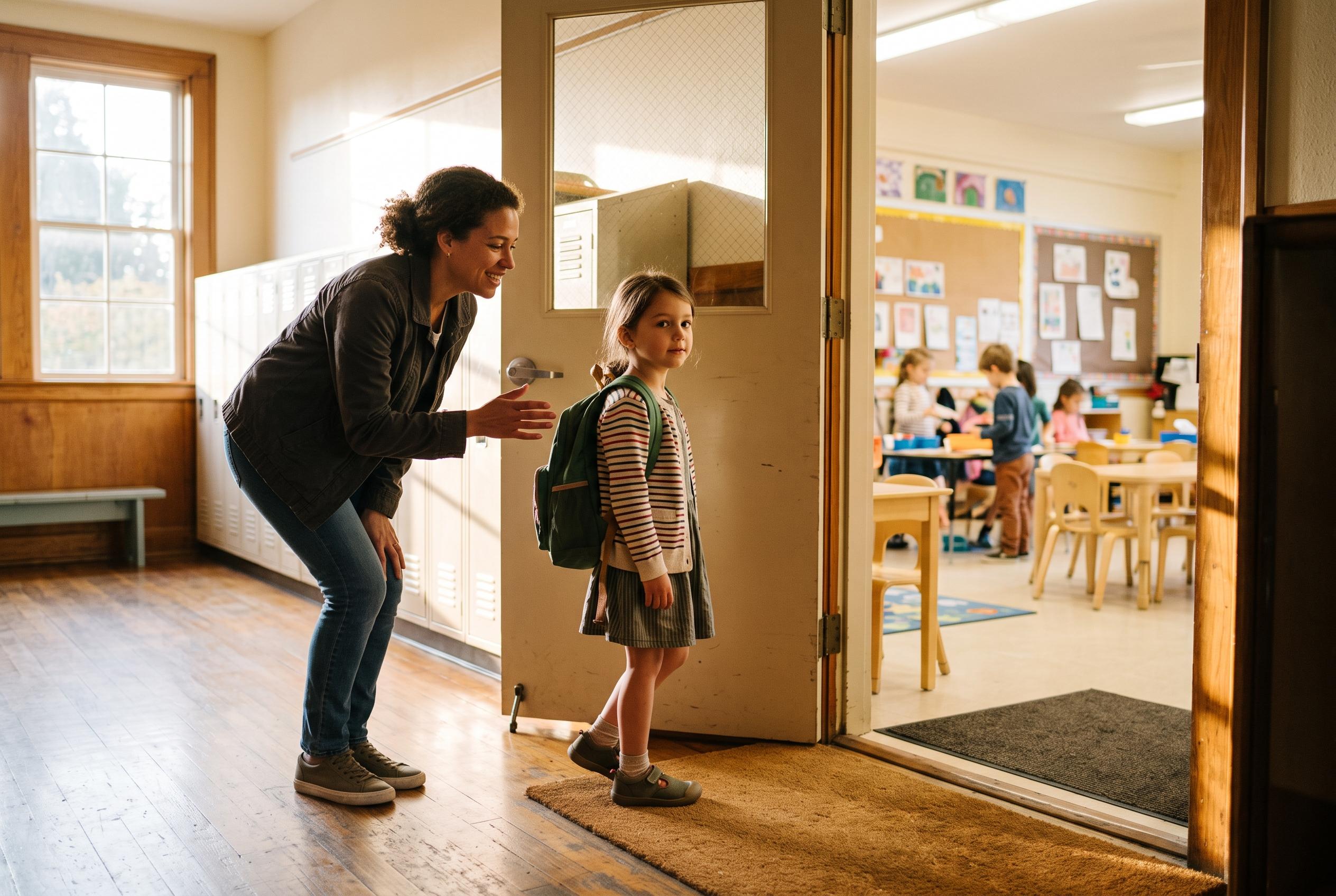

Psychologist Ece Başak Karakaş highlights that feelings of unease during the start of school are natural and manageable, emphasising the importance of support, routine, and emotional awareness for children and parents alike.
Children often feel a sense of unease when school begins, and specialists say that is usually part of healthy development, not a sign that something is wrong. In her Cumhuriyet essay, psychologist Ece Başak Karakaş describes separation as a recurring part of life, from infancy onwards, and argues that the return to school can bring excitement, sadness and anxiety at the same time.
Karakaş’s central point is that the aim is not to erase those feelings, but to help children manage them. She writes that younger children can only fully trust an environment when they feel protected by an adult’s support, which makes the parent’s own emotional state important too. If a parent is highly anxious at drop-off, that worry can intensify the child’s sense that school is unsafe.
That view is consistent with guidance from Johns Hopkins Medicine and the Kids Mental Health Foundation, both of which recommend preparing children for the new routine before term starts. They advise adjusting sleep and wake times early, visiting the school in advance, and helping children reconnect with friends so the setting feels more familiar. Children’s Health also notes that separation anxiety is common in development and can be triggered by changes in routine or environment, including starting a new school.
Karakaş also suggests that children benefit from hearing what will happen after drop-off, so separation does not feel like disappearance. She says some children are helped by a transitional object, such as a small toy or another item from home, which can make the distance feel more manageable. Parenting.org and the Cleveland Clinic likewise recommend short, consistent goodbyes, keeping promises and avoiding drawn-out departures that can deepen distress.
The essay places particular weight on naming the feeling itself. Karakaş argues that adults should reflect the child’s fear, frustration or reluctance back to them in a calm way, so the emotion becomes easier to understand and bear. Over time, repeated experiences of leaving and reuniting help children learn that love remains even when a parent is not physically present, and that they can cope, ask for help and be reunited later.
Karakaş adds that parents should also look inward and ask what the school transition stirs up in them, especially if they are revisiting their own childhood memories. That reflection matters because children are not simply being separated from a parent for a few hours; they are also learning, step by step, how to build independence, solve small problems and function in a structured social setting. When anxiety becomes intense, long-lasting or disruptive to everyday life, she says support from a child and adolescent mental health specialist may be needed.
Disclaimer: This content is for informational purposes only and is not intended to be a substitute for professional medical judgment, advice, diagnosis, or treatment.



