

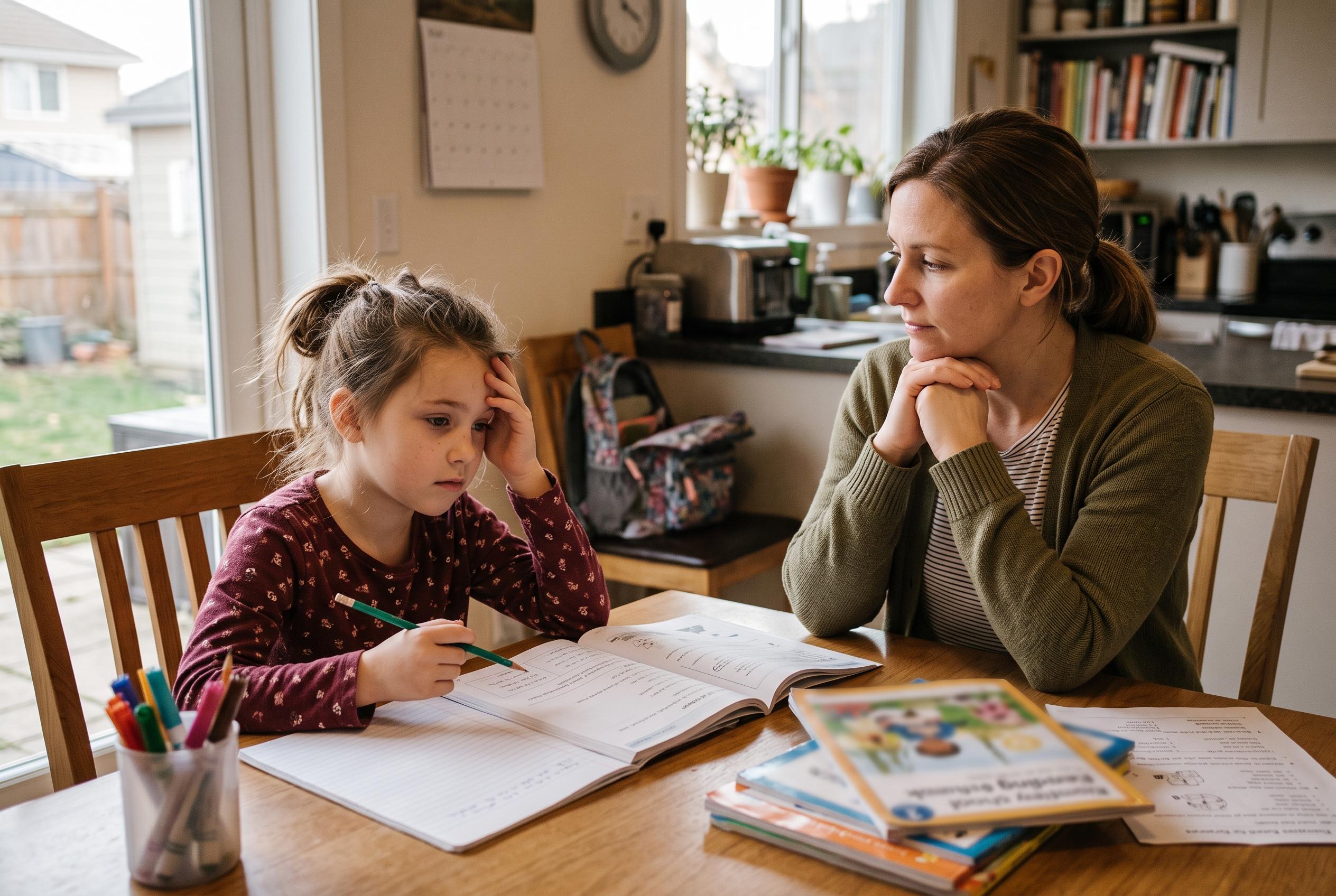

Avoidance, guessing and frustration can mask reading difficulties. Experts say early assessment and targeted support can prevent a temporary struggle from becoming a lasting loss of confidence.
Many children who struggle with reading do not announce the problem in obvious terms. Instead, the warning signs often show up as avoidance, frustration, or behaviour that can be mistaken for tiredness or disinterest. The lead article argues that parents should pay close attention when a child repeatedly resists reading, becomes upset during homework, or seems to cope by guessing rather than actually working through the words.
That matters because grades alone do not always reveal the full picture. A child may appear to be keeping up by leaning on picture clues, memorised phrases, context or guesswork, yet still lack the basic skills needed to read accurately and understand what they are seeing on the page. The articles on reading difficulty also note that some children stay quiet in class, hide their struggles with familiar books, or read aloud fluently enough to mask weak comprehension.
One of the most important distinctions for parents to understand is the difference between decoding and comprehension. Decoding is the process of turning written symbols into spoken words, while comprehension is about making meaning from the text. A child may stumble when reading aloud because they cannot decode smoothly, or they may read the words correctly but be unable to explain what the passage means. Several child-reading guides say that persistent trouble with letter names, rhyme, sound recognition, slow reading, letter reversals and difficulty with multisyllable words can all be signs that a deeper assessment is needed.
Some reading problems can also point to a learning difference such as dyslexia. The material reviewed for this article says parents should watch for ongoing difficulty learning letters, mixing up sounds or words, poor rhyme awareness, and repeated reversals of letters or numbers. It is the pattern that matters most. A short-lived wobble is usually less worrying than a consistent struggle that continues over weeks or months and starts to affect confidence, schoolwork, or a child’s willingness to engage with books at all.
Once parents notice those patterns, experts advise moving away from guesswork and towards a clearer assessment. The lead article recommends diagnostic testing to identify specific gaps, which may include phonics, fluency or comprehension. It also notes that classroom support is not always enough on its own, particularly when a child needs more individual attention than a busy teacher can provide. Private tutoring or other targeted help can work alongside school lessons to give a child more repetition, feedback and confidence.
How adults talk about the problem matters just as much as the support itself. The lead article suggests avoiding language that makes a child feel blamed, such as words that imply failure or bad behaviour. Instead, parents are encouraged to frame reading as a skill that can be built, not a flaw to be corrected. That approach is especially important because shame can make children withdraw even further. Gentle encouragement, small goals and visible progress often work better than pressure.
At home, experts say shorter and more regular reading sessions are usually more effective than long, stressful ones. Children who are already resistant to reading are likely to push back harder if practice feels like a punishment. Allowing them to choose books, comics or magazines that match their interests can lower resistance and make the activity feel more rewarding. The broader message across the articles is consistent: if a child seems to be falling behind, the earlier adults respond, the easier it is to close the gap before frustration hardens into a lasting dislike of reading.
Disclaimer: This content is for informational purposes only and is not intended to be a substitute for professional medical judgment, advice, diagnosis, or treatment.



