

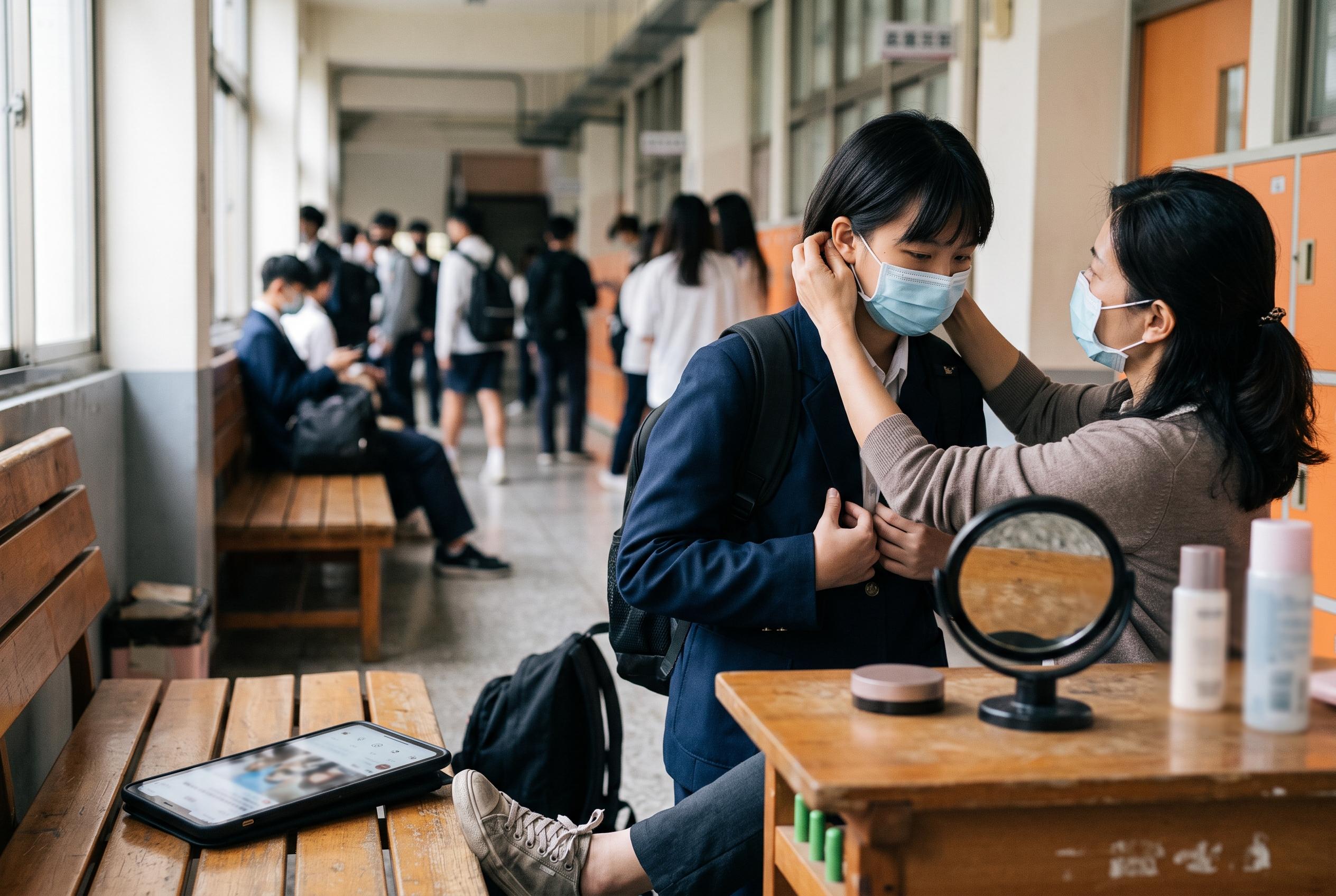

A survey in Taiwan reveals rising appearance-related anxiety among over 10,000 students, leading to widespread mask-wearing, self-esteem issues, and a normalization of cosmetic procedures, with family and social media influences amplifying the crisis.
A survey of more than 10,000 junior and senior high school students in Taiwan has found that appearance anxiety is affecting a substantial share of teenagers, with the Children and Families Welfare Alliance saying the problem is already shaping daily behaviour, emotional wellbeing and attitudes towards cosmetic procedures.
The alliance said 35.4% of the students it surveyed described themselves as struggling with appearance-related anxiety. The rate was much higher among girls, at 48.7%, compared with 20.6% among boys. It also found that 23.5% of teenagers spent more than half of each day wearing a face mask, not for infection control but to hide their looks or feelings, while many continued to keep their masks on during physical education or exercise. Some even refused to remove them at mealtimes.
The survey also points to a worrying normalisation of aesthetic intervention among adolescents. Nearly one in five said they would consider medical beautification treatments, including minor cosmetic procedures and, in some cases, more invasive surgery. About one in 10 said they might want to try weight-loss injections if given the chance. The alliance said these responses suggest that pressure over appearance is not limited to self-image alone, but is beginning to influence health-related choices.
Family attitudes appear to matter as well. Among teenagers with severe appearance anxiety, 10.8% said they were frequently or always criticised by parents for how they looked, compared with 3.3% among those rarely criticised. In the same group, 39.1% reported severe emotional distress, including sleep problems, depression, tension and irritability. That is far higher than the 4.4% recorded among teenagers with low appearance anxiety, reinforcing the case that offhand comments about looks can have a lasting effect.
Recent academic studies help explain why the issue is becoming more pronounced. Research published in 2024 in journals including the Journal of Paediatric Nursing and Archives of Psychiatric Nursing found links between social appearance anxiety, heightened attention to appearance-related content on social media and greater objectification of the body, particularly among adolescents who follow influencers or use social media heavily. Another 2024 review also connected celebrity culture and idealised online beauty standards with rising self-consciousness. On that basis, the alliance is urging parents and educators to avoid criticising children’s appearance, weight or clothing, and instead help them focus on personal qualities, bodily awareness and healthier measures of self-worth.
Disclaimer: This content is for informational purposes only and is not intended to be a substitute for professional medical judgment, advice, diagnosis, or treatment.



