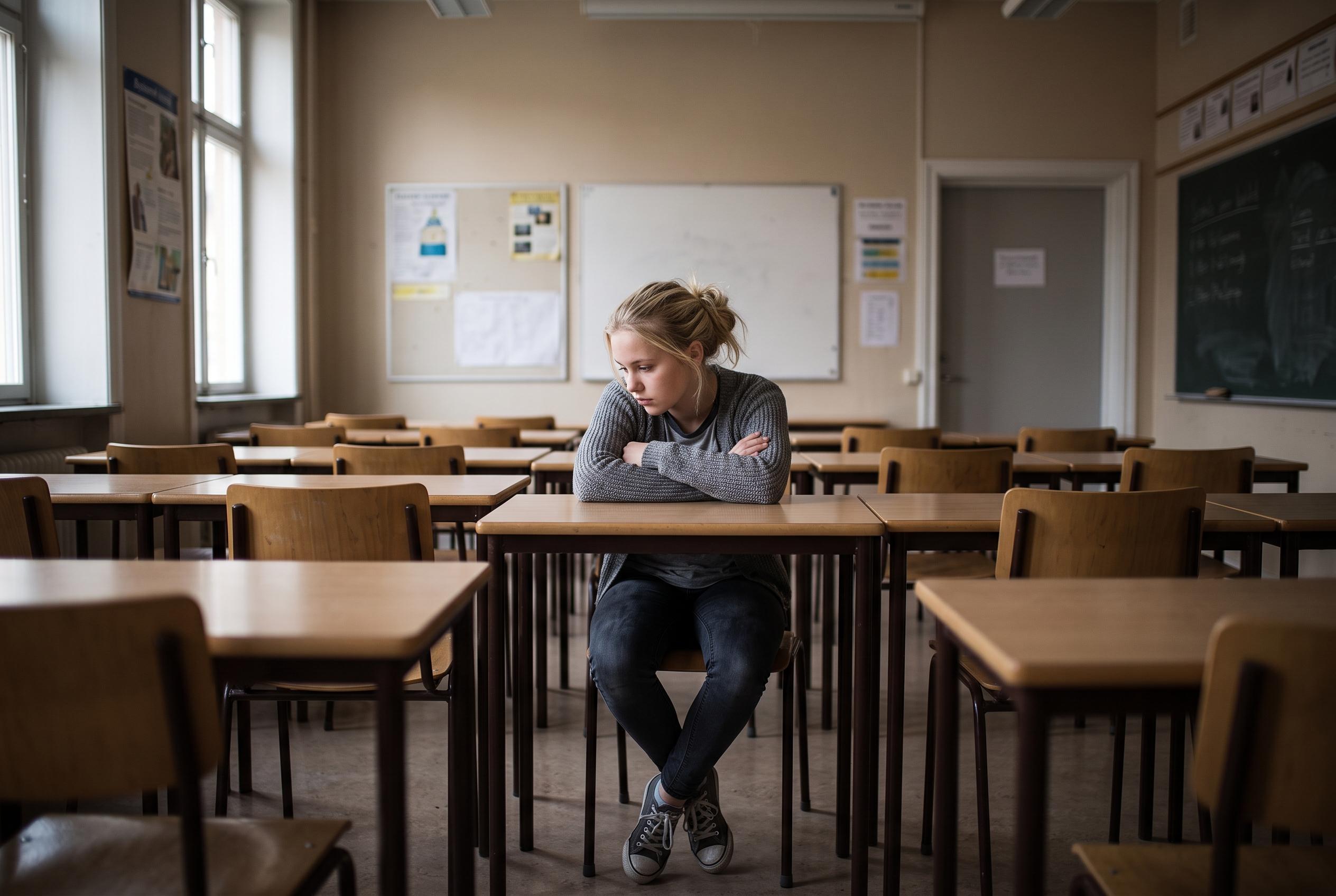

Calls to Swedish support organisation Tjejzonen regarding eating disorders have more than doubled over the past four years, with experts warning that returning to school amid ongoing pandemic effects intensifies challenges for vulnerable young people.
Calls to Swedish support group Tjejzonen about eating disorders have more than doubled in 4 years, while counsellors are warning that the return to school can be especially difficult for young people already struggling with food and body image. The organisation said it received 1,488 calls on the topic in 2021 and 3,213 in 2025, underscoring what it sees as a growing need for support among children and teenagers.
Moa Gardell, who coordinates support work at Tjejzonen, said the move from summer break back to lessons, routines and activities can heighten pressure because it often brings a new class, a new timetable or a change of school. She said that for some young people the transition can feel like a loss of control, which may intensify stress at precisely the point when they are expected to readjust.
The concern fits a wider pattern seen in Sweden during and after the pandemic. Frisk & Fri, another organisation working on eating disorders, has reported a clear rise in calls since the disruption caused by Covid-19, with staff describing callers as more isolated and in worse condition than before. Bris, the children’s rights organisation, has also reported a sharp increase in eating-disorder-related contacts and said last year it handled 3,804 such calls, up from 769 in 2016.
Linnea Konnberg, a former anorexia patient who now volunteers for Tjejzonen, said comparison with classmates can be a powerful trigger and can leave young people fixated on their bodies for a long time. Tjejzonen is urging relatives and other adults to listen carefully and avoid trying to solve the problem on their own, a reminder that specialist help and patient support are often needed when school pressures collide with an eating disorder.
Disclaimer: This content is for informational purposes only and is not intended to be a substitute for professional medical judgment, advice, diagnosis, or treatment.