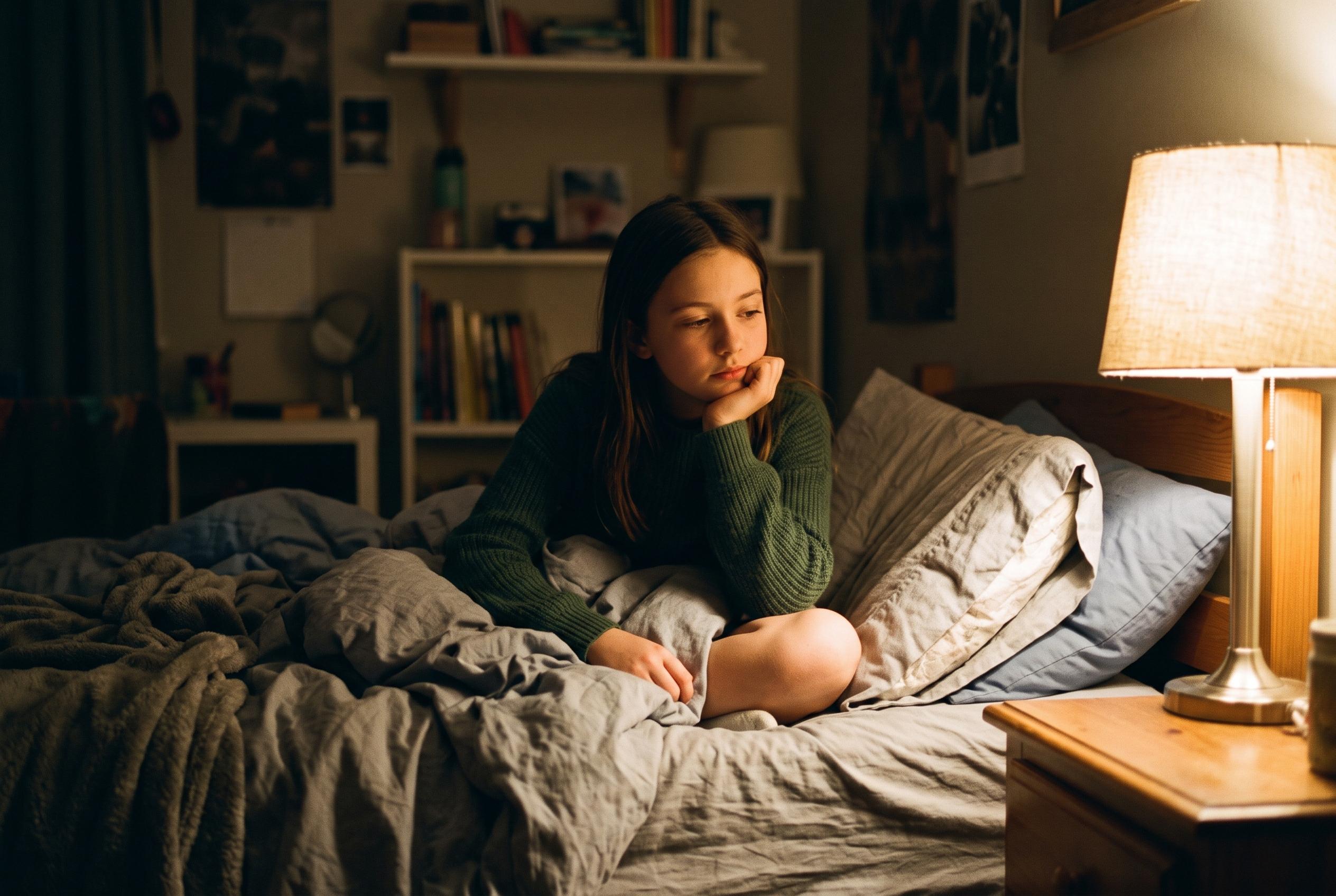

Research from Florida International University indicates that anxiety might impact the relationship between the brain’s pineal gland and sleep in children aged 10 to 13, shedding light on sleep difficulties during early adolescence.
A Florida International University study has found that anxiety may change how the brain’s pineal gland relates to sleep in preteens, offering a possible biological explanation for why some children struggle to fall asleep and stay asleep. Published in Scientific Reports, the research examined children aged 10 to 13 and found that a larger amount of melatonin-producing pineal tissue was usually linked with better sleep, but not among those with high anxiety.
According to Florida International University, the study was led by psychology professor Aaron Mattfeld and alumnus Franco Fuertes, who used high-resolution MRI scans alongside overnight sleep-lab monitoring. The team found that about half to three-fifths of the children had pineal cysts, fluid-filled structures that do not produce hormones. Those cysts did not appear to affect anxiety levels, but the volume of the active pineal tissue told a more complex story.
The researchers expected bigger pineal volume to mean better sleep across the board. Instead, the opposite pattern emerged in highly anxious children: larger pineal tissue was associated with longer sleep onset, lower sleep efficiency and more disrupted sleep. The journal paper, published on 14 February 2026, said anxiety severity moderated the relationship between pineal volume and objective sleep problems, and that the effect was strongest for sleep onset latency and sleep efficiency rather than REM sleep.
Mattfeld’s team focused on this age group because 10-to-13-year-olds are in a sensitive developmental window, just before anxiety disorders often become more common. During these years, the brain is rapidly reorganising, hormones are shifting and the internal body clock naturally pushes many children to fall asleep later. The researchers said this is one reason sleep timing can become especially difficult in preteen years, particularly when stress is already high.
The study does not prove cause and effect, and the team has not yet directly measured melatonin in the children. But the findings suggest that pineal structure may be one more piece of the sleep-anxiety puzzle. The researchers are now following 200 children as they move from middle school into later adolescence to see whether early sleep disruption helps predict later psychiatric problems.
Mattfeld said parents should keep bedtimes consistent, keep bedrooms cool and screen-free and avoid relying on over-the-counter supplements if sleep problems persist. He argued that sleep should be treated with the same seriousness as other health measures, especially because chronic disruption can affect mental, cardiovascular and cognitive health.
Disclaimer: This content is for informational purposes only and is not intended to be a substitute for professional medical judgment, advice, diagnosis, or treatment.