
Research from Thomas Jefferson University suggests that relying solely on traditional autism assessments may overlook sensory integration issues impacting children’s daily activities, highlighting the need for more comprehensive evaluations.
Researchers at Thomas Jefferson University say that autism assessments may miss important sensory difficulties unless clinicians look beyond obvious signs such as noise sensitivity or discomfort with touch.
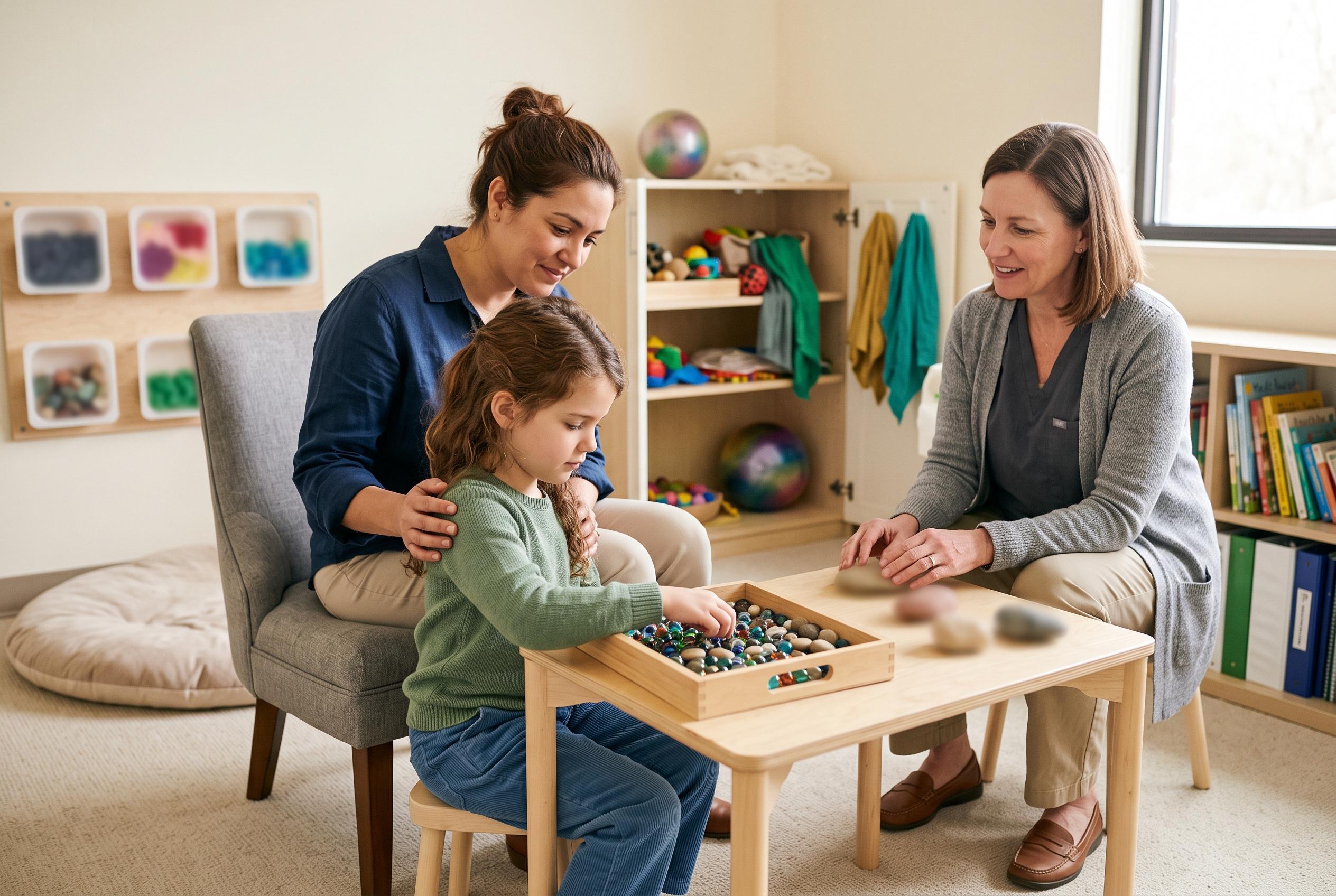
In a study of 93 children aged five to nine, occupational therapists used standardised sensory integration tests rather than relying only on caregiver reports. The team examined how the children processed sight, sound, touch, body position, balance and motor tasks that depend on sensory input. According to Jefferson, the aim was to see whether this broader approach revealed issues not captured in routine autism evaluations.
The findings suggested that it did. Some children showed problems with tactile perception, balance, motor planning or motor skills, while others struggled in several areas at once. That matters because sensory difficulties do not always show up as visible distress. A child may not cover their ears or avoid certain fabrics, yet still have trouble making sense of information from their hands or body.
Jefferson’s account highlighted one child who seemed untroubled by loud classrooms or touch but struggled with tasks such as buttoning clothes, tying shoes and holding a pencil. Further testing suggested a substantial difficulty processing touch. The broader point, the researchers said, is that everyday problems with dressing, handwriting or coordination may reflect sensory integration issues even when the child does not appear “sensory sensitive”.
The study also found little overlap between the detailed sensory assessments and standard autism diagnostic tests, which the researchers interpreted as evidence that sensory integration testing can add information for treatment planning. That does not replace an autism diagnosis, but it may help occupational therapists and families understand why certain daily activities are so hard. Jefferson’s researchers noted that this fits with a wider body of work on sensory features in autism, which are now recognised as part of the condition’s diagnostic picture. Earlier research on sensory integration-based occupational therapy has also suggested it can improve parent-identified goals for children with autism, though that does not mean one therapy approach works for every child.
For parents, the practical lesson is to watch for persistent difficulty with balance, movement, fine motor skills and touch-based tasks, not just loud-room overwhelm. A more individual assessment, the researchers argue, may be the best way to identify what support a child actually needs.
Disclaimer: This content is for informational purposes only and is not intended to be a substitute for professional medical judgment, advice, diagnosis, or treatment.