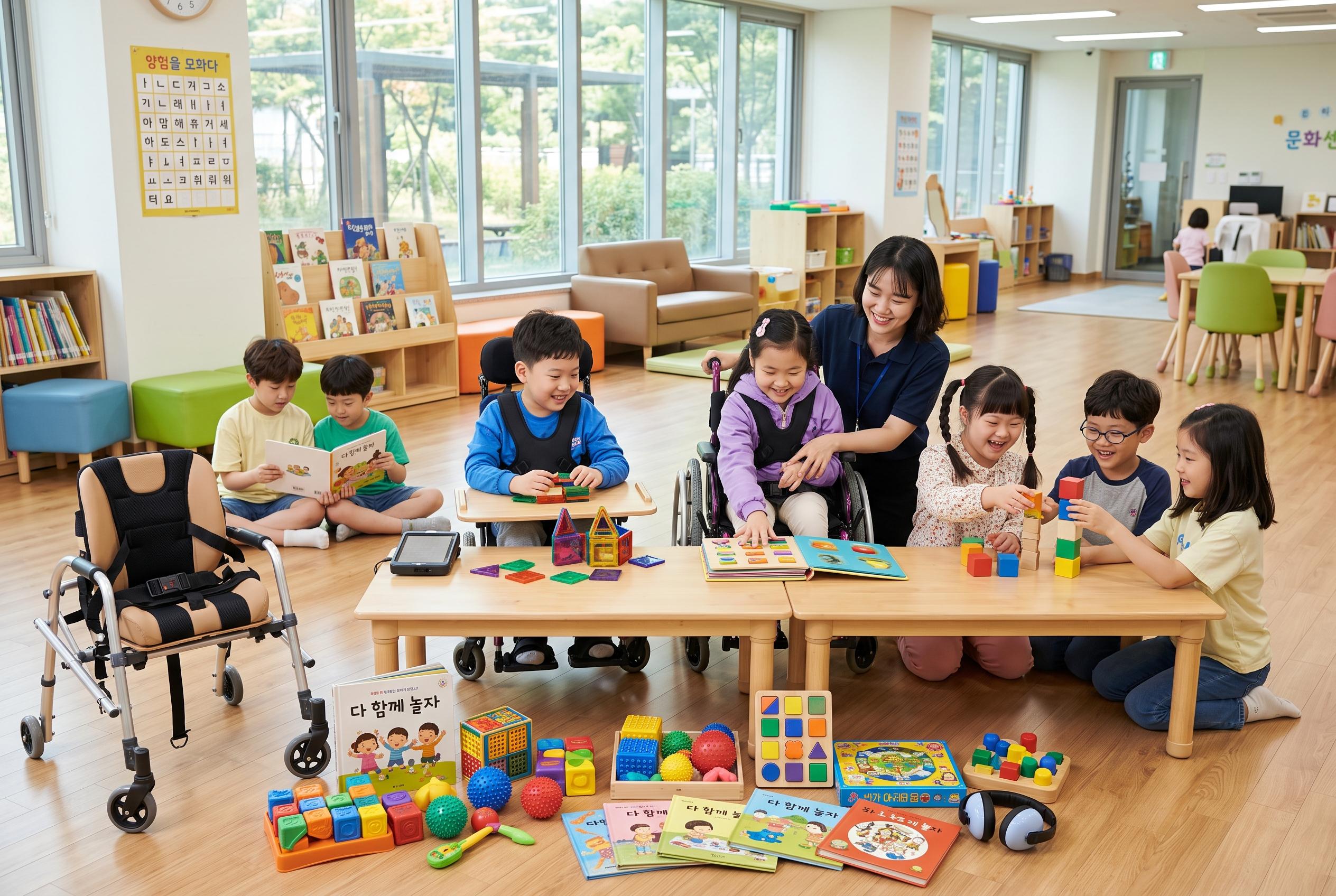

While South Korea’s birthrate declines, the number of children with disabilities is rising sharply, exposing gaps in support services and calls for a unified national approach to diagnosis, treatment, and education.
South Korea’s declining birthrate is masking a different trend in child welfare: over the past decade, the number of children has fallen sharply, yet the number of children with disabilities has risen. According to data compiled by the Korea Institute for Health and Social Affairs and highlighted by Seoul Shinmun, the child population dropped by 2.27 million between 2015 and 2024, while the number of children with disabilities increased by nearly 20,000. The shift is especially pronounced among school-age children, with developmental disabilities making up the clear majority of cases.
The figures point to a system that is identifying more children with developmental needs, but not necessarily supporting them better. Last year, 76.6% of children with disabilities were classified as having developmental disorders, including 42.6% with intellectual disabilities and 34.0% with autism spectrum disorders, according to the institute’s analysis. Experts say expanded screening and lower barriers to diagnosis have brought previously missed cases into view, but they have also exposed gaps in follow-through after diagnosis.
That gap is most visible in the way families are left to navigate services on their own. Seoul Shinmun reported that once a child is identified as needing help, parents often have to search separately for medical care, rehabilitation, schooling and welfare support, rather than moving through a single public pathway. Song Yeon-sook of the Slow Learners Citizens’ Association said parents frequently describe the search for connected services as more exhausting than the demands of raising the child itself.
The strain continues in classrooms and childcare settings. The Korea Institute for Health and Social Affairs found that 27.5% of children with disabilities struggle to adapt to daycare, kindergarten or school, with the biggest hurdle being keeping up with lessons. Shortages of special education teachers and support staff add to the problem. At a recent international symposium in the National Assembly, experts pointed to Australia’s Blue Sky Project as an example of how health, education and welfare services can be tied together, arguing that South Korea needs a national network that links diagnosis, treatment, rehabilitation, education and social support rather than leaving families to piece the system together themselves.
Disclaimer: This content is for informational purposes only and is not intended to be a substitute for professional medical judgment, advice, diagnosis, or treatment.