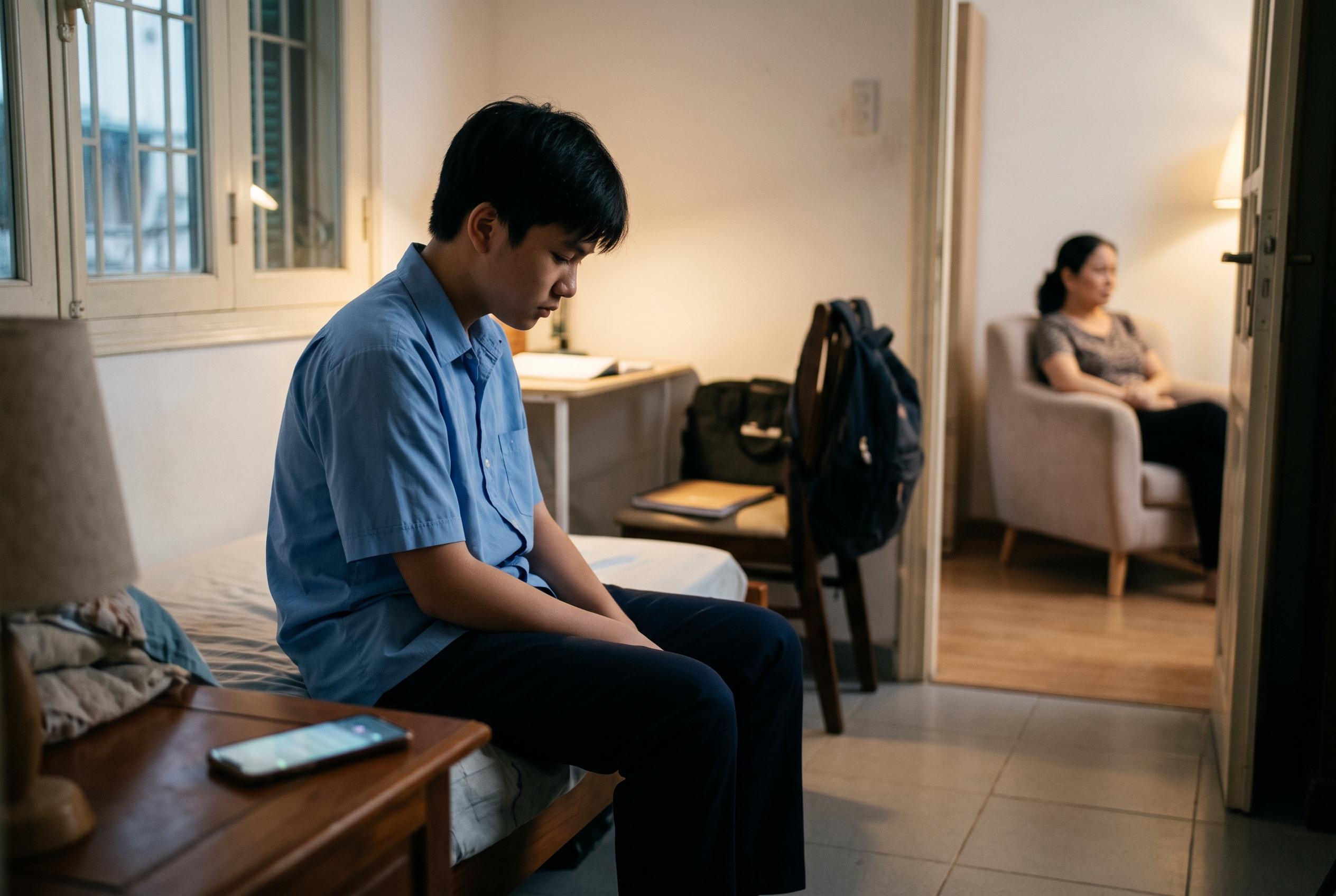

A case from Hà Nội highlights how social media can deepen emotional distress in vulnerable teenagers, raising concerns over content exposure and mental health risks among young people.
A teenager’s slide into self-harm can begin long before anyone sees the cuts, and in one recent case described by doctors at Bạch Mai Hospital in Hà Nội, social media appeared to deepen an already fragile situation. The patient, a secondary school student, was under sharper academic pressure after entering Year 10 and felt increasingly misunderstood at home, according to doctors quoted by Thanh Niên. Rather than turning to family, the teenager retreated into the online world, where late-night scrolling and a steady stream of distressing material gradually took hold.
At first, the student used social media for harmless entertainment. Over time, however, the feeds shifted towards videos about sadness and pain among young people, which the platform’s recommendation systems kept amplifying, doctors said. The teenager also became the target of ridicule on a school confession page, with mocking posts repeatedly appearing on the phone. After a heated argument with parents, the emotional strain escalated and the teenager began cutting the forearm with a razor blade, later hiding the injuries under long sleeves.
Doctors at the Institute of Mental Health said the case illustrated how self-harm may reflect emotions that adolescents cannot yet put into words. Nguyễn Thành Long warned that social media can intensify risk by feeding users more of the same content once they begin engaging with negative material. He also pointed to the effect of prolonged night-time use, which can disrupt sleep and weaken emotional control. Research is still evolving, but it increasingly suggests that heavy exposure to social media content, especially self-harm material, can worsen mental health risk in vulnerable adolescents.
The broader evidence remains mixed, yet several recent studies point in the same direction. A longitudinal Australian study published in PubMed found that adolescents aged 12 to 18 who used social media for more than two hours a day faced a small increase in the risk of depressive symptoms and poor well-being, with the highest risk seen in early adolescence and among girls. An advisory from the US Surgeon General has also said social media is now widely used by young people, while warning that safety evidence remains limited. A separate study published in PubMed found that exposure to self-harm content was linked with a higher risk of self-injurious thoughts and behaviours. In the case described by Thanh Niên, the teenager improved after psychiatric treatment, family counselling and tighter control over how social media was used.
Disclaimer: This content is for informational purposes only and is not intended to be a substitute for professional medical judgment, advice, diagnosis, or treatment.