

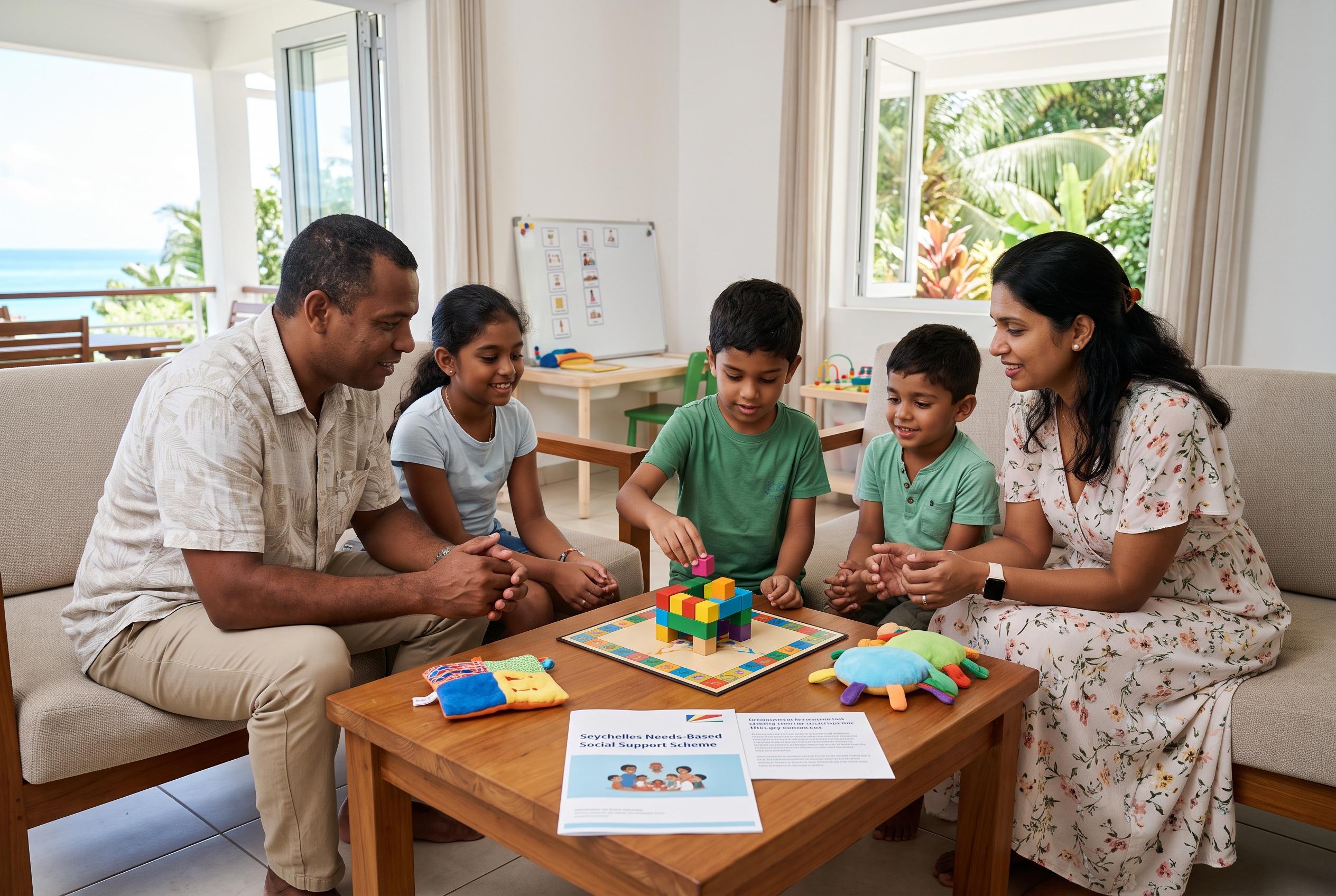

Seychelles is widening its financial assistance for children with autism under a new needs-based scheme, shifting towards a social model of disability support for families affected by the developmental condition.
Seychelles will widen financial support for some children with autism after the Agency for Social Protection said families who missed out on earlier medical assessments between November 2024 and June 2026 will now be eligible for a new needs-based programme. Roma Edmond, the agency’s chief executive, said the Children Neurodivergent Disorder Needs Scheme is intended for children with autism spectrum disorder who do not qualify for the country’s existing disability benefit.
Edmond announced the change at a press conference on Tuesday at the ex-SACOS building, alongside Dr Vanessa Lesperance of the Functional Capacity Assessment Board. She said seven children lost disability benefit after autism-related assessments during the period in question, with families reporting an average monthly income loss of SCR5,000 and autism-related household costs averaging SCR9,800 a month. The agency said those cases will be given immediate priority under the new scheme.
The programme will apply to children aged 6 and under who live in Seychelles, have a confirmed diagnosis from a qualified medical professional and receive a no or moderate functional restriction outcome from the assessment board. Families must also fall below the existing disability benefit threshold and submit the required medical and application documents. Support will be means-tested and could include a caregiver allowance, a therapeutic and mobility grant and a specialist needs supplement, with monthly help ranging from SCR6,500 to SCR15,800 depending on household circumstances.
Lesperance said the new approach marks a shift away from a narrowly medical view of disability towards a broader social model that considers a child’s day-to-day needs. That is important, because the World Health Organization says autism is a developmental condition that can affect communication, behaviour and social interaction in different ways, while UNICEF and other child-focused organisations stress that children with disabilities often need coordinated medical, educational and social support. Edmond said annual financial reassessments will be required, but the children’s diagnoses will not be reviewed again. “The government is here to support you and we will try our best to meet you half-way by putting new programmes in place to give families a better life with dignity,” she said.
Disclaimer: This content is for informational purposes only and is not intended to be a substitute for professional medical judgment, advice, diagnosis, or treatment.


