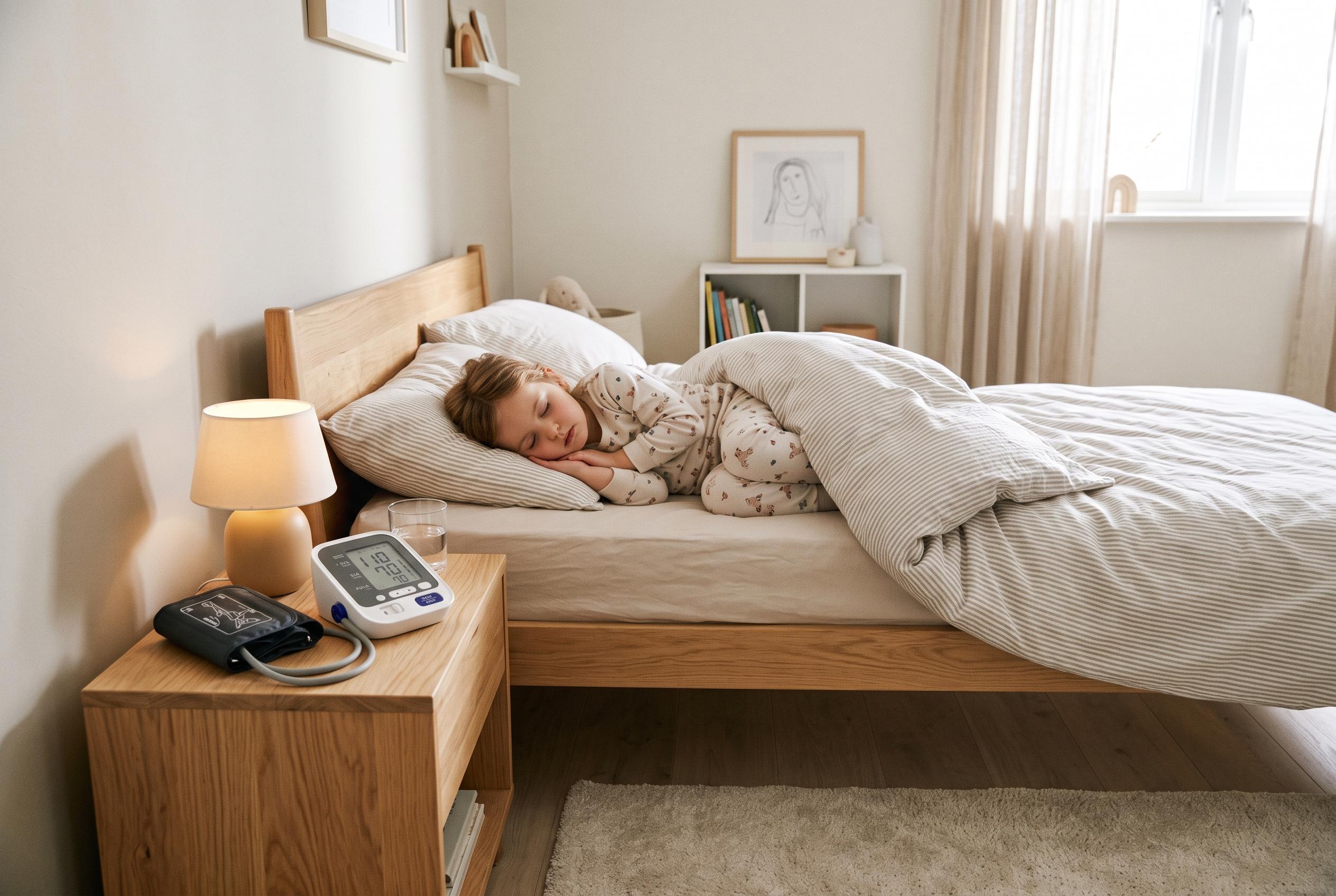

New research suggests that severe obstructive sleep apnoea in children is linked to higher morning blood pressure, highlighting the importance of routine blood pressure monitoring in affected youngsters to identify early cardiovascular risk, even after accounting for obesity.
Severe obstructive sleep apnoea in children is linked with a greater chance of morning hypertension, according to new research published in Sleep Medicine by Rohan Bellary and colleagues at the University of Louisville School of Medicine. The study found that the association held even after accounting for obesity, sex and developmental stage, suggesting that sleep apnoea itself may carry independent cardiovascular risk.
The retrospective analysis covered 806 children aged one to 18 years who underwent overnight sleep testing and blood pressure checks before and after the study. Researchers grouped the children by apnoea-hypopnoea index, a measure of how often breathing is disrupted during sleep, and found a clear pattern: average morning systolic blood pressure rose as sleep apnoea became more severe. Children with severe disease had more than twice the odds of morning hypertension after adjustment for other factors.
The findings add to a growing body of evidence that sleep apnoea can affect blood pressure early in life. A National Heart, Lung, and Blood Institute-funded study reported that children with obstructive sleep apnoea were nearly three times more likely to develop high blood pressure in their teenage years, although that risk eased if the condition improved during adolescence. The American Heart Association has also said obstructive sleep apnoea affects an estimated 1% to 6% of children and adolescents and can contribute to raised blood pressure, abnormal blood fats and changes in heart structure.
Bellary’s team found that body mass index also played an important role, with higher BMI scores independently predicting elevated blood pressure. The relationship between moderate sleep apnoea and blood pressure weakened once weight was taken into account, but severe sleep apnoea remained significant. The strongest link with systolic blood pressure appeared in preschool-aged children, while sex did not significantly change the pattern. The researchers said the results support routine blood pressure monitoring in children with sleep apnoea, especially those with severe disease, to help identify cardiovascular risk earlier.
Disclaimer: This content is for informational purposes only and is not intended to be a substitute for professional medical judgment, advice, diagnosis, or treatment.